Kanesa Granulated Miso Experience Center, Communicating "Tradition and Innovation" Alive in Tsugaru’s Food Culture
Space Promotion
2025.09~
Tsugaru miso, produced in the Tsugaru region of Aomori Prefecture, is known for its strong umami and deep richness. Because it is slowly aged in a cold climate, it was also once called Tsugaru Sannen (Three-Year) Miso.
Based in the Namioka district of western Aomori City, Kanesa Corporation has continued to produce quality-first Tsugaru miso, preserving its history and traditions for more than 150 years since its founding in 1875. In addition, in 1978, the company developed granulated miso (Paramiso) that retains the flavor and taste of fresh miso while being easier to use and store. Kanesa’s granulated miso soup has received international acclaim, including the Grand Gold Medal at Monde Selection and the Superior Taste Award from the iTQi (International Taste Institute).
In September 2025, the Kanesa Granulated Miso Factory opened at the foot of Mt. Bonju as a new facility to ensure the stable supply of rapidly growing granulated miso products.
This new factory was established as the third production base, following the Bonju Factory, which produces traditional fresh Tsugaru miso, and the Kanesa Paramiso Factory, which produces granulated miso using Kanesa’s proprietary method. It is capable of producing 100 million servings of granulated miso, approximately double the previous capacity. Inside the new factory, the visitors can also find a newly opened Kanesa Granulated Miso Experience Center, themed around granulated miso.
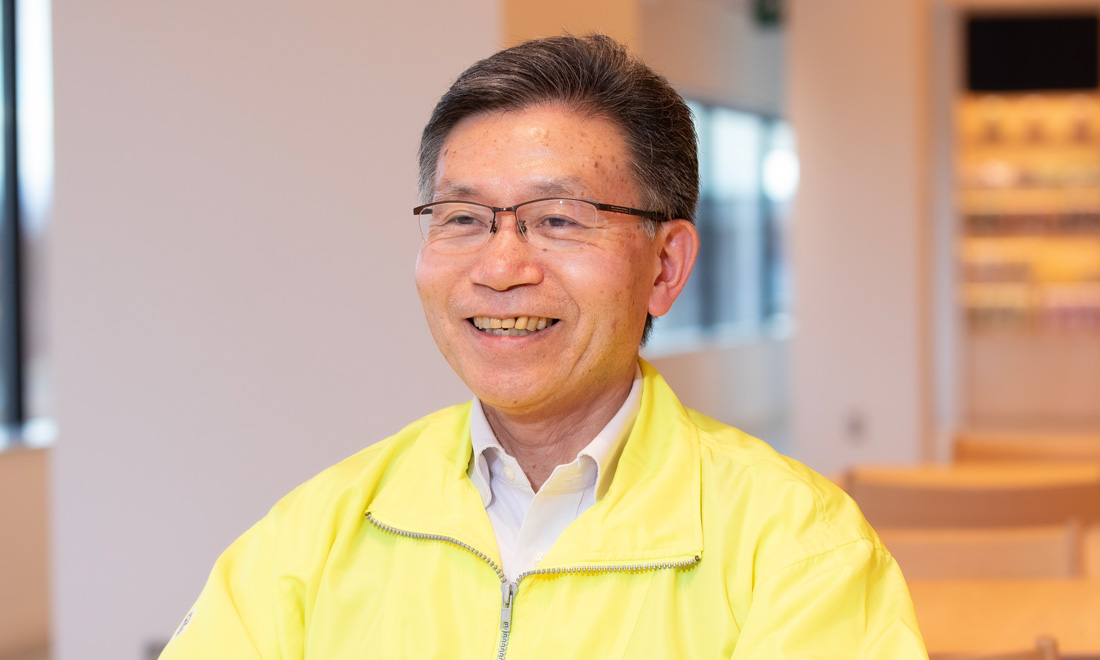
Kanesa’s factories were once in central Aomori City, but today all three facilities are near Mt. Bonju in the Namioka district. Representative Director and President Nobuyuki Akitaya explains how the company came to build its factories on this site: “Clean water is essential for making miso, and the water quality in this area is particularly good. At our previous factory, we faced issues such as surrounding residential development and restrictions on groundwater extraction, so when we were looking for a new location, we came across this site.”
The Kanesa Granulated Miso Factory was originally planned to be built directly behind the Kanesa Paramiso Factory, with only a small viewing area for business partners and supermarket representatives. However, as planning progressed, the idea emerged to turn it into a facility open to the general public as well.
“At that time, we learned that a site along the national highway near the Kanesa Paramiso Factory had become available, so we decided to change the construction location. It was more accessible and offered a larger plot of land than the originally planned site, so we revised the plan to create a facility where visitors could enjoy the factory tour and spend time at their leisure,” says Akitaya.
NOMURA MEDIAS, which became a partner in creating the experience center, joined the project from the planning stage and advanced preparations through repeated online meetings and visits to Aomori.
Taiji Ishii, Chief Planner at NOMURA MEDIAS, says, “We found that Kanesa held a ‘tradition’ of continuing to make Tsugaru miso as a long-established miso manufacturer, and found ‘innovation’ in granulated miso that lets people enjoy delicious miso soup simply by adding hot water. We set this concept of ‘tradition and innovation’ as the theme of the experience center and built the facility’s story so that it would be clearly conveyed to visitors.” Creative Director Arata Takahashi adds, “We also went back to study miso making and Aomori’s food culture in depth as we refined the plans. To learn more about food culture, we conducted research at Aomori’s markets and took many photos. We maintained close communication, including acting as a bridge with the factory construction company, to ensure the experience center would truly become something valuable for Kanesa.”
"A New Factory and Experience Center Built in the Bonju Area, Home to the Clean Water Essential for Miso Making"
Nobuyuki Akitaya, Representative Director and President, Kanesa Corporation
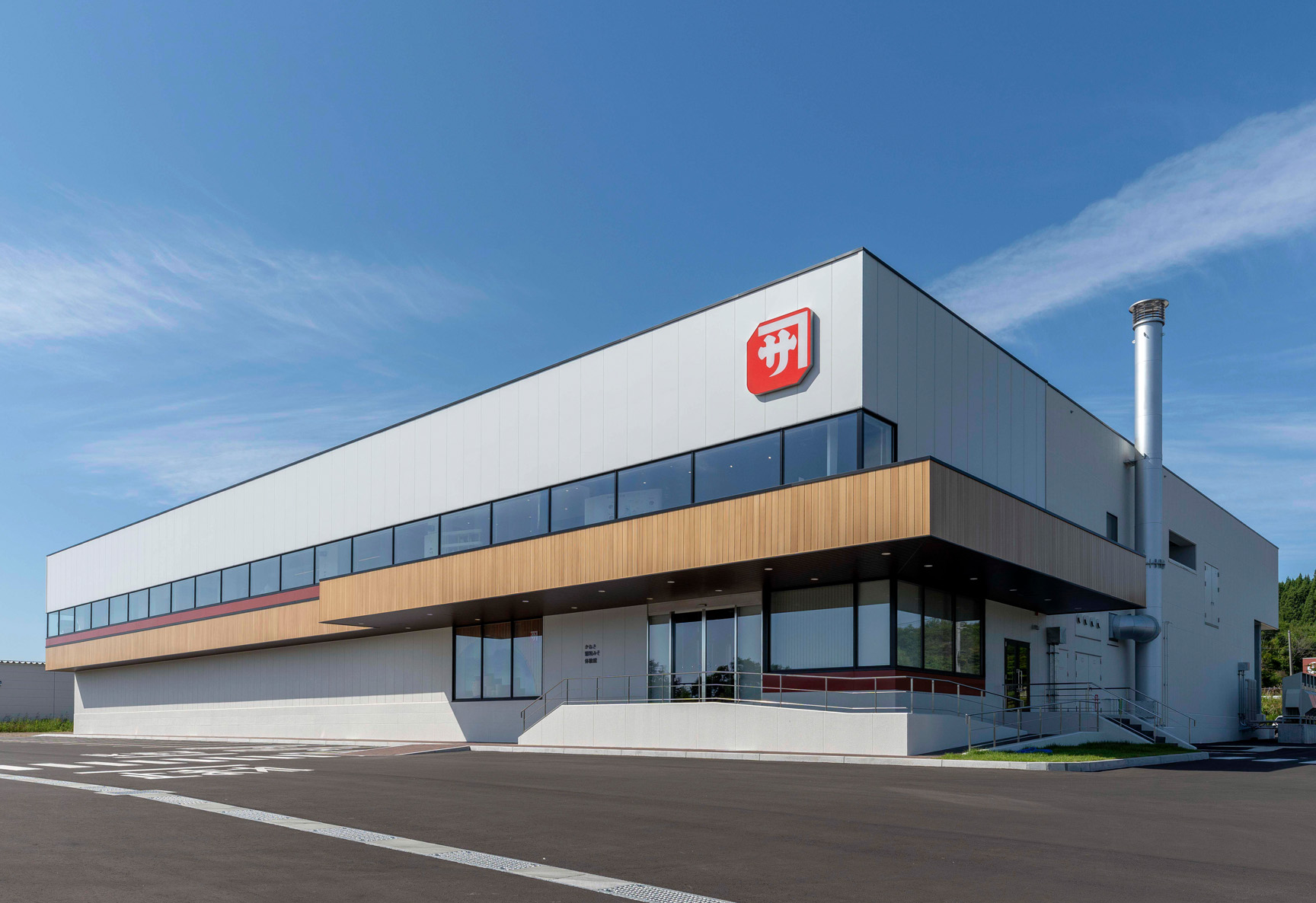
The Kanesa Granulated Miso Experience Center was opened inside the new factory located along National Route 7.
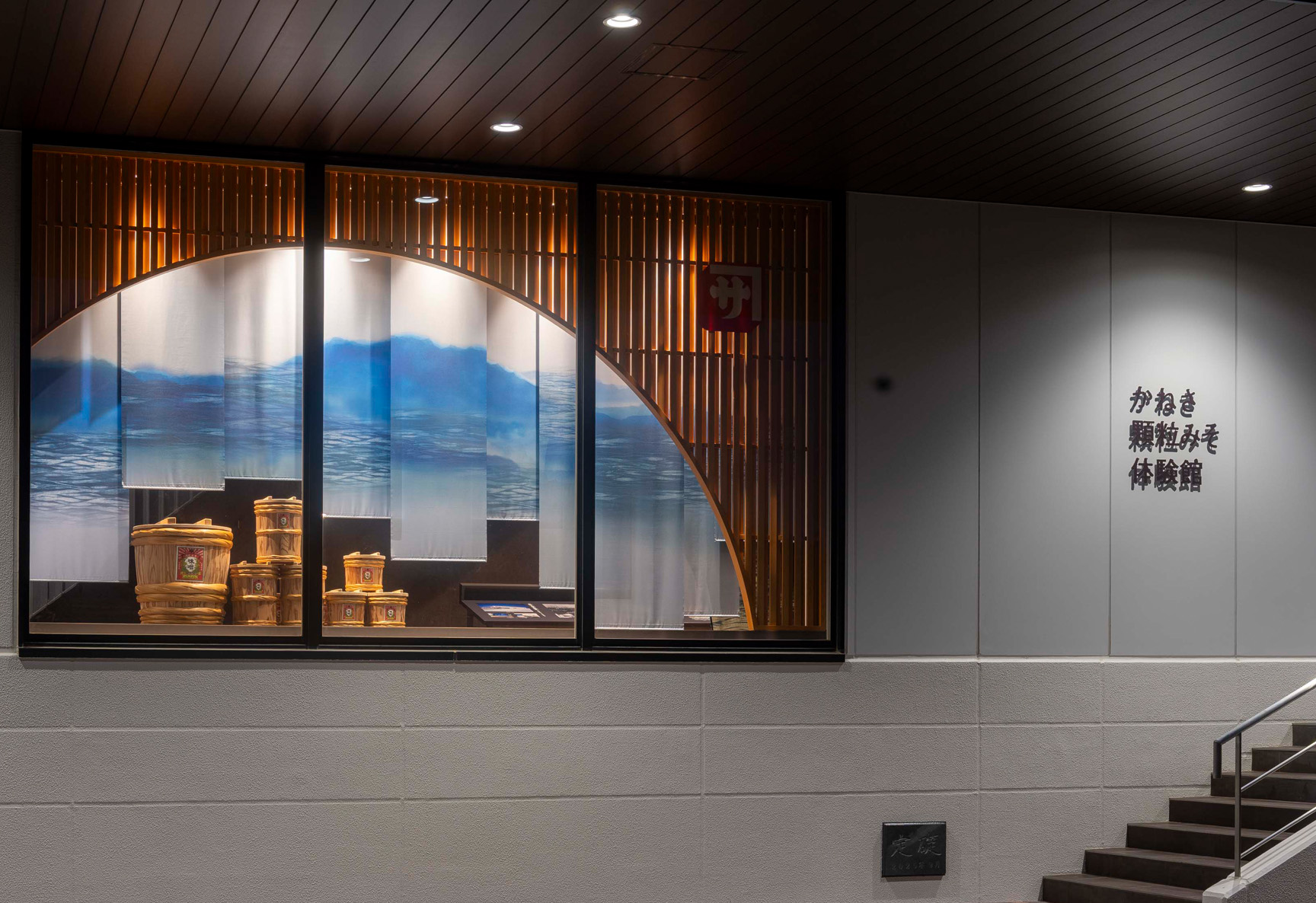
Exterior of the experience center entrance (nighttime photo). A replica miso barrel and an indigo-dyed tapestry inspired by Mt. Bonju are on display.
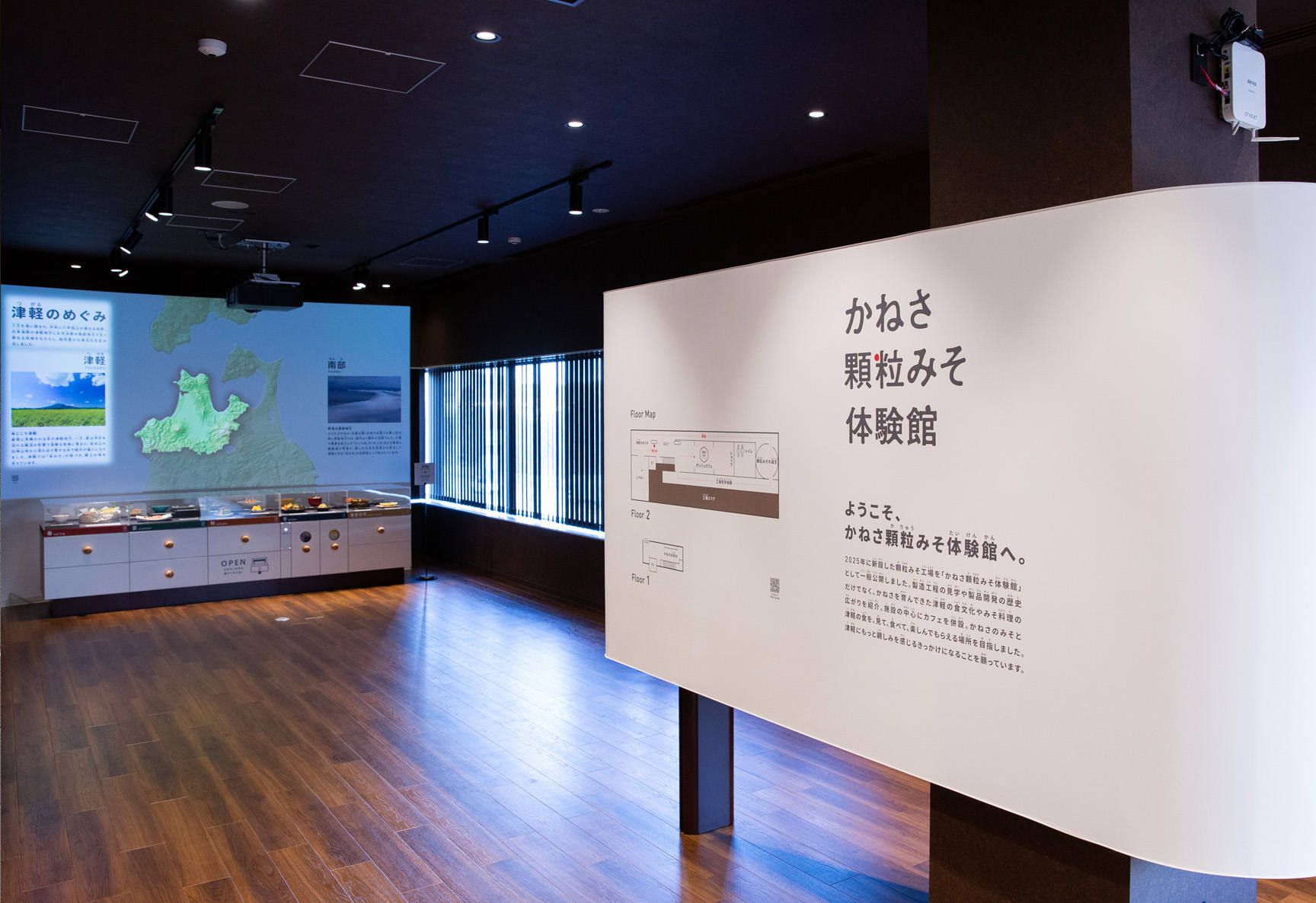
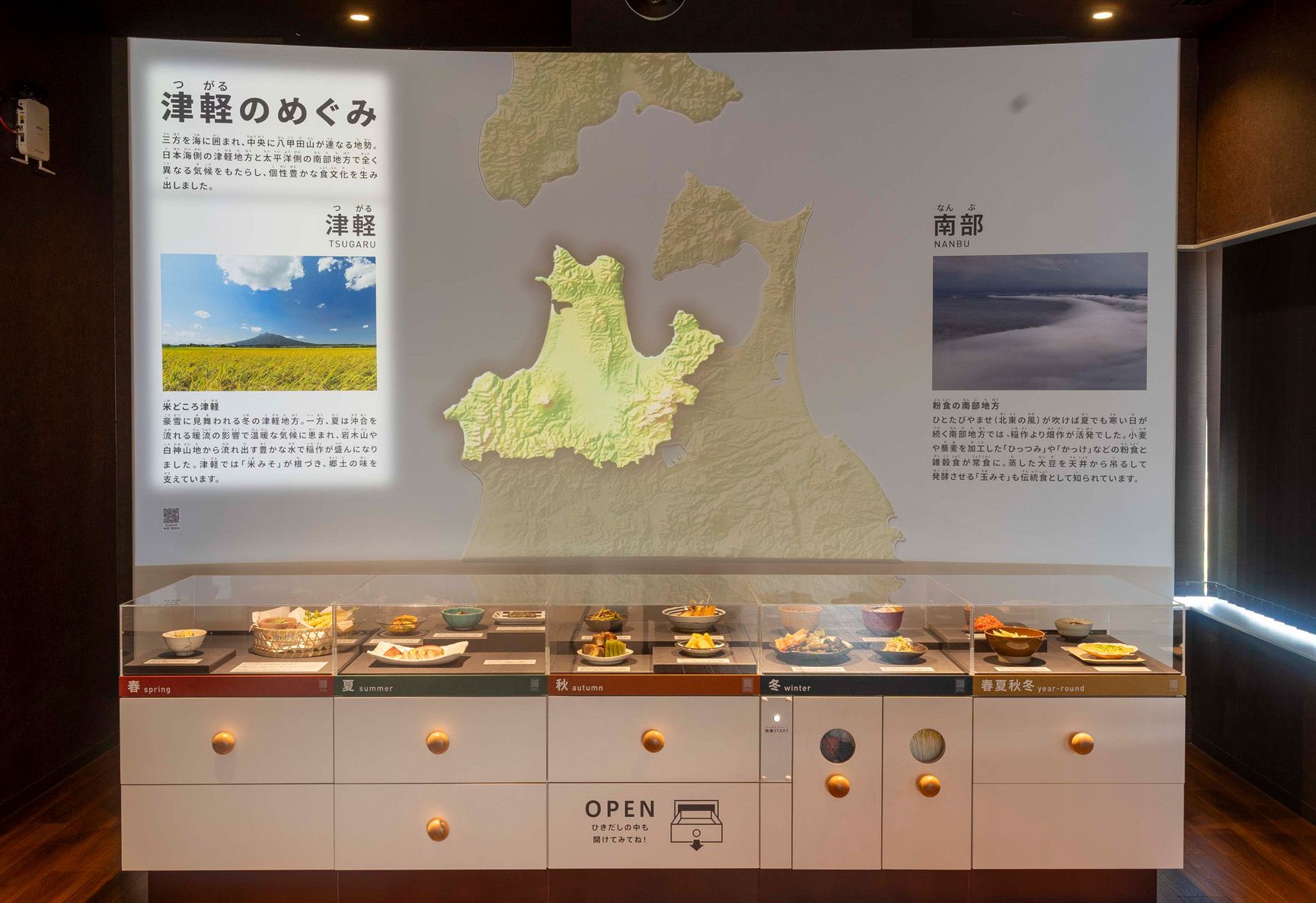
On the second floor, behind and to the left of the facility introduction panels, are the “Blessings of Tsugaru” exhibition area and a theater.
"How to Express 150 Years of “Tradition” and the “Innovation” of Granulated Miso"
Kazuhiko Furuhata, Executive Vice President of Kanesa Corporation, says, “I personally have absolute confidence in the deliciousness and quality of Kanesa’s granulated miso. I felt that presenting our 150 years of miso-making ‘tradition’ together with the ‘innovation’ of granulated miso as the theme of the experience center would be easy for visitors to understand.”
Although Kanesa created granulated miso, a product still considered innovative even by today’s standards, back in the 1970s, its development posed many challenges.
To make miso into granules, moisture must be removed through drying, but because miso is a delicate food, applying heat can damage its flavor. In other words, to create easy-to-use granulated miso while preserving its flavor, it must be dried with as little heat as possible.
With this challenge in mind, Kanesa’s research team, which included Akitaya at the time, developed the “vacuum extrusion granulation method” for drying miso at low temperatures and cutting it with blades under vacuum. This patented process removes moisture from fresh miso with almost no heat, so when water is added, it returns to its original form, allowing people to enjoy the authentic flavor of Tsugaru miso.
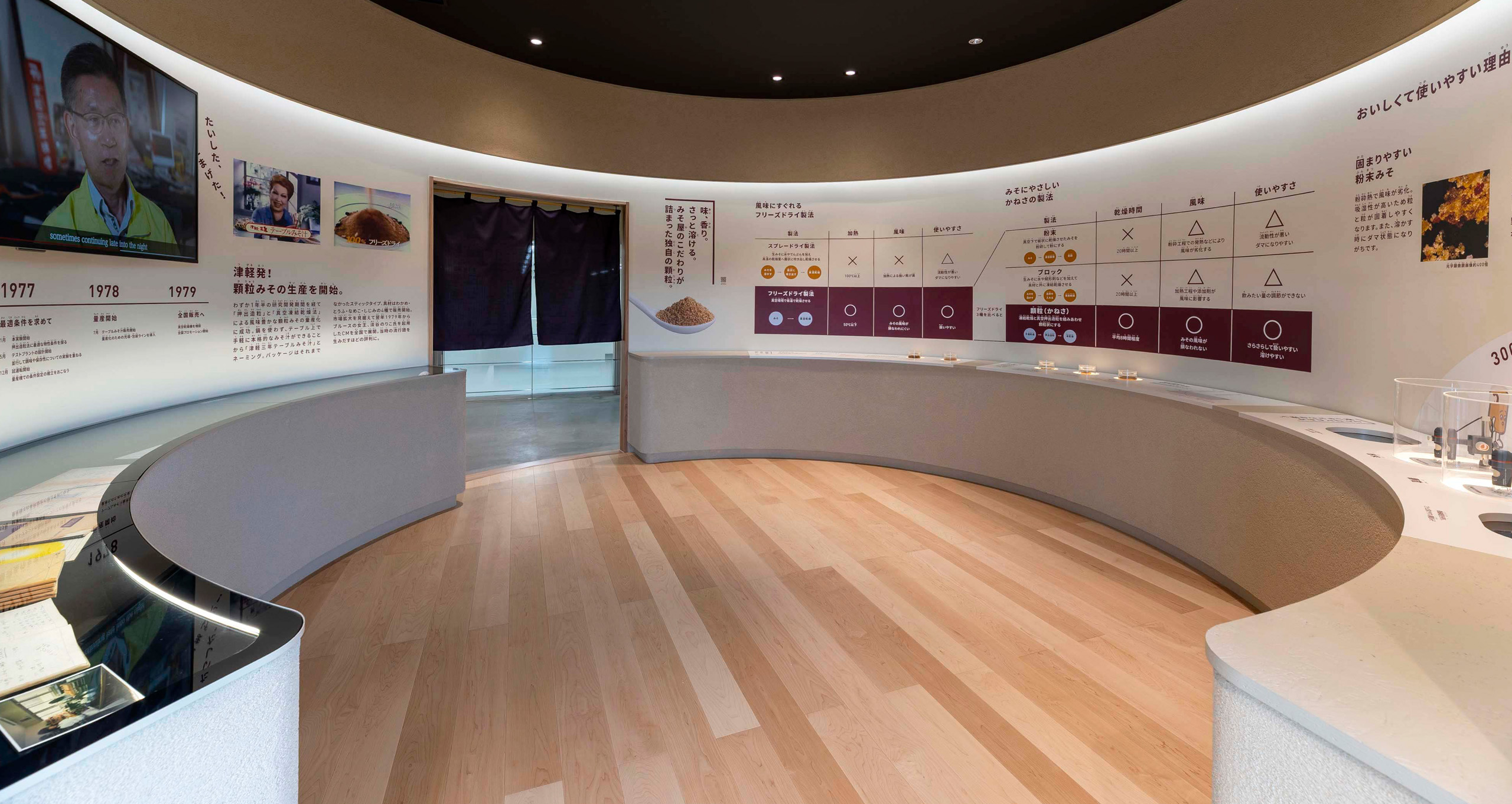
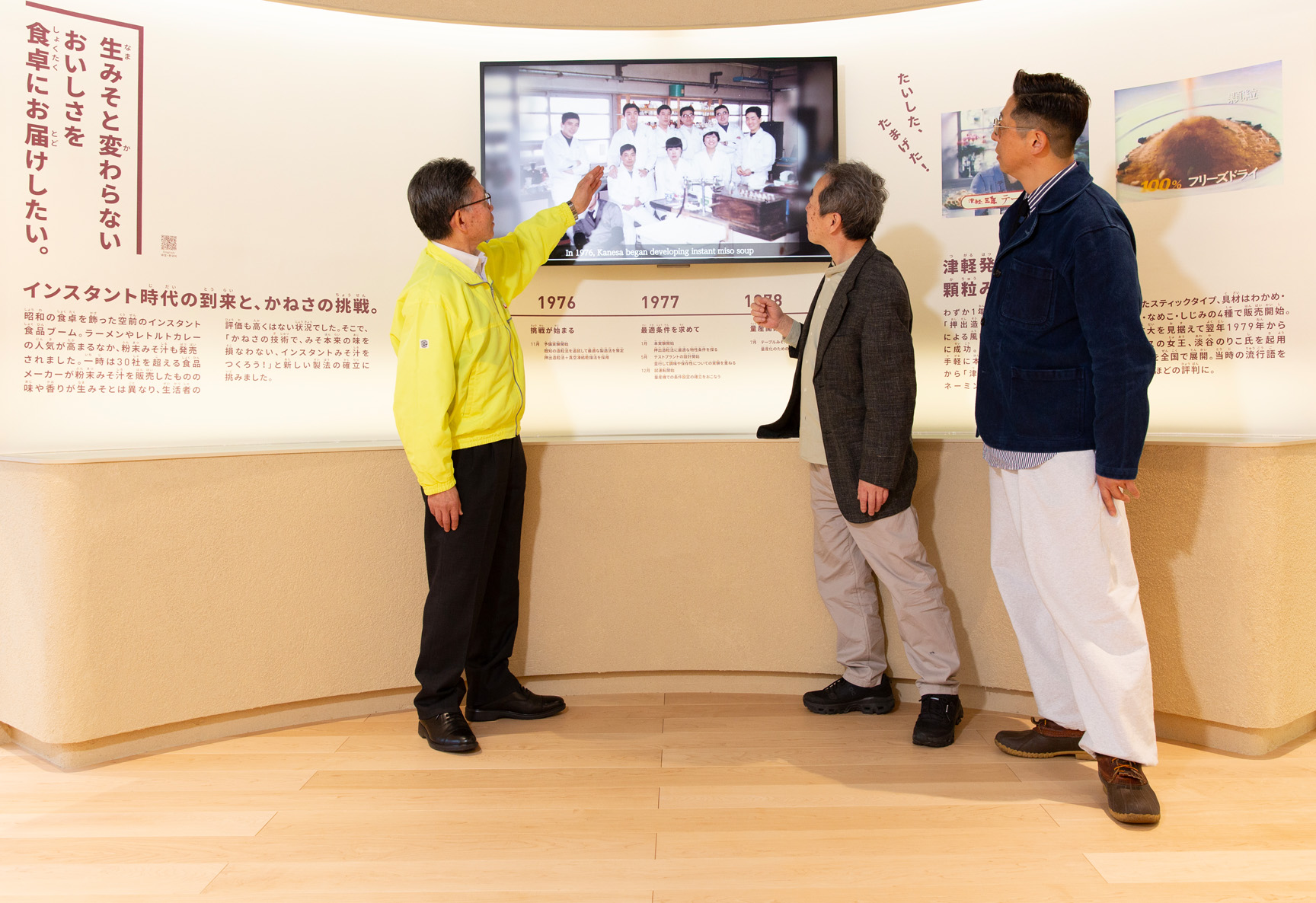
In the exhibition room titled “Birth of Granulated Miso” inside the experience center, visitors can view valuable materials from the time Kanesa pursued development with one goal in mind: “We strive to bring the authentic taste of raw miso straight to your dining table.” Visitors can also see how Kanesa’s granulated miso compares with other products.
Akitaya further comments, “The exhibition room includes an easy-to-understand showcase of granulated miso. Visitors are perceptive and love to learn the differences between the Freeze-Drying Method and Spray Drying Method, as well as the characteristics of powder, block, and granule forms within freeze-dried products.”
Shun Kawai of NOMURA MEDIAS, who served as Project Manager, reflects that many adjustments were required to move the project forward. “Everyone shared the desire to create something great, but depending on each person’s position, the direction they aimed for differed slightly, so we needed to align our views to determine the best final outcome. I paid close attention to not only our internal planning, design, and production teams, but also to coordinating with the construction company and external production partners,” says Kawai. In particular, the team worked closely with Chiyoda X-ONE Engineering Corporation, which handled construction of the entire factory. Takahashi comments, “As we continued discussions with Kanesa and the team members, various requests came up, such as enhancing the café menu or increasing the ceiling height. Construction had already started at that stage, and the construction company could have refused, but they were very open to discussing options with us. They responded to design adjustments and equipment changes, and worked with us toward the shared goal of creating something better, for which we are truly grateful.
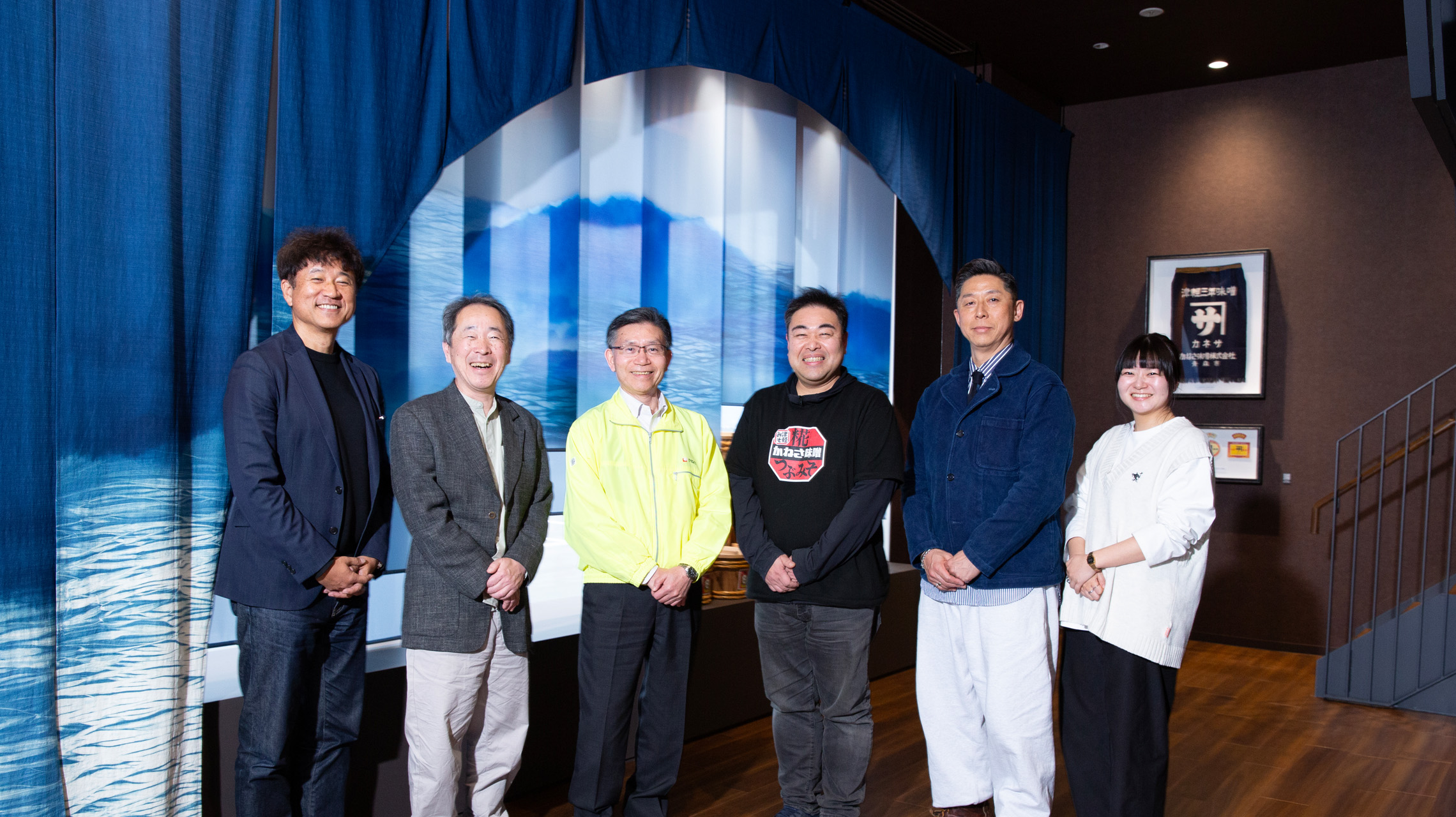
From the left: Kawai, Ishii, Akitaya, Furuhata, Takahashi, Inoue. Photo taken at the experience center entrance.
With support from many people, the Kanesa Granulated Miso Experience Center is now complete.
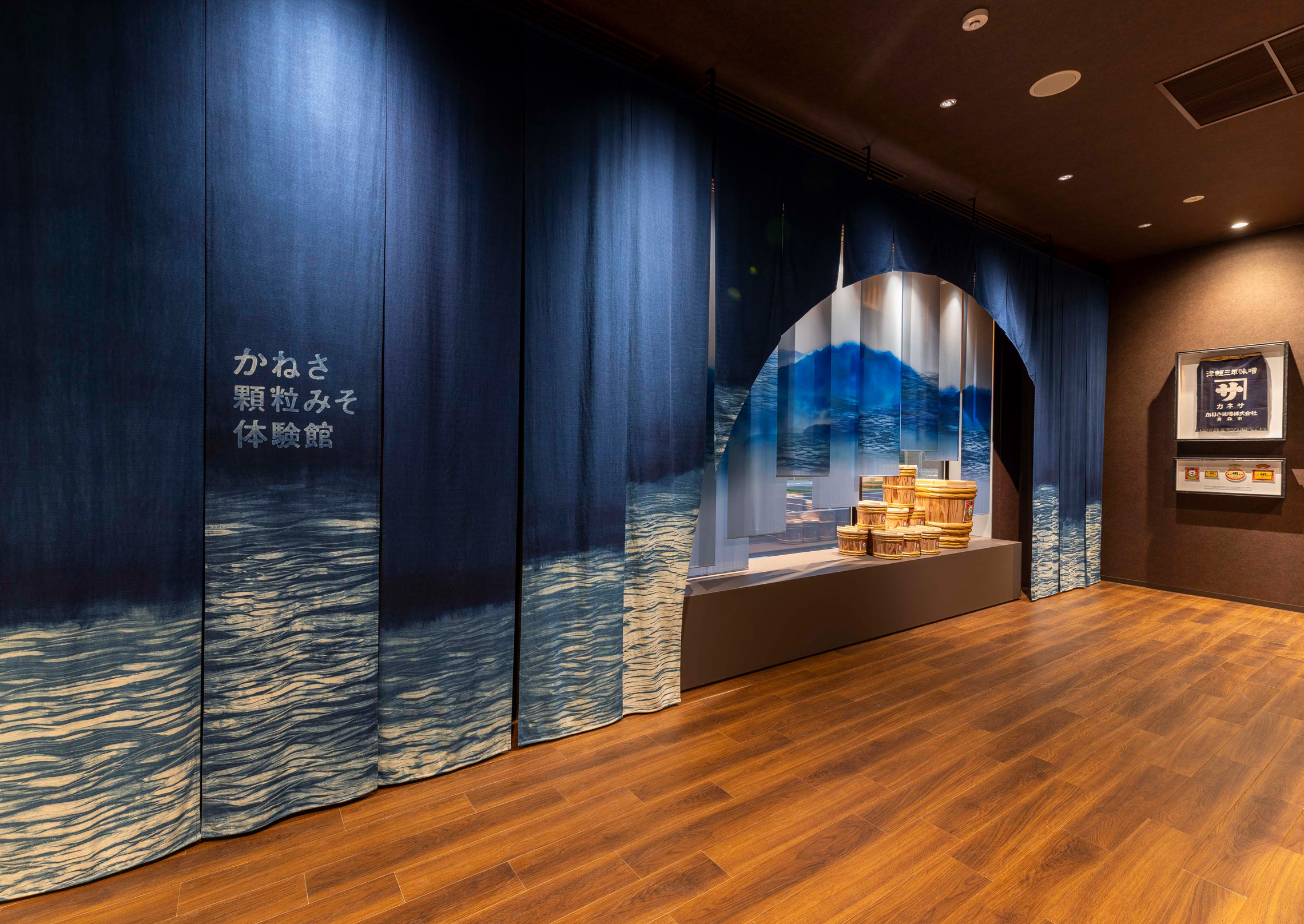
Step inside, and a gentle aroma of miso immediately surrounds you. Greeting visitors at the entrance is an indigo-dyed tapestry styled like a traditional noren curtain, inspired by Mt. Bonju, a place blessed with abundant water and crisp, clear air.
The tapestry was designed by Hiromi Inoue, a designer at NOMURA MEDIAS.
Inoue comments, “We wanted to use something made locally, so we had it dyed at a natural indigo dye workshop in Tsugaru. I also visited the dye workshop myself, looked at different dyeing techniques, and worked through what would best express the water of Mt. Bonju.”
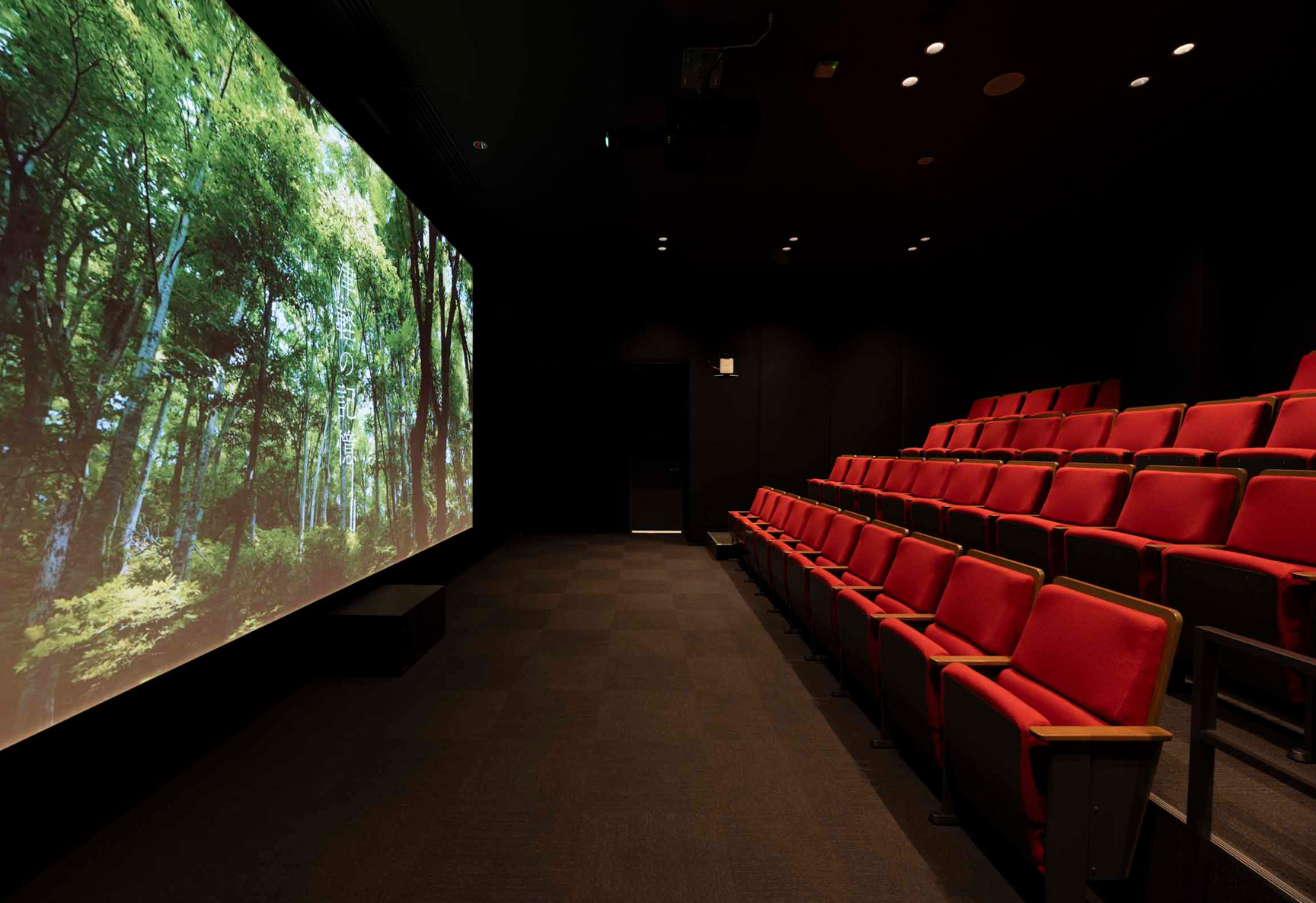
Upstairs on the second floor, visitors are welcomed by an exhibition area and a theater experience that introduces Tsugaru’s seasonal food culture year-round. Playing in the 48-seat theater is the original theme film Tsugaru Memories, produced by shi-shi-shi Inc. Created specifically for this experience center, it explored Tsugaru’s abundant nature and the lives of the people who call it home. “Some visitors watch the film and come out in tears, moved by what they’ve seen. Tsugaru miso only appears briefly in the video, but we feel it truly conveys that we make our miso within Tsugaru’s wonderful nature and traditions,” says Furuhata, speaking to the impact of the video.
Just outside the theater is “Blessings of Tsugaru,” an area showcasing Tsugaru’s food culture across the seasons. Ishii explains, “I joined the film shoot and reviewed the footage in detail so we could fine-tune things and avoid any mismatch between the video and the exhibits. Only by properly telling the story of Tsugaru’s food can Tsugaru miso truly stand out. We created this exhibition area to serve as a bridge, connecting the people and food featured in the film to the miso factory experience.” “I’m originally from Aomori,” Ishii continues, “and Tsugaru cuisine is genuinely unique and fascinating. We also had a university professor who researches regional cuisine supervise the content, and we selected a wide range of Tsugaru ingredients and dishes, presenting them across spring, summer, autumn, and winter.”
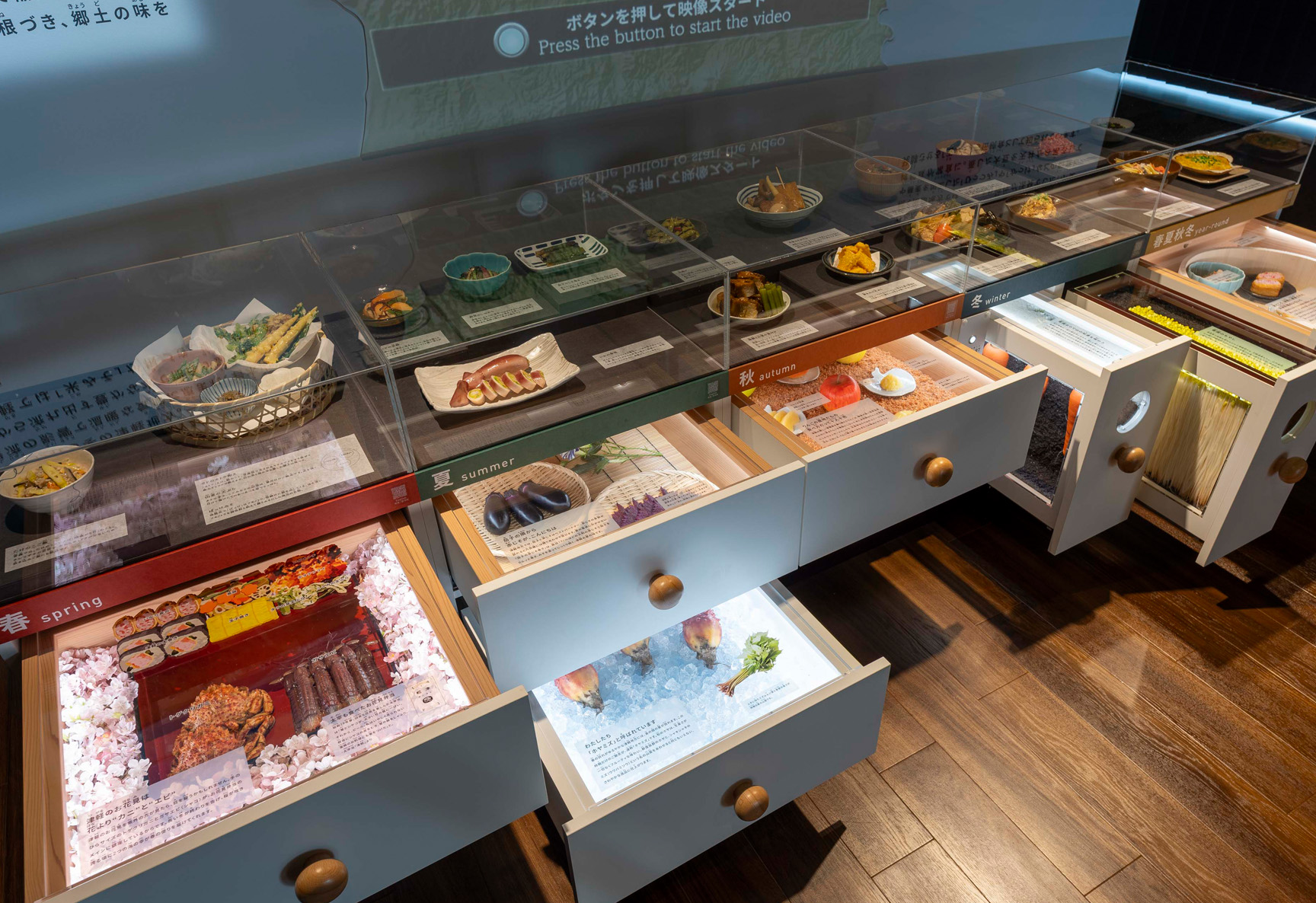
With highly detailed food replicas, the exhibit introduces everything from Tsugaru-style Hanami Bento boxes to delicious ways to enjoy apples, and it has become a popular spot where many visitors stop and linger.
"Kanesa’s Miso, Nurtured within Tsugaru’s Food Culture: A Visitor Flow Designed to Boast its Charms"
The “Blessings of Tsugaru” corner in front of the theater.
Many more ingredients and dishes are displayed inside the drawers as well.
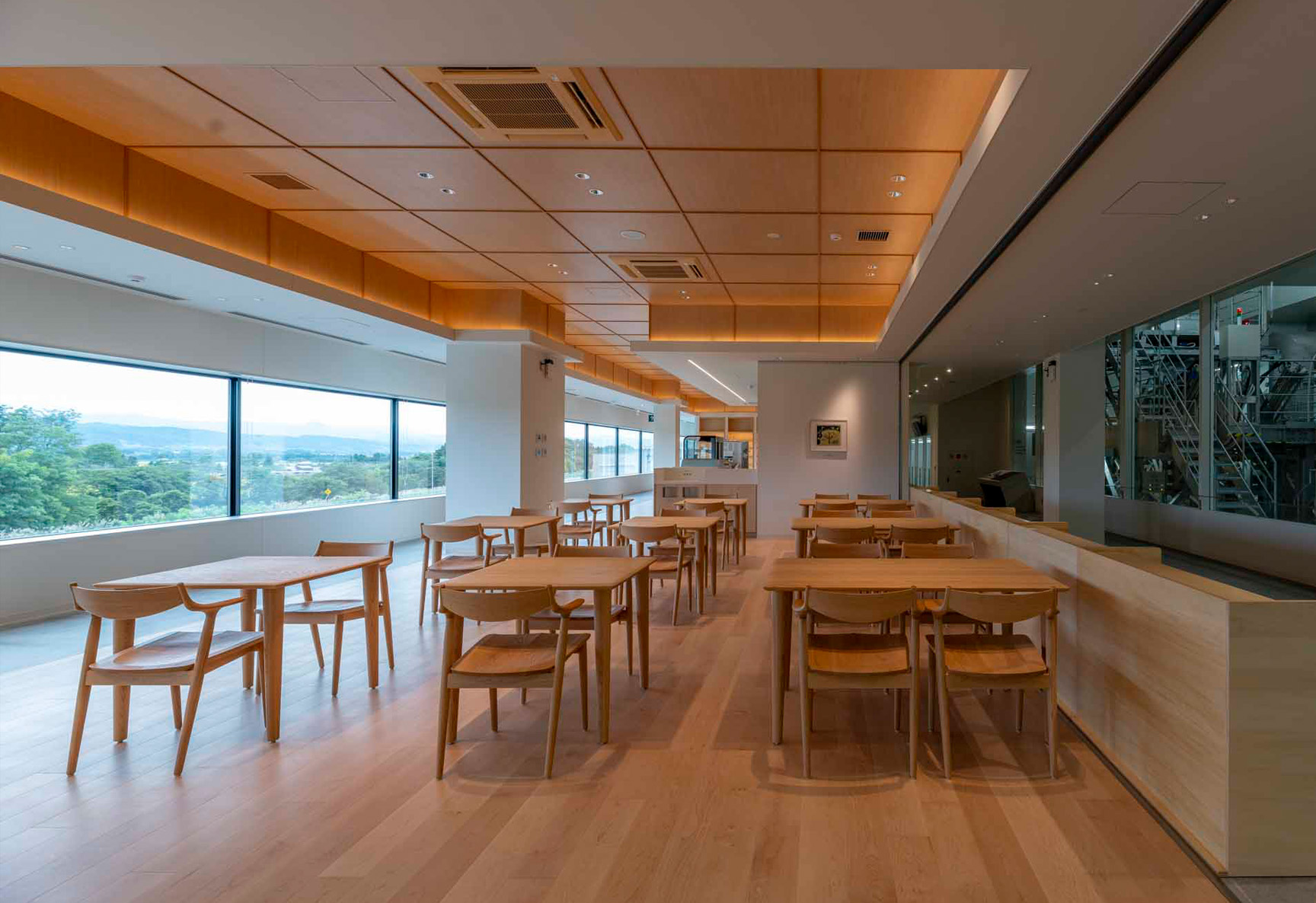
Inside the café, with its calm, relaxed atmosphere. Follow the left-hand corridor to reach the exhibition room introducing granulated miso.
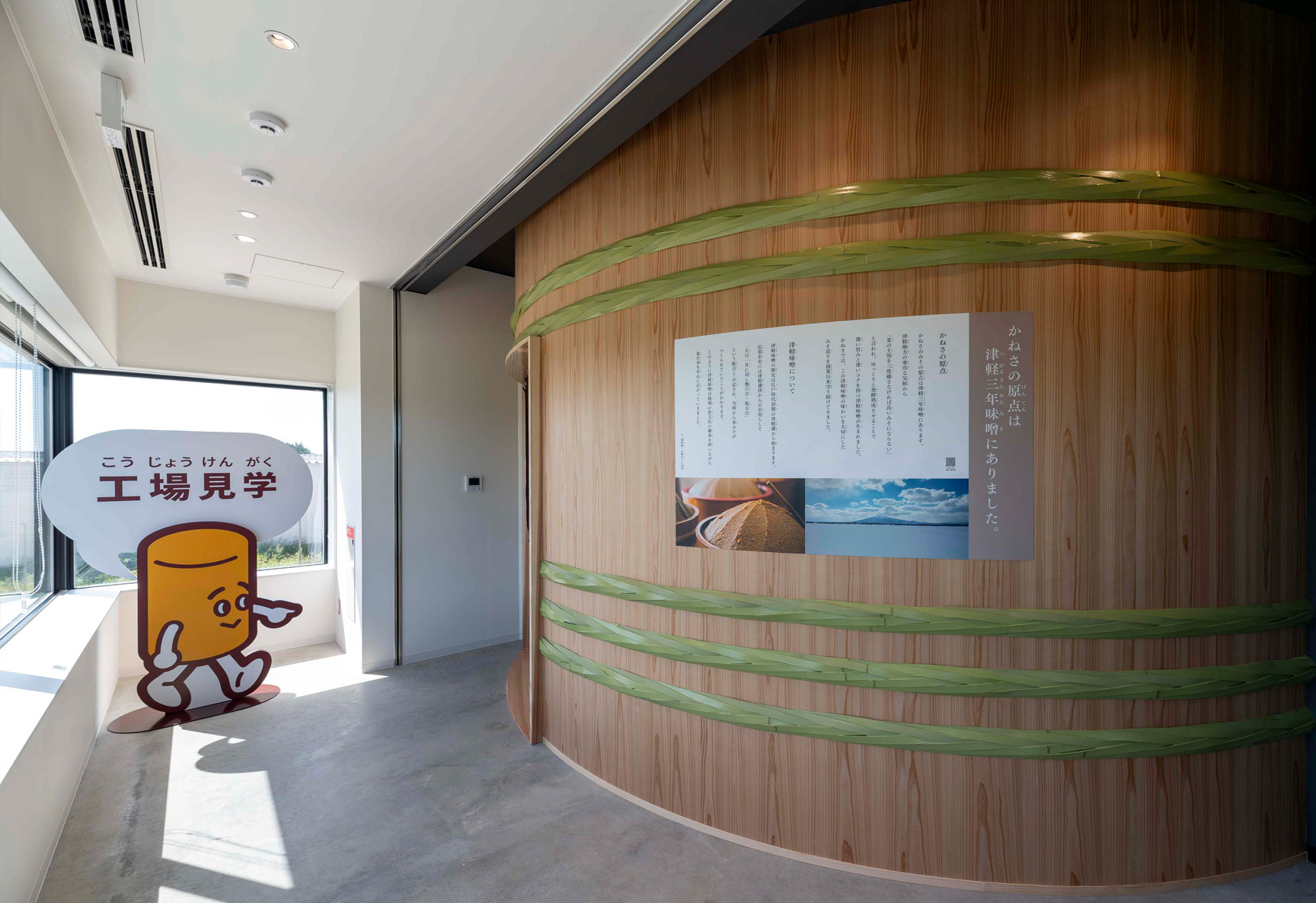
Pass through the “Birth of Granulated Miso,” exhibition room, designed to resemble a wooden vat, and continue on to the factory tour area.
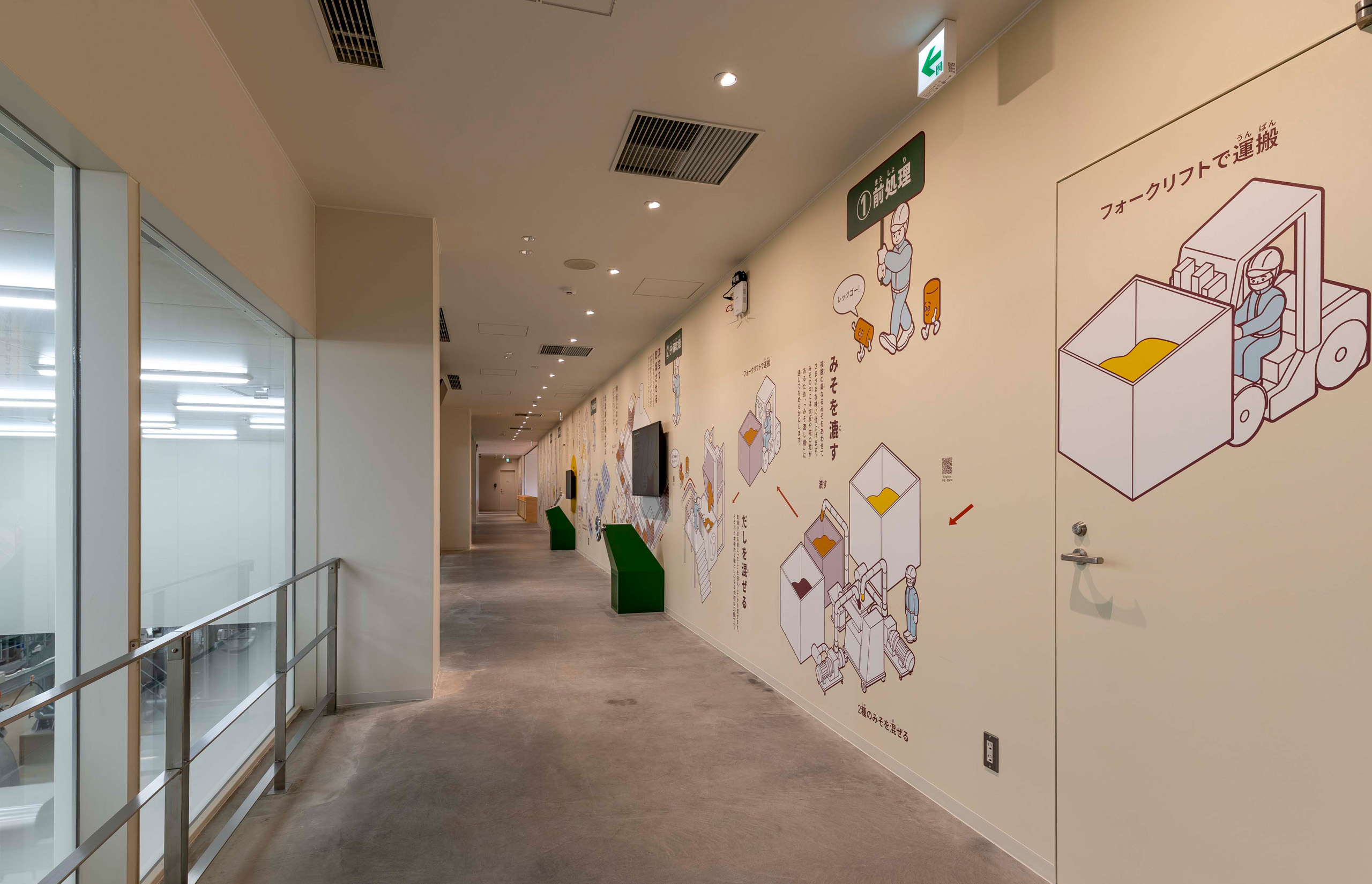
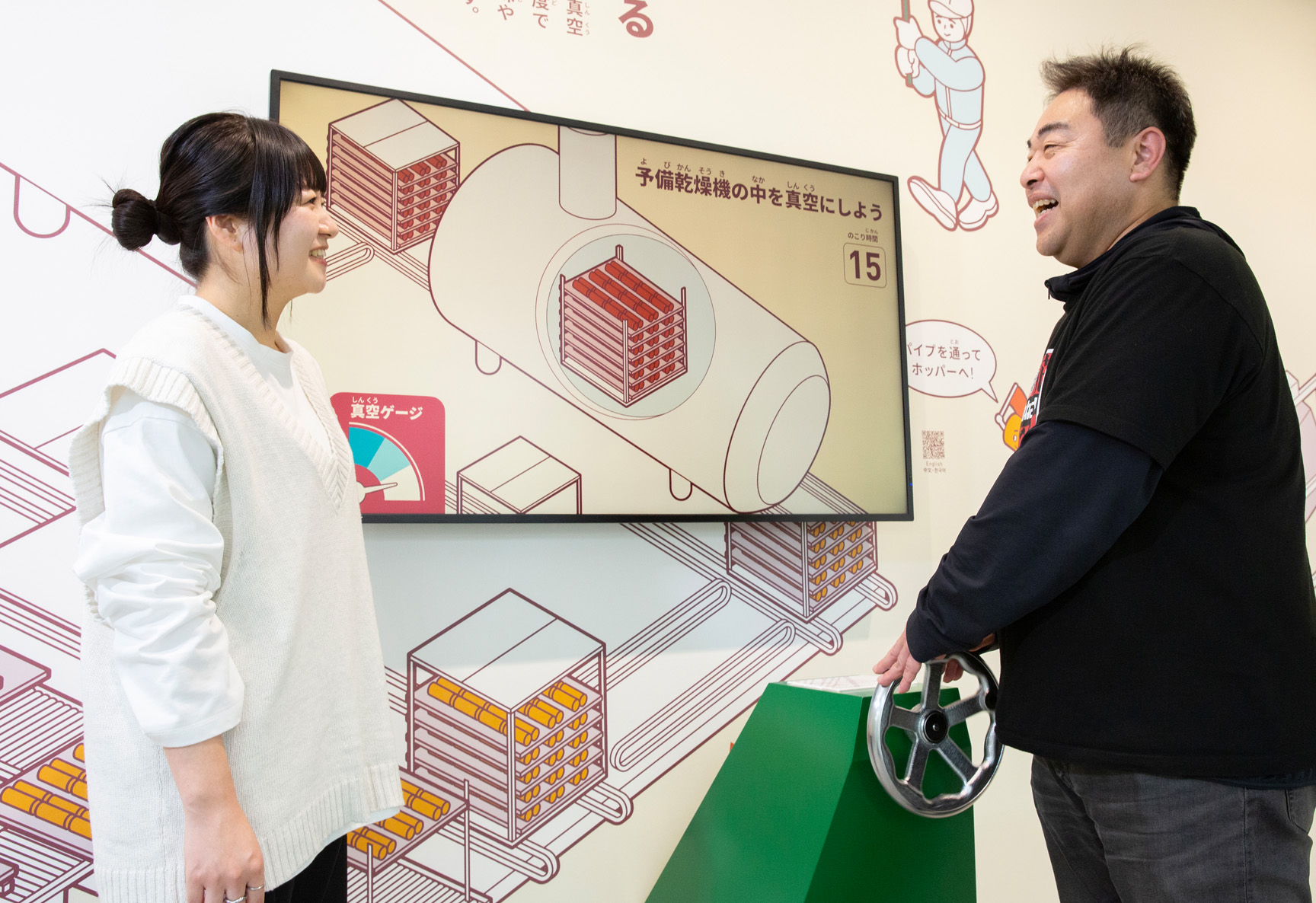
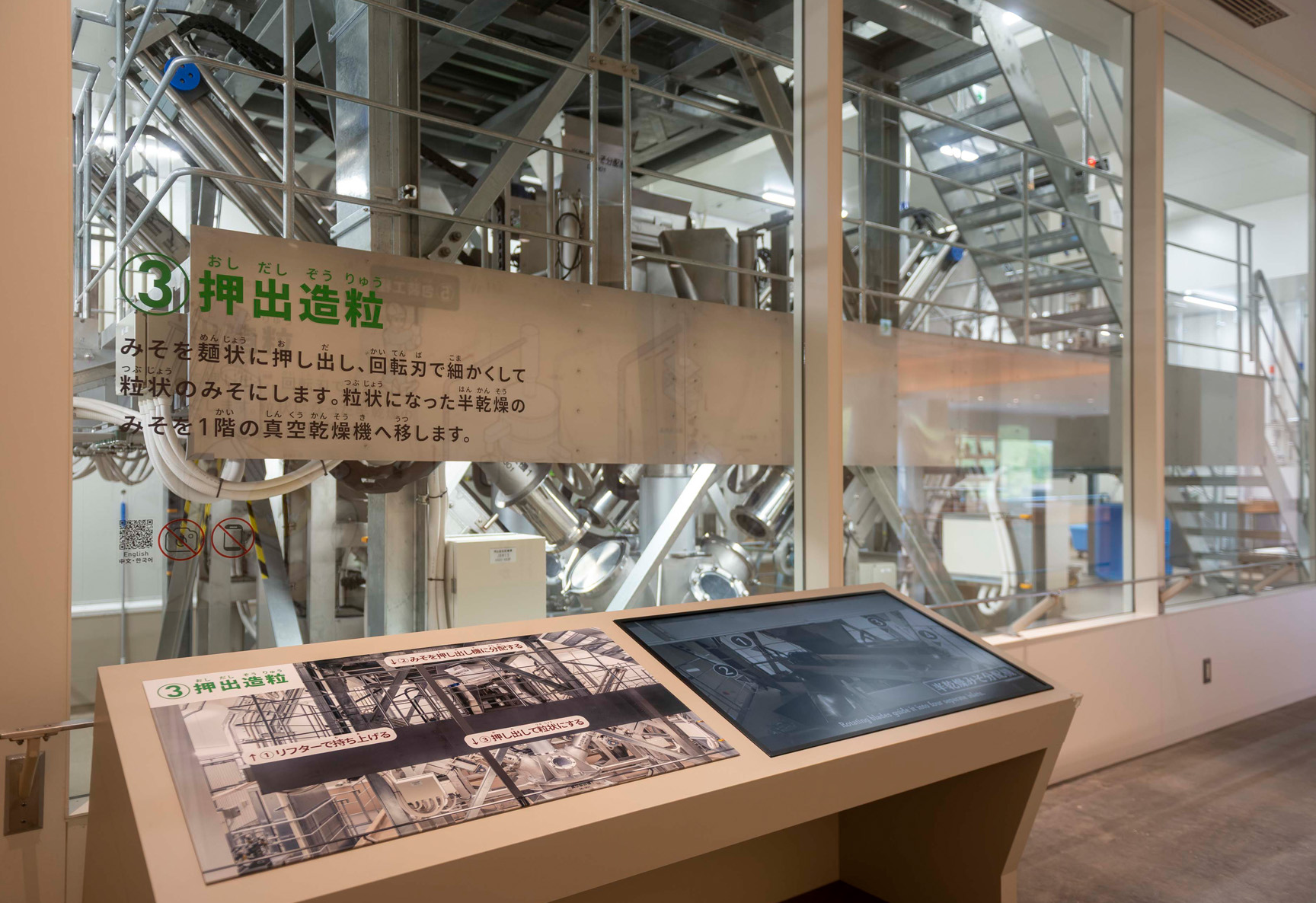
After viewing “Blessings of Tsugaru,” visitors walk down a corridor with a panoramic view of the Hakkoda Mountains on the left and the café and factory on the right, then pass through the “Birth of Granulated Miso” exhibition room on their way to the factory tour area. In the factory tour area, large windows let visitors observe the machinery and the people at work, while illustrated wall graphics explain the granulated miso manufacturing process in an easy-to-follow way. To help visitors experience the process firsthand, the center also features two game-style activities: “Vacuum Drying” and “Extrusion Granulation.” Kids and adults alike can have fun while learning how granulated miso is made.
Akitaya speaks on the layout with joy, “The flow of the tour is easy to understand, making it easy for us to explain to visitors, too. It’s turned out exactly the way Ishii had in mind.”
Another standout feature, unlike typical factory tour facilities, is the spacious café placed right at the center of the experience center.
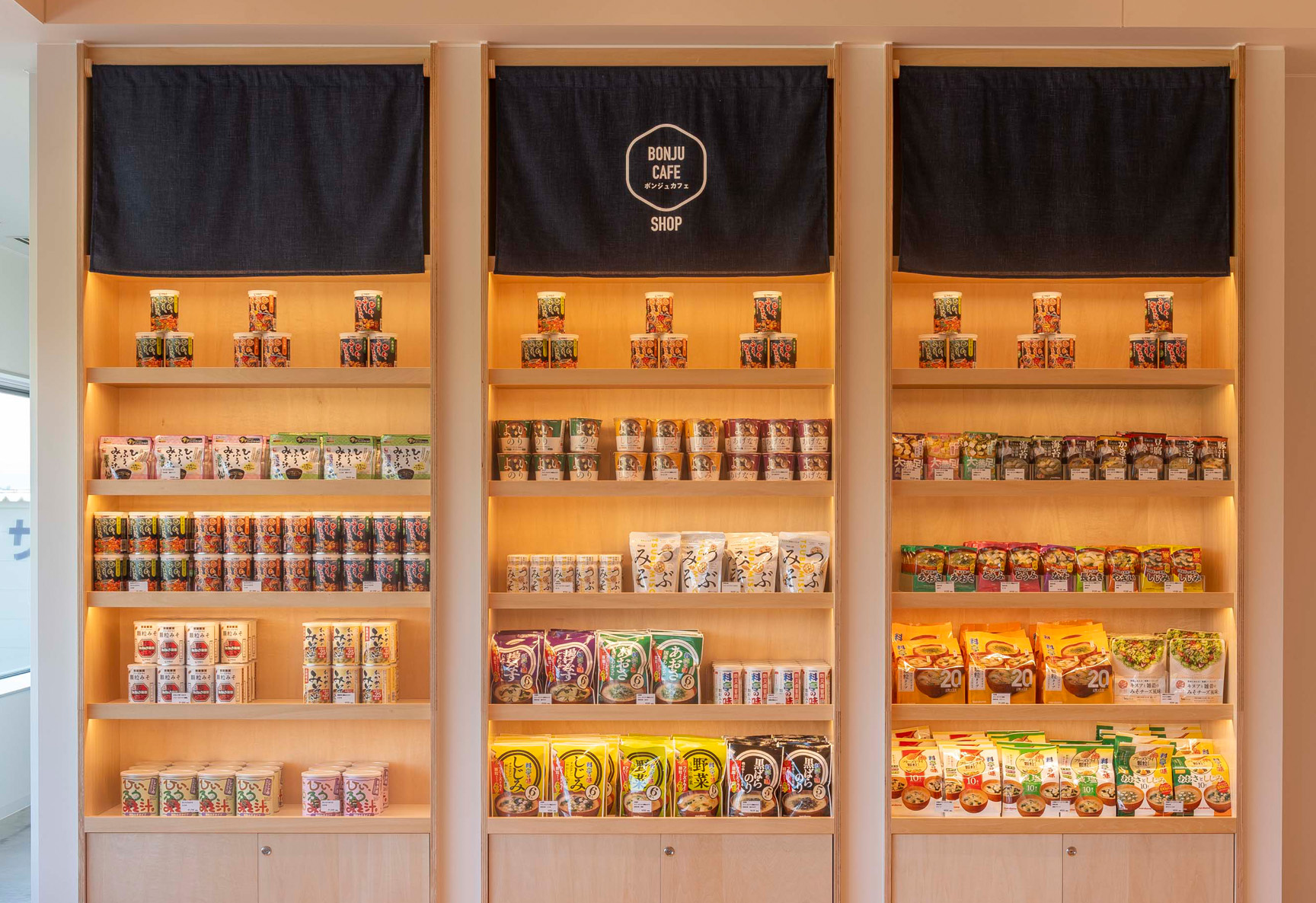
At BONJU CAFE, visitors can enjoy light meals, desserts, and drinks made with ingredients like miso, koji, and apples while taking in two completely different views on either side: the Hakkoda mountain range and the granulated miso factory. There is also an on-site shop where visitors can purchase a variety of products made with granulated miso.
Takahashi explains, “It’s rare to find a factory tour facility with such a large, open café attached, so we also saw it becoming a community space for local residents. Visitors can connect with Tsugaru’s history and food culture, tour the factory, and then enjoy the ‘tasty’ experience in the café. We aimed to create a place where you do not just learn, you can taste and experience it as well.” Akitaya adds, “It’s not only the view from the windows, but the café’s tables and chairs are also getting great feedback. Some people just come to take a break at the café. It really paid off to sweat the details.”
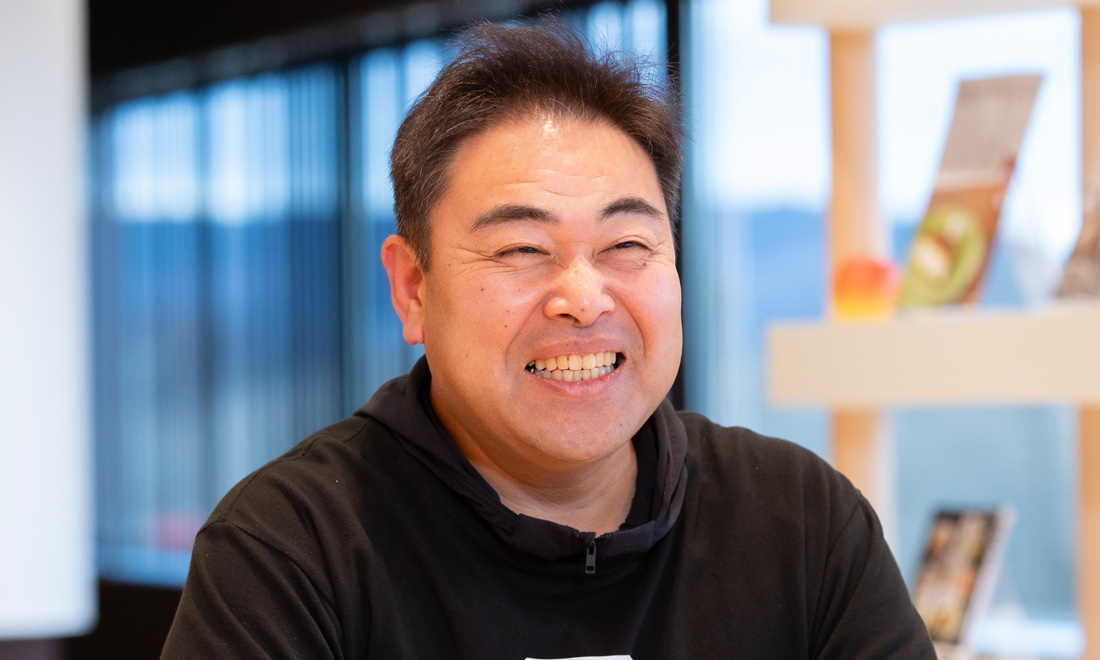
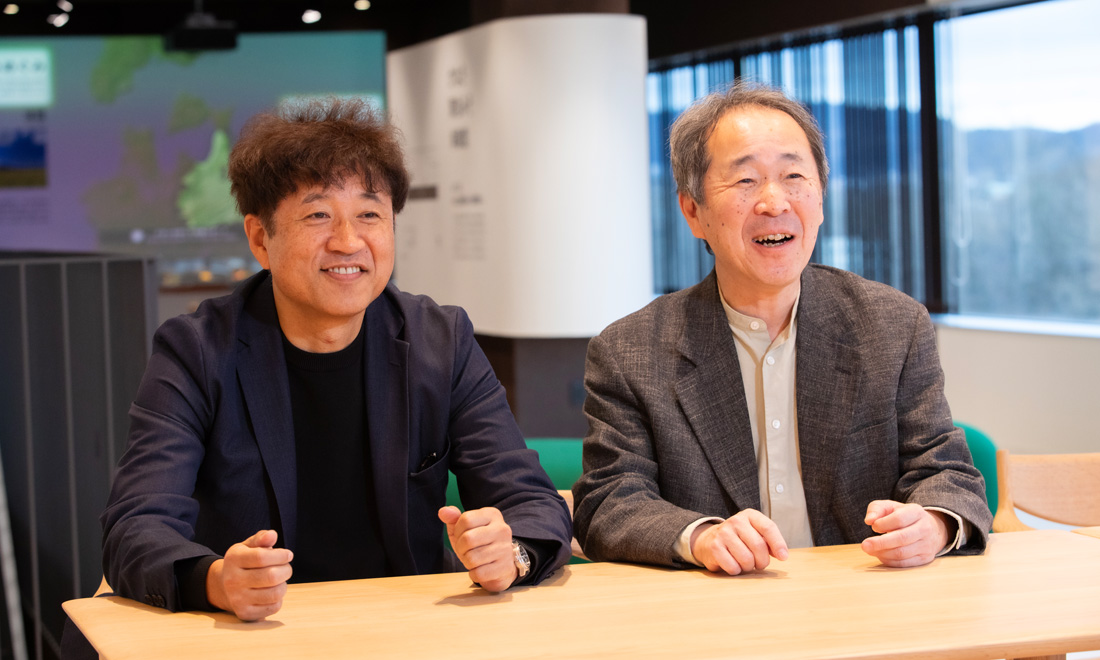
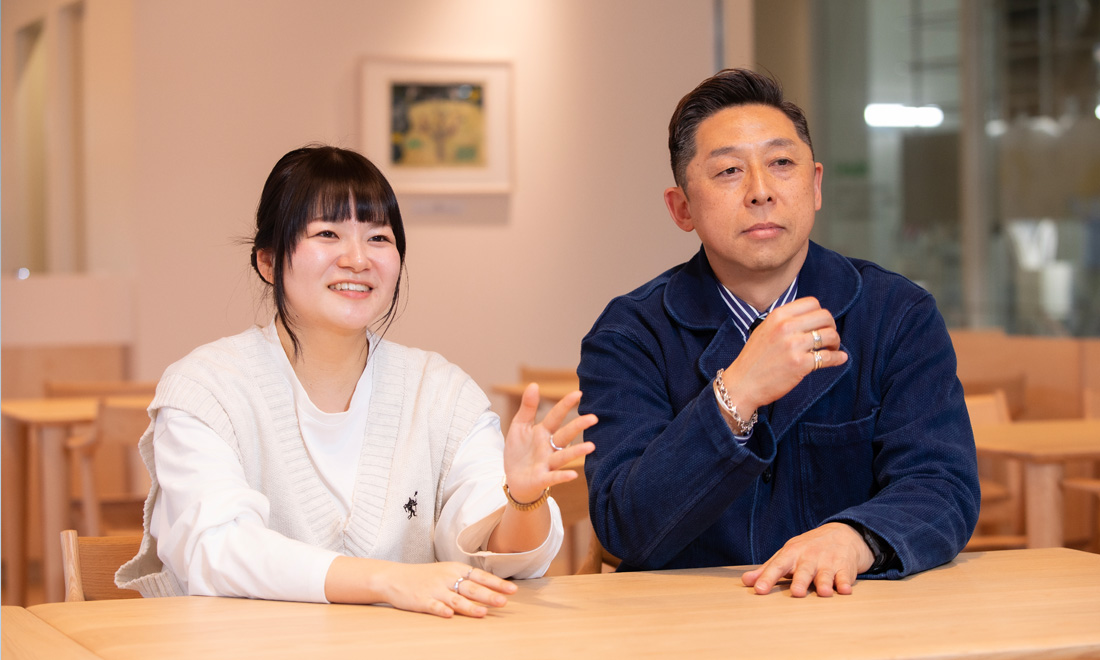
Hiromi Inoue, Designer, and Arata Takahashi, Creative Director, NOMURA MEDIAS
"An Experiential Facility Making Kanesa’s History and Technology “Visible,” Carrying them into the Future"
Kanesa’s collection of materials was vast, reflecting the company’s long history. NOMURA MEDIAS reviewed the large volume of items they borrowed and searched for what should be displayed in the experience center.
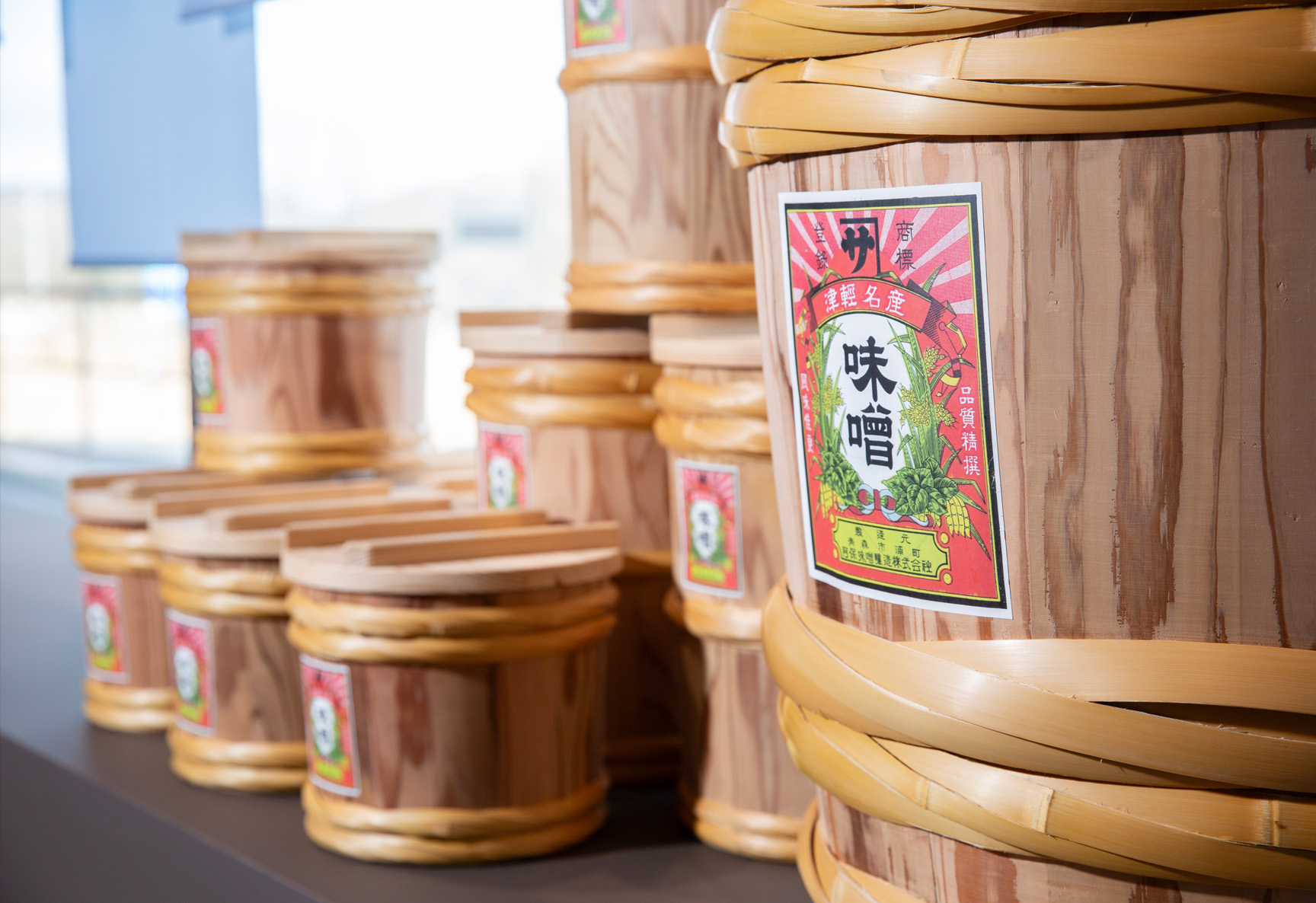
The label on display at the entrance was something Ishii discovered among older letters. “They appear to be letters exchanged between the owner’s wife and the printing company in 1958. The letters include back-and-forth comments like ‘this part should be done this way’ and ‘this design doesn’t look refined,’ and I assumed the labels enclosed were prototypes, but it turned out that one of them was a design that was actually used,” Akitaya says with a smile. Ishii adds, “We compared it with what appeared in old photographs, and I became convinced it was the real thing.”
The apron displayed alongside the label was also something Ishii tracked down online. Akitaya goes on to praise Ishii, saying, “Mr. Ishii’s research skills are incredible. Thanks to him, we even learned that Kanesa’s predecessor company was founded as ‘Abo Shoten.’ We uncovered all kinds of things we didn’t know ourselves.”
“I checked all sorts of sources, including the National Diet Library and statistical materials from Aomori City from that era,” says Ishii. Takahashi continues, “Using his local connections, Ishii was able to get support from research institutions and speak with individuals who collect historical photographs. I think it’s because of that steady groundwork that we were able to create the unique ‘experience’ this facility offers, and make the history and technology ‘visible’ in a real way.”
I was also fortunate that Akitaya himself developed granulated miso. By hearing directly from him about how it was developed and what he focused on, the team was able to incorporate those details into the exhibits. “In 2025, Kanesa marked its 150th anniversary, and it was a milestone for me as well, my 50th year with the company. I’m happy we’ve been able to preserve, in a tangible form, the product I was involved in,” says Akitaya.
The replica miso barrel displayed at the entrance bears a label design that was used by Abo Miso Brewing, Kanesa’s predecessor.
Inside the “Birth of Granulated Miso” exhibition room. From the left: Akitaya, Ishii, and Takahashi. Akitaya himself also appears in a photo of the development team from that time.
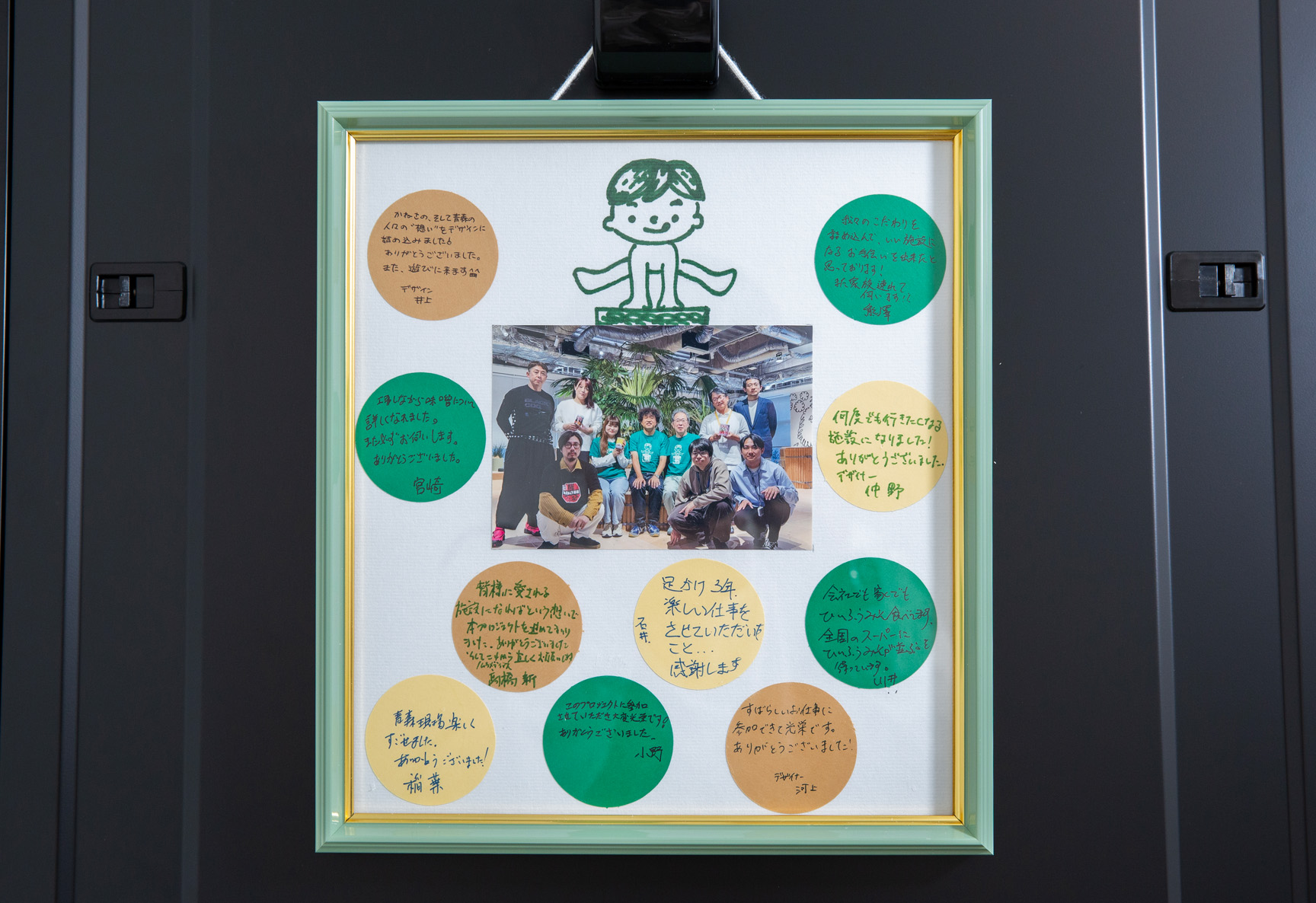
An autograph board with the members’ signatures. Above the group photo is Kanesa’s mascot character, “Kanesa Boy.”
Just before completion, Inoue stayed in Aomori for nearly three weeks to take part in the final finishing work. “Even if the design looks complete on drawings, you still have to place things in the actual space and check, together with the craftspeople, whether anything feels off, and whether anything could be unsafe. That’s what we did in the final checks,” she says. And after the facility was finished, something wonderful happened. “Mr. Furuhata told us he wanted the staff’s signatures. I’ve never been asked that before in my work, so I was surprised, and it made me genuinely happy. It felt like all the effort had been worth it,” says Inoue. The autograph board signed by the project members is still displayed in the experience center’s backrooms, almost like a building cornerstone plaque.
Kawai reflects, “I’m also from the country, so I was truly happy to support a company rooted in its community and dedicated to preserving its traditions, and I feel we had a great team on this project. We did not just build the facility and walk away; we designed and built the experience center while thinking about how Kanesa would operate it going forward.”
Looking ahead, Akitaya says, “Our first priority is to keep the factory running steadily, but we also want as many people as possible to visit the experience center. We want to continue using it as a place where people can truly understand granulated miso.” Furuhata adds with some hope, “We’re confident we make excellent products, so we want people to learn about Kanesa and granulated miso here. We would love to grow our fan base. If even more customers start choosing Kanesa products when they shop, we’d be very happy.”
Since the experience center opened, it has welcomed a wide range of visitors, including business partners, families, couples, and day-service groups, and going forward, it is also looking toward school field trips and more tourist visits. Around 40 cruise ships call at Aomori Port each year, so preparations are underway to attract overseas passengers. Each exhibit includes a QR code that lets visitors view explanations in multiple languages.
The Kanesa Granulated Miso Experience Center continues to grow as a place where local people connect, and as a destination that draws visitors from many places. It will continue sharing the tradition and innovation of Tsugaru miso, along with the unique appeal of Tsugaru itself, with audiences in Japan and around the world.
One of the game-style activities in the factory tour area lets visitors experience the “vacuum drying” step in miso production.
Panels and other displays clearly explain which steps each machine is responsible for in the production process.
At the shop corner attached to the café, visitors can also purchase products made with granulated miso.
In the 48-seat theater, visitors can enjoy the theme film created specifically for this experience center.
CREDIT
NOMURA MEDIAS Co., Ltd.
Account Producer: Shun Kawai
Planner: Taiji Ishii
Creative Director : Arata Takahashi
Designer : Hiromi Inoue
Product Director: Yuta Kumazawa, Harumasa Miyazaki, Satoshi Ono, Satoshi Inaba
Project Development : Takashi Sakamoto, Wataru Takada
Design Support: tunnel design Inc.
Production Support: TONGULLMAN Inc. IWASAKI CO., LTD. Spin Hoist Co.,Ltd. Mediaturge Inc. RFA digital brains Co., Ltd. Yamashin Kenso Co., LtdBrush Up Co., Ltd KOWA Co.,Ltd. Tsugaru Natural Indigo Dyeing Store
After understanding our clients’ ideas and analyzing the issues they face, we put forward wide-ranging ideas from concept creation through to detailed plans and content proposals.
With the right knowledge and judgment, we bring projects to fruition by managing production and construction with commitment to quality, safety, and the environment.
To provide experiences and productions that offer safety and peace of mind, we perform regular maintenance, inspections, repairs, and equipment replacement.
To maximize the impact of events, we plan and implement everything from creating spaces to attracting customers and providing customer service support.