
TOWNGATE CORE TOKYO 都SEEN
国内外の観光客の期待に応える、 ショップ運営
- Store Operation & Product Development
- Souvenir Shop Planning & Operation
- Original Product/Museum Goods Development
Post-corona
From inbound research
Product development inspired by
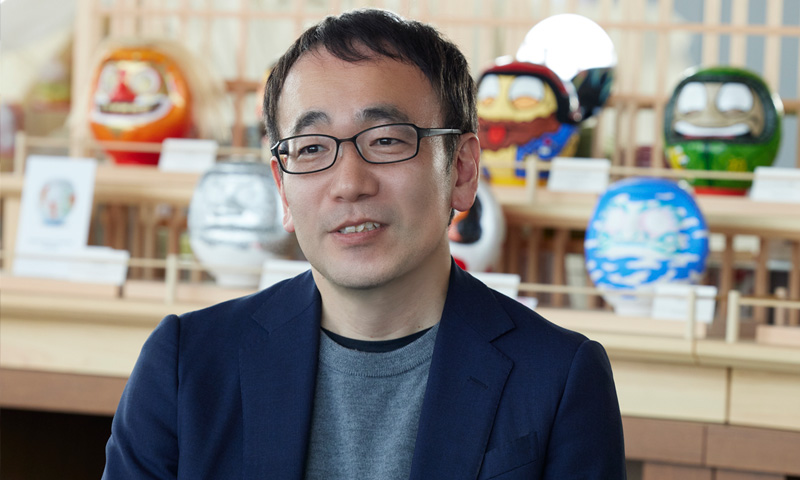
On the 45th floor of the Tokyo Metropolitan Government Building, the shop & café "TOWNGATE CORE TOKYO Miyako SEEN" (hereinafter "Miyako SEEN"), an observation floor offering panoramic views of Tokyo, is currently attracting attention among foreign tourists. Although it opened in 2019 and became a hot topic, it soon had to temporarily close due to the impact of the COVID-19 pandemic. When business resumed in October 2022, the staff noticed that the customer base had changed from before.
Previously, there were many tourists from Asian countries, especially China, but after resuming operations, the proportion of visitors from Europe and the United States has clearly increased. Has the change in demographics meant that what users seek from this store has also changed? Yoshikazu Onuma, the account producer in charge of store operations, spoke about the challenges at the time: "We have always consciously stocked a large number of products for inbound tourists, but we have come to want to provide products that better fit our customers." What is necessary to remain a shop that is unique to NOMURA MEDIAS, rather than just an ordinary souvenir shop, is to know the customers in front of us better. Thus, the inbound research project was launched in the summer of 2023.
The research was conducted by commissioning a questionnaire survey company. Foreign tourists who actually visited Miyako SEEN were approached directly, and interviews were conducted in English. The questionnaire items covered a wide range of topics, from background information such as the number of times they have visited Japan and where they came from, to satisfaction levels with Miyako SEEN regarding product lineup and pricing, what kinds of places they visited, and where they plan to go next, allowing us to speak with a total of about 360 people.
Satisfaction with Miyako SEEN is high, with many visitors commenting that "admission is free," "it is clean and comfortable," and "the night view is beautiful," leading to word-of-mouth spread among tourists.
It has also become clear that while inbound tourists from Asian regions such as China and Taiwan frequently use Kansai International Airport due to the large number of arriving and departing flights, tourists visiting from English-speaking regions such as Europe, North America, and Australia tend to access Tokyo via Narita Airport. While Asian tourists enjoy sightseeing in lively groups with friends and family, tourists from Western regions seem to prefer enjoying themselves quietly in small groups, such as couples. Through research, the background behind the shift in visitor demographics emerges.
A major realization was the feedback, "Tokyo SEEN's products are cheaper than souvenir shops in Asakusa." While this was positively perceived as reasonable, it also implied that they were expecting a slightly higher price range. Preferred items were those with traditional Japanese motifs such as Mt. Fuji and cherry blossoms. We also learned that inbound tourism often involves long stays of several months, and that heavy or bulky luggage tends to be avoided. Using this valuable hearing data as a reference, a new product development project was initiated within NOMURA MEDIAS.
-
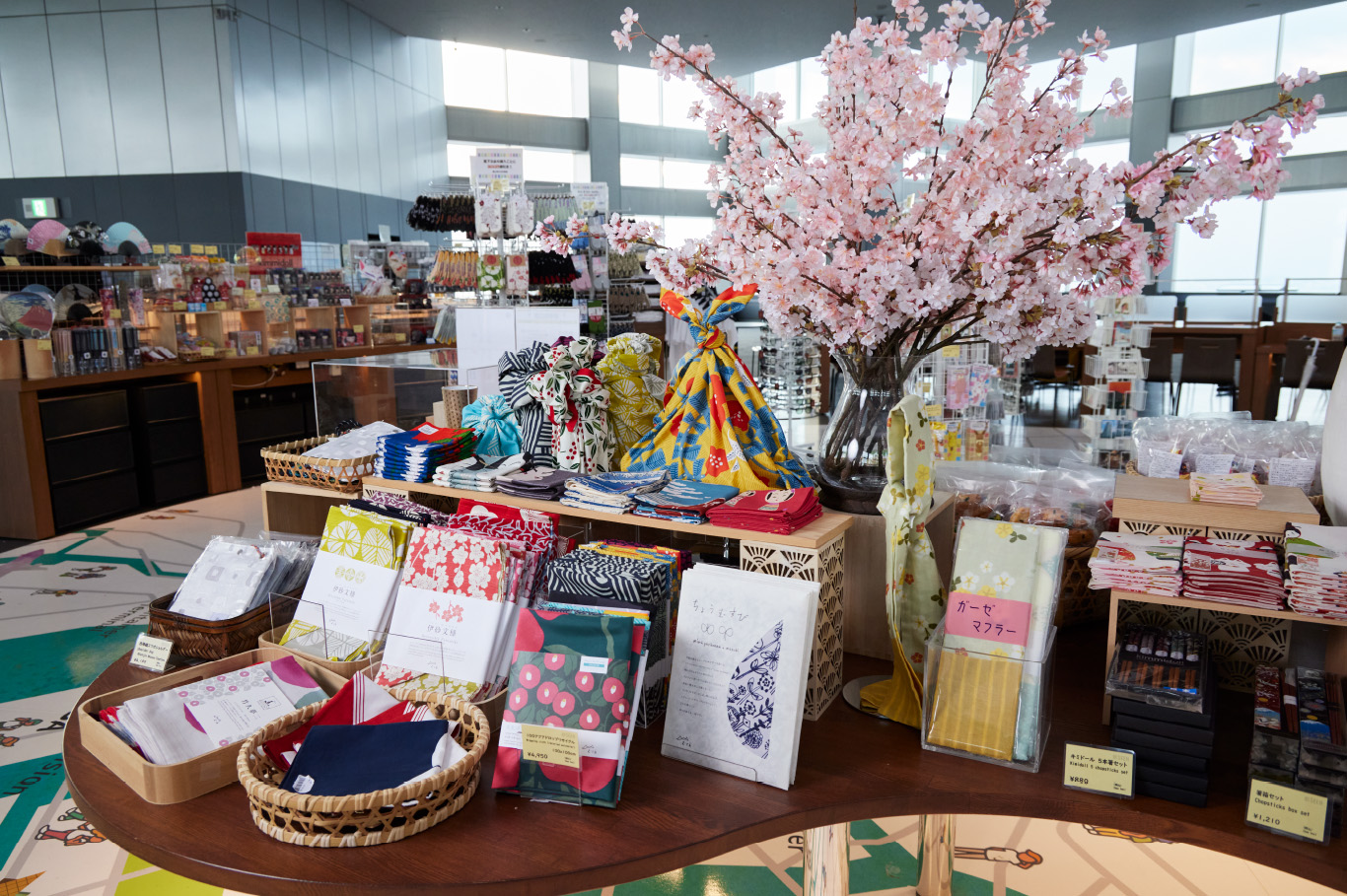
Seasonal product display corner -
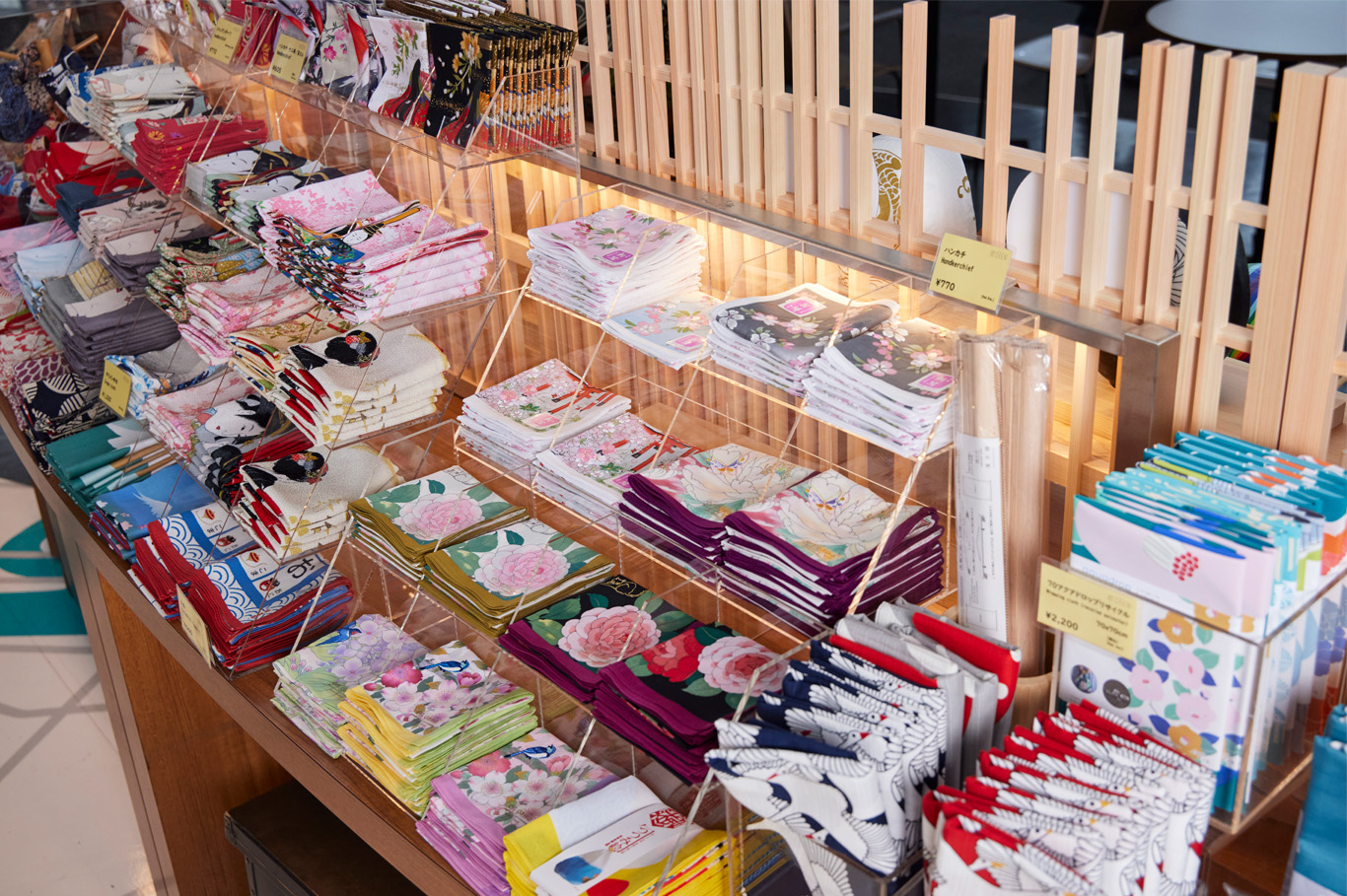
Products for foreign tourists
Test marketing with Art Daruma
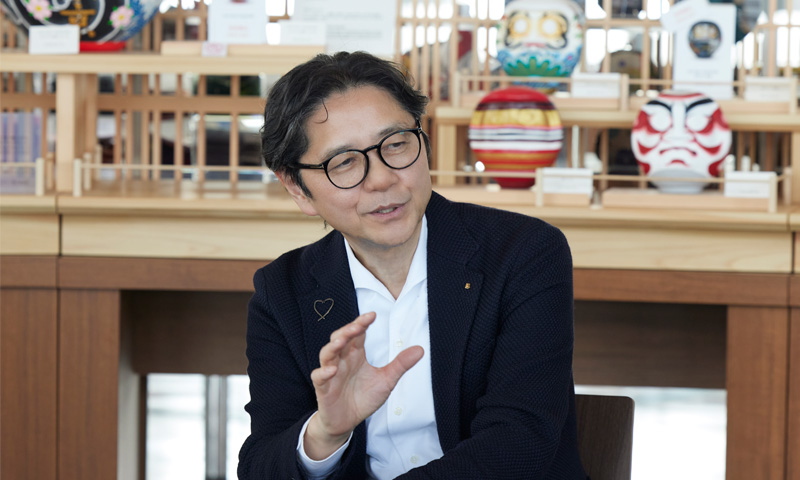
Examples of developing high-priced products targeting inbound tourists already exist in museum shops such as the Suntory Museum of Art and the Mitsui Memorial Museum. Several sets of tea utensils priced at over 100,000 yen have been sold, and building block-like objects made of domestic wood have even sold for hundreds of thousands of yen. Drawing on that past experience, senior advisor Masahiro Nakagawa explains the intention behind exploring the high-priced segment: "Regardless of whether it is old or new, selling high-quality items at appropriate prices also contributes to store branding."
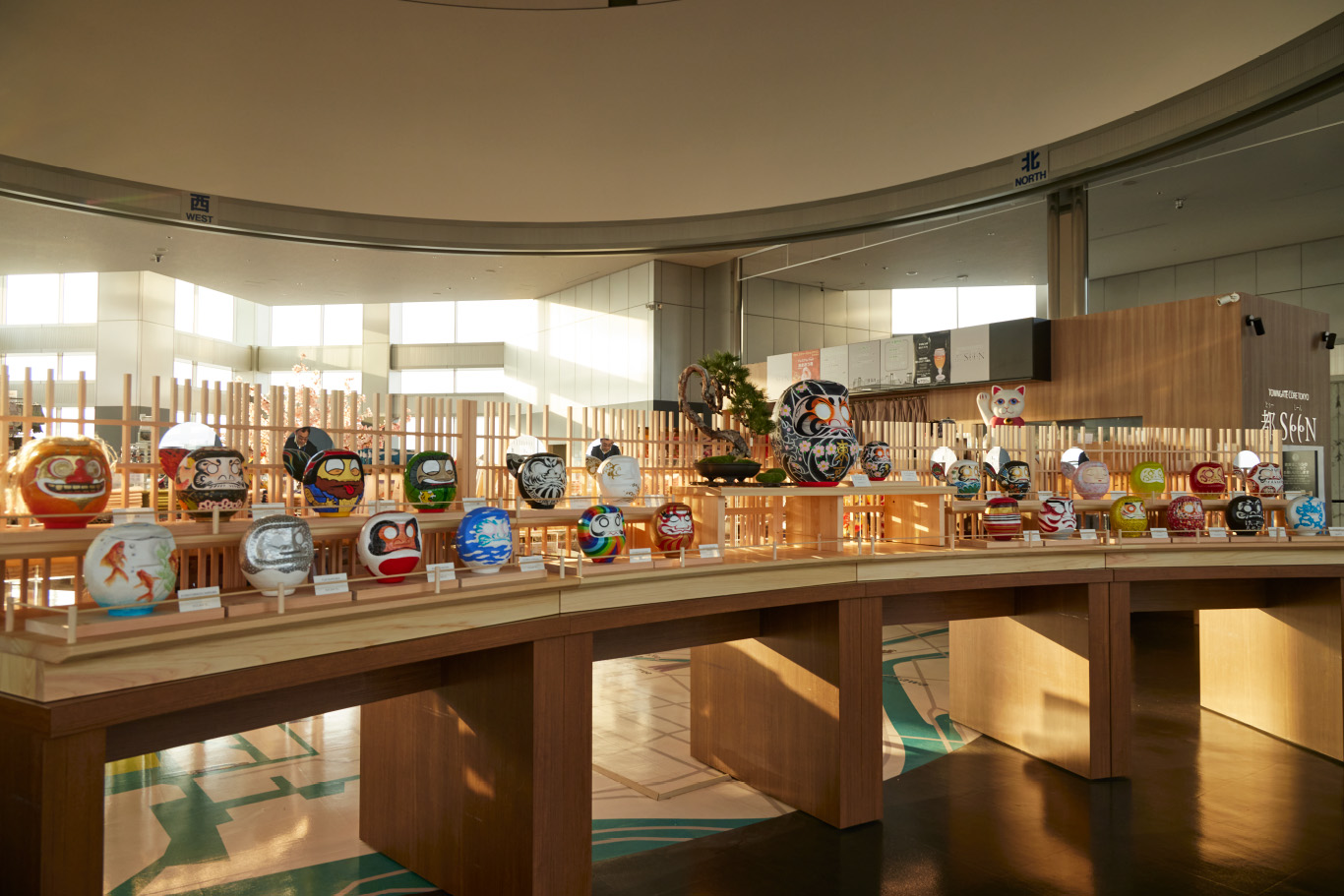
Traditional products that are easy to take home and aim for a high unit price—actually, there were several candidates. For example, beckoning cats are already in the existing lineup and sell well. However, placing them now would not show individuality. That is why the spotlight fell on Daruma dolls, which are light due to papier-mâché and colored with various hues. The store name "Miyako SEEN" is a play on words combining being in the city center (Miyako) and "seen," meaning to see or sightsee. He thought that the reality of seeing with one's own eyes might connect to the eyes of the Daruma, and that original Daruma dolls would be perfect as a souvenir typical of Miyako SEEN.
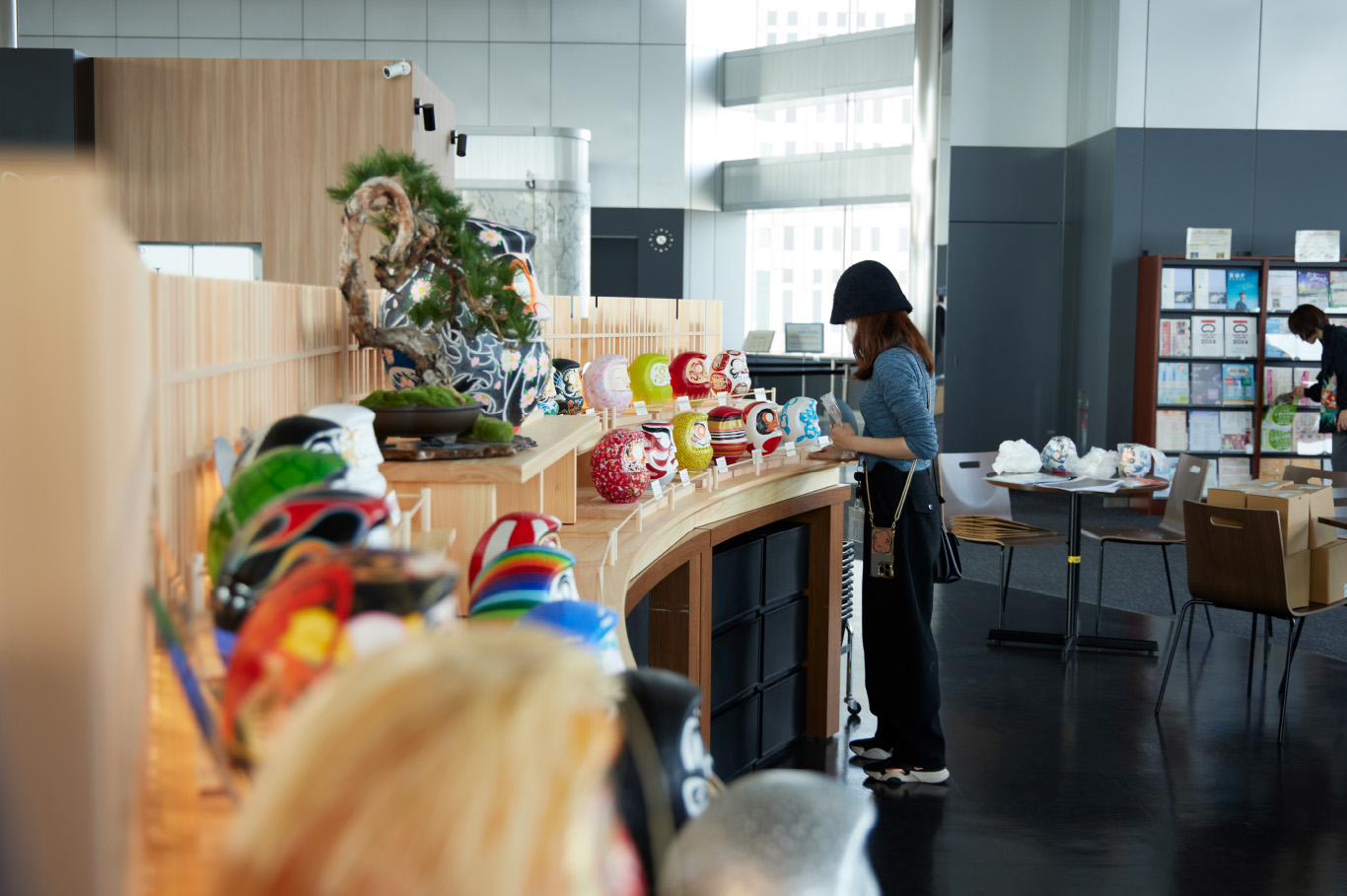
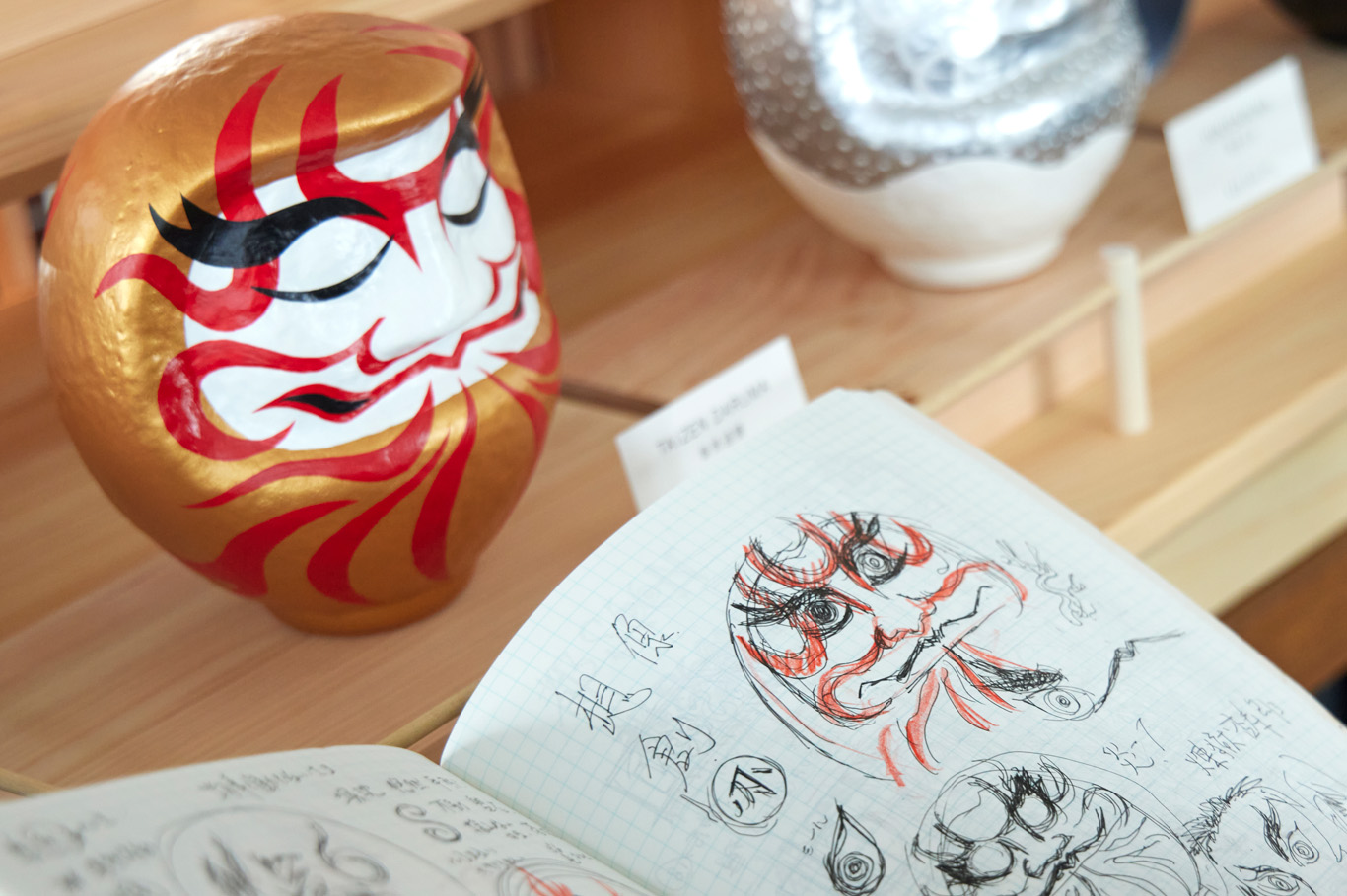
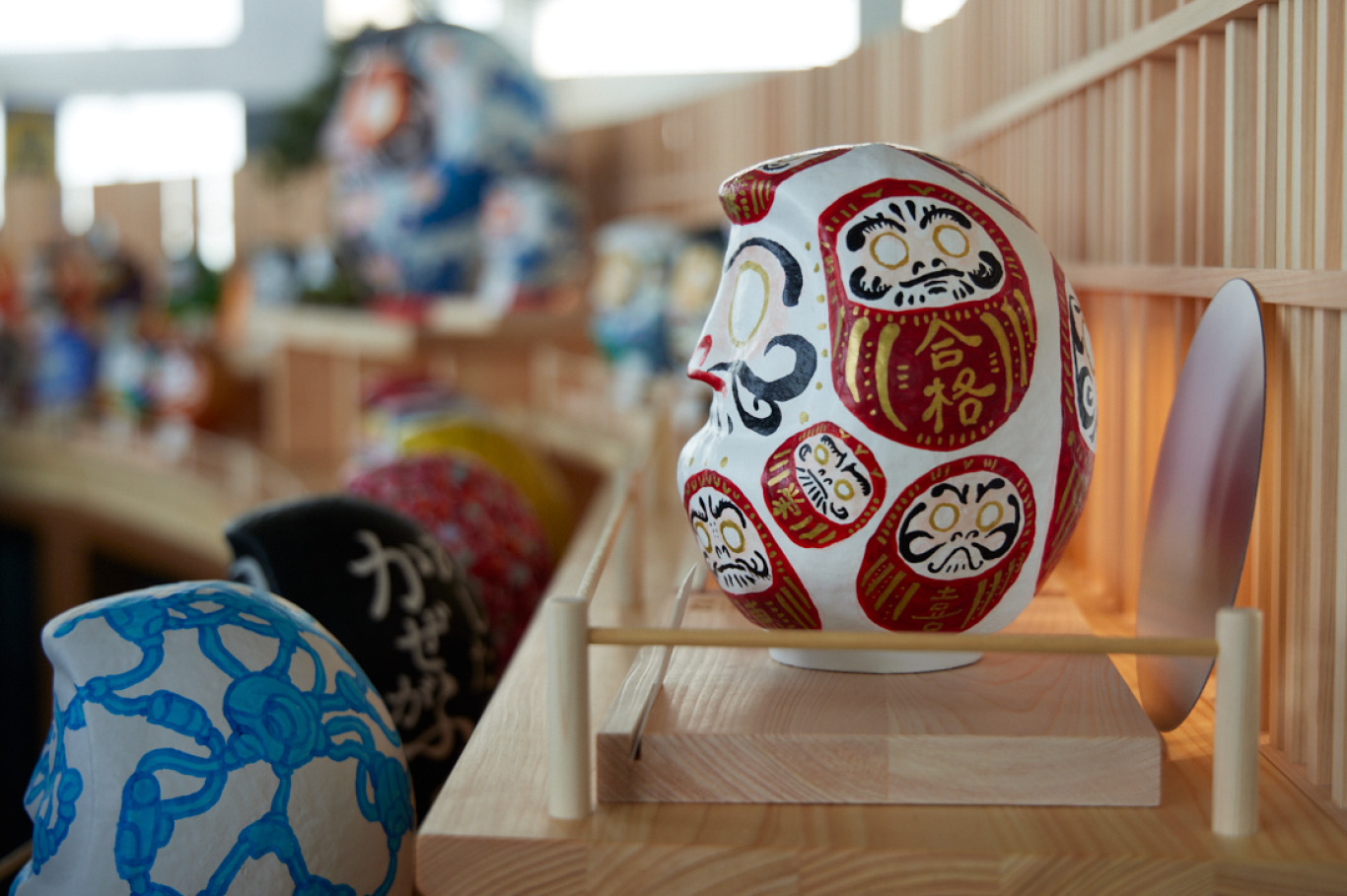
When Nakagawa, who planned the project as a test marketing initiative, explained the purpose, about 20 artists and designers participated in the project. The Daruma dolls decorated with their respective themes were named "Art Daruma" and displayed at Miyako SEEN.
-
Exhibition installation in progress -
Calm Daruma -
AmbitiousDaruma
Onuma can personally feel the response to this project. "It has become quite a hot topic. Just the other day, one of the participating designers asked me, 'Did the Daruma dolls sell?'" he revealed happily.
Daruma dolls come in a wide variety, from Japanese traditional patterns, modern patterns, and painting-like depictions to abstract designs, and some products are already sold out. There are also pop-style Daruma dolls imitating characters, and the original worldview created by deviating from the conventional classical image attracts viewers. Nakagawa, speaking half-jokingly, said, 'I put "art" in the title because I wanted it to develop freely. If positioned as a craft, it is hard to gain value unless it is precise. This time, works gathered that are free, almost too free. It might have been nice if they leaned a bit more toward traditional patterns with inbound tourism in mind,' as he proudly gazed at the line of unique Daruma dolls.
Prices range from the 10,000-yen to the 30,000-yen range, with slightly larger works priced even higher. While there might be concerns that children could touch or break them, they are simply enclosed by wooden fences rather than being placed in acrylic cases. The sight of visitors enjoying the art daruma dolls in their own way—approaching them to peer closely at the details or sitting in the lounge seating to admire the gorgeous overall view—is becoming a new everyday scene at Miyako SEEN.
Take home memories
As a "media"
Revitalizing spaces
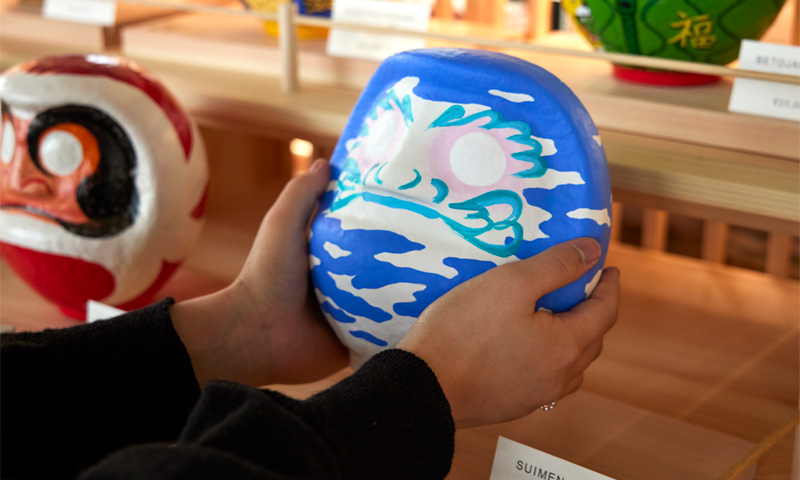
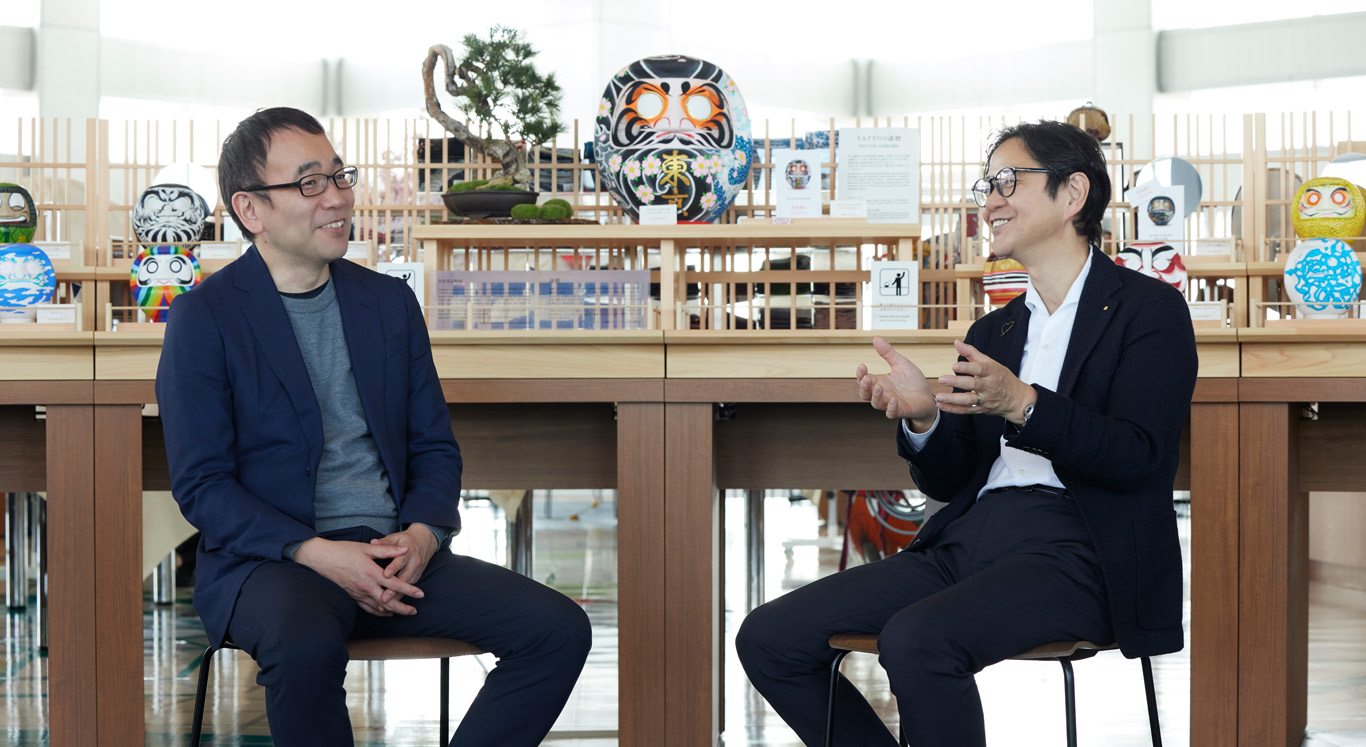
NOMURA MEDIAS has so far developed products by "creating things based on the theme of the shop." Many people may have purchased postcards, clear files, and other items inspired by exhibits at museum shops after visiting art exhibitions. At "Tokyo SEEN," Art Daruma fulfills that role. Memories of visiting the Tokyo Metropolitan Government Building, the recollection of viewing Tokyo from above. It serves the role of allowing visitors to take home the emotions and joy gained from the spatial experience. "Daruma are objects into which one entrusts their thoughts and wishes by filling in the eyes. At that time, one's feelings are projected onto it, and when taken home, communication in the form of souvenir stories is born. In that sense, can Daruma be called a medium?" says Nakagawa.
He says that in the future, they are also considering mini-workshops where tourists themselves paint small Daruma dolls. 'At first, we provided value by selling products, but next we want to provide an experience where customers themselves add added value and take home a memory of Japan. We are in the position of a souvenir shop, but I think various possibilities can be considered,' he says, feeling confident about Daruma dolls. Although this project also had a strong aspect of test marketing, it made it possible to estimate the production line. They are moving into brand formation in earnest, and if sales are good, they are looking ahead to expansion into other stores.
In addition, Miyako SEEN is equipped with cafe tables and bench seats, and visitors can often be seen spreading out maps to discuss where to go next. The research also revealed many requests such as, "We want something that helps us understand which neighborhoods are interesting and where we can buy what." To address this, a contemporary emaki (picture scroll) depicting landmarks of Tokyo and Japan was created. While maps used just for checking destinations have evolved through digital tools like apps, nothing else in the modern era offers an overall view in a panoramic format like an emaki. It was produced as tenugui (hand towels) and postcards available for purchase as souvenirs, and a large-scale emaki was also displayed in the elevator hall as a photo spot for commemorative pictures.
"In product development, we always value coordination and affinity with the location," says Onuma, expressing high hopes for the emaki (picture scrolls) as well: "The emaki have a strong affinity with the exhibition floor overlooking the Tokyo skyline, as well as with inbound tourists seeking Japanese-style products. As an item you can only get at this place and that reminds you of having come here, I hope it will be something that evokes memories after customers take it home as a souvenir."
-
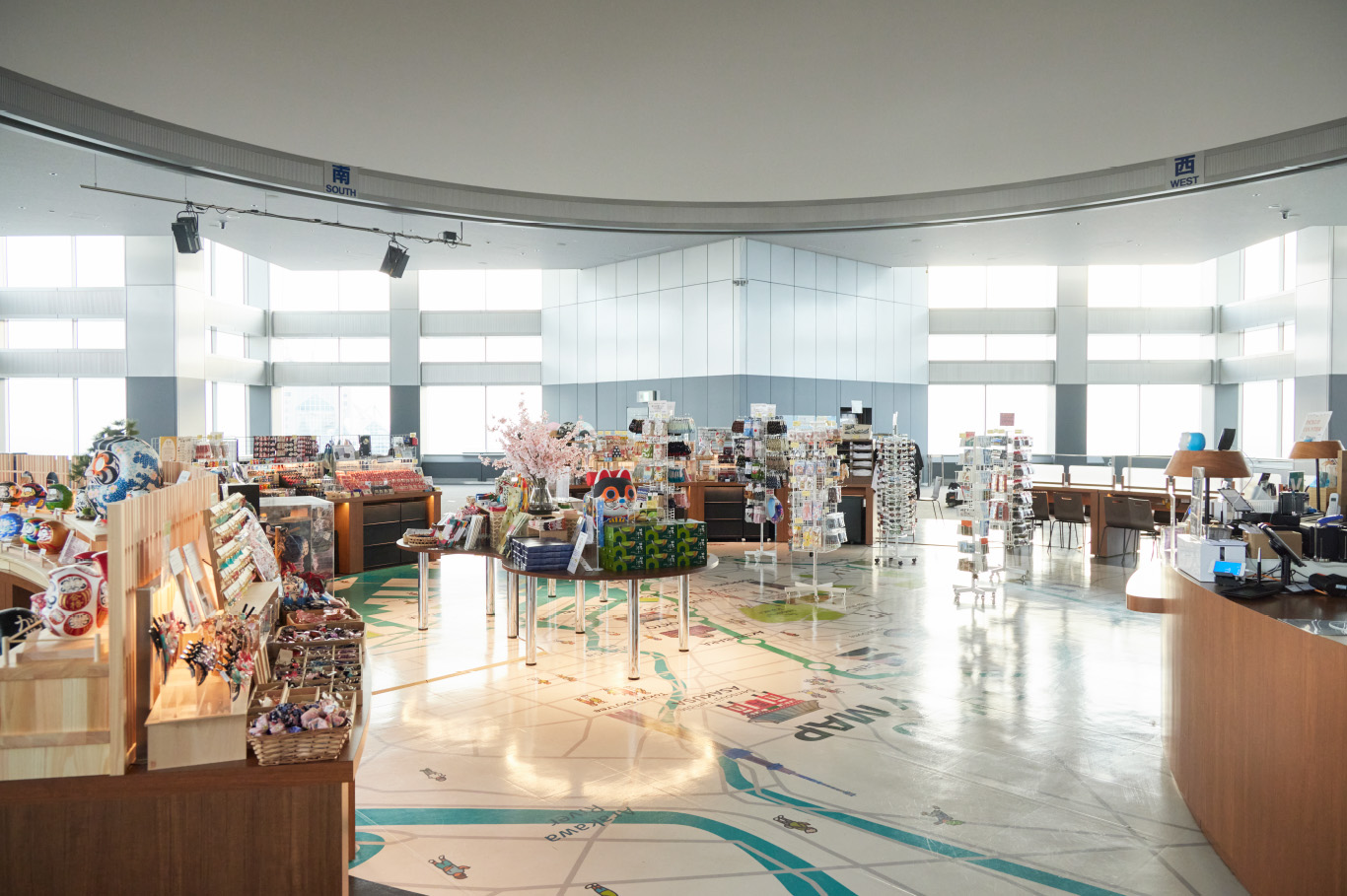
Inside the store -
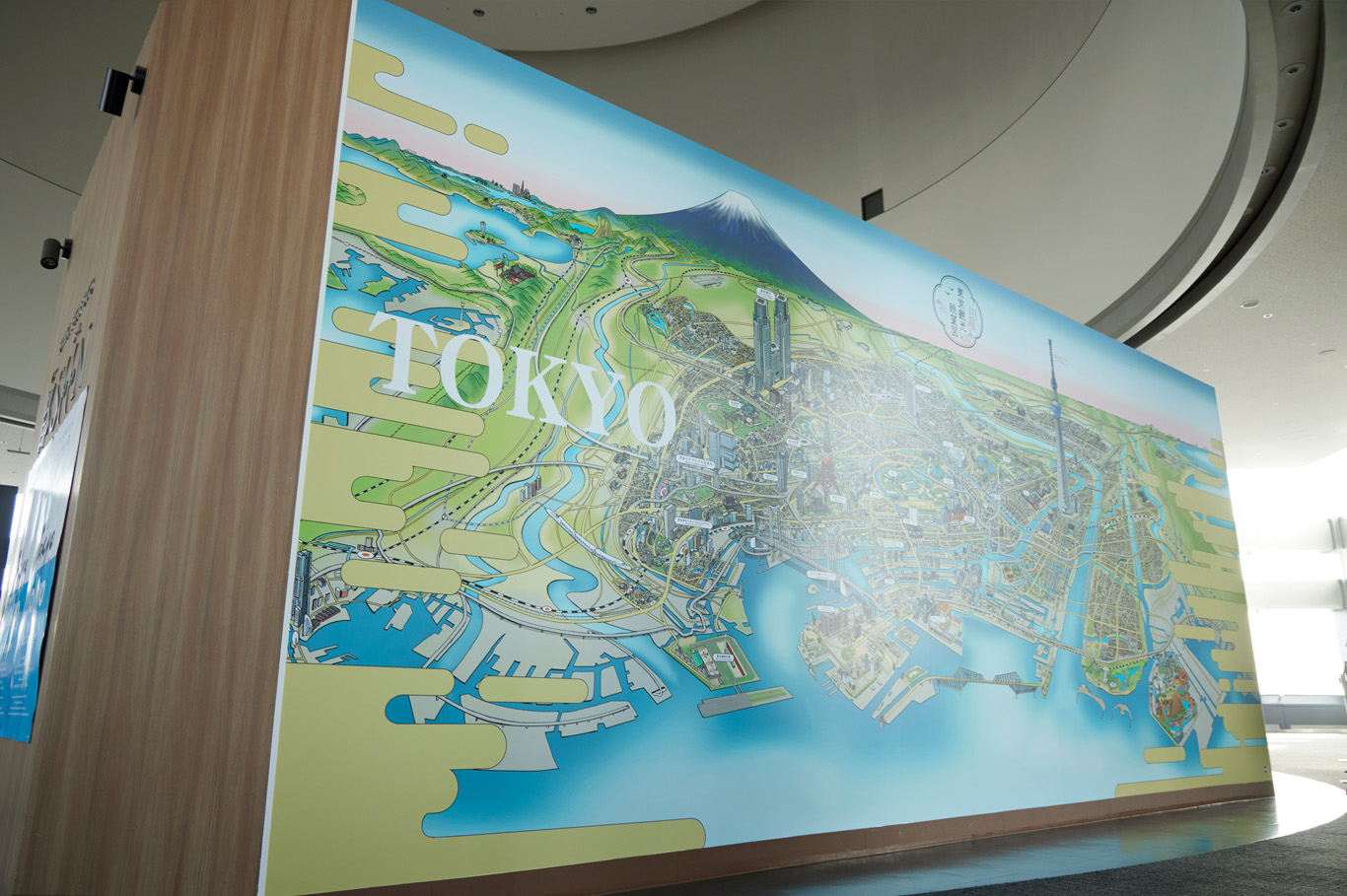
Tokyo Sightseeing Map -
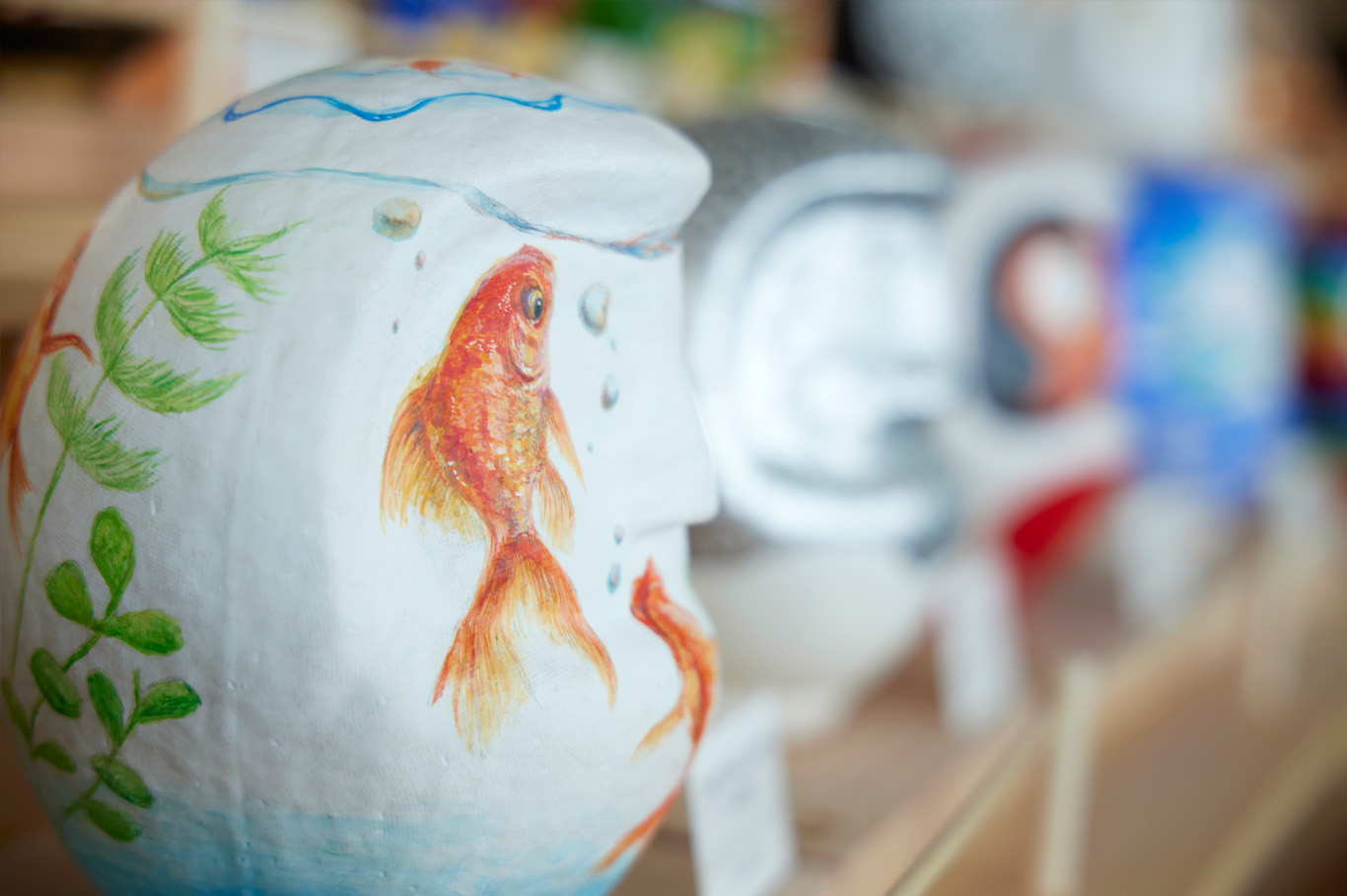
Goldfish bowl Daruma -
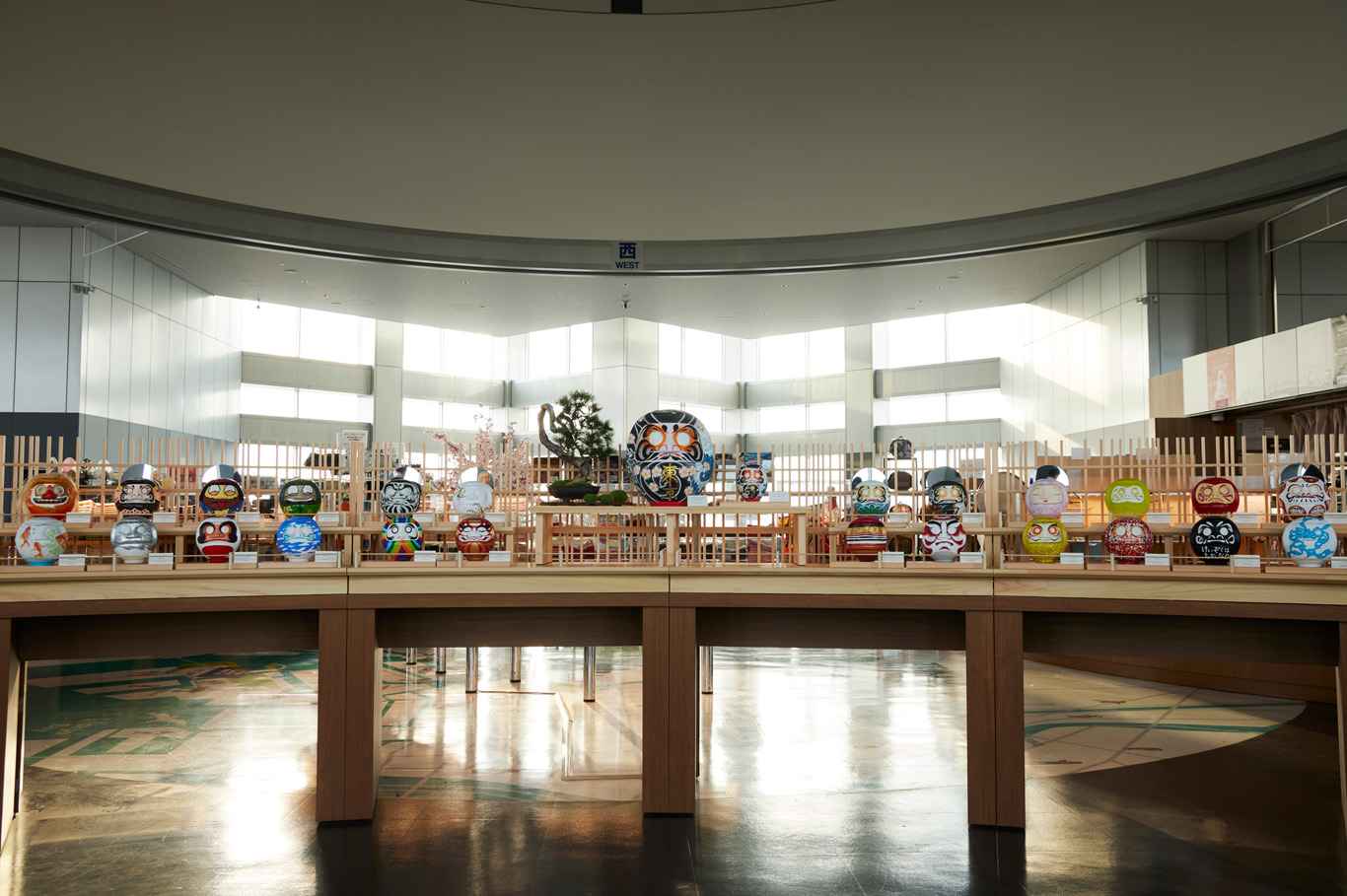
Art Daruma corner
- Project Member
-
- Store manager
- Yuki Saito
- Operation
- Yoshikazu Onuma
- Senior Advisor
- Masahiro Nakagawa
- Solution
-
- Engineering
- Design
- Production & Construction
- Product development
- Store management
- Project Year
- 2019.4-