
Isezaki Mall 1・2St.
16年の時を超えて蘇る、 からくり時計と街のにぎわい。 ノムラメディアスが紡ぐ技術と思い出
- Other Corporations & Organizations
- Three-dimensional Models & Automaton Clocks
Protecting the Japanese culture
known as mechanical clocks

Mechanical clocks have long been familiar in Japan. Combining functions to perform puppet shows and play music, clocks with these features captured the hearts of many common people and became integrated into daily life. Even now, as the times have shifted from analog to digital, mechanical clocks displayed at stations and department stores continue to tick away the time while watching over the people coming and going.
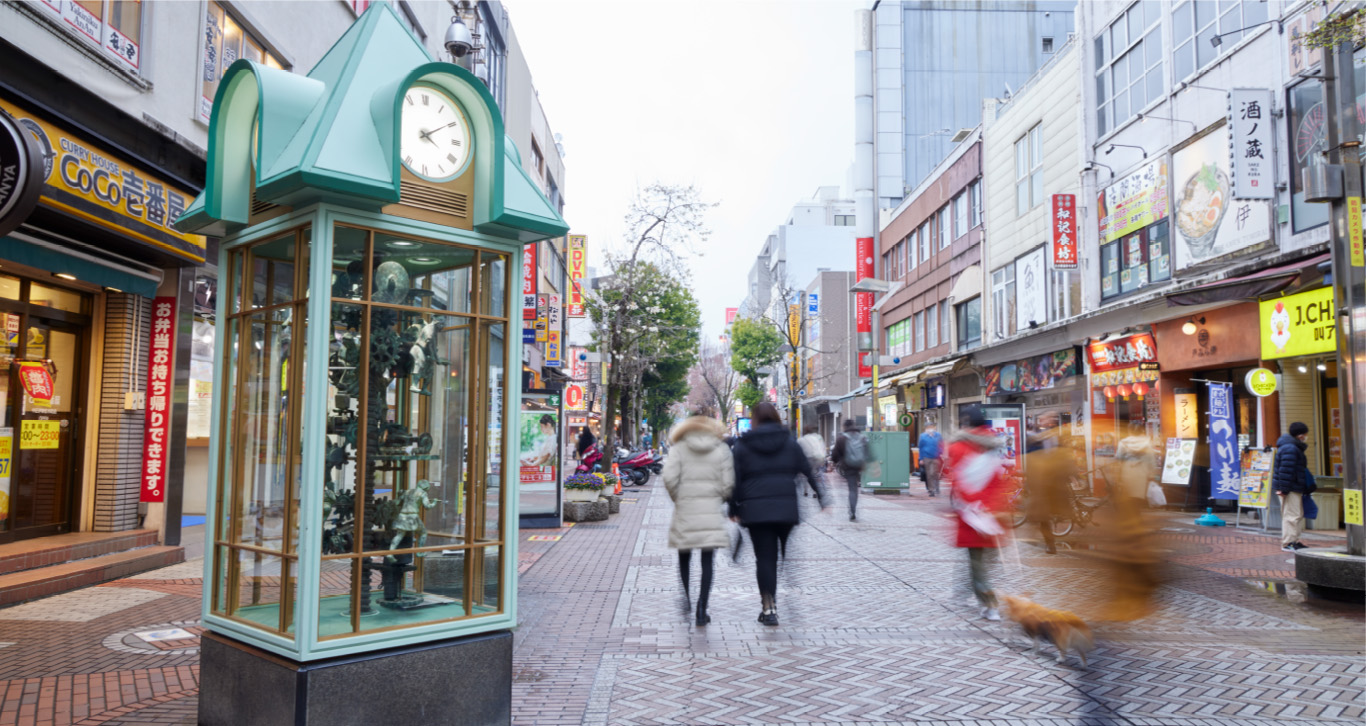
In Naka Ward, Yokohama City, Kanagawa Prefecture, Isezaki Mall 1・2St. (Isezakicho 1 and 2-chome Shopping District) also features a mechanical puppet clock that has been loved for many years as a symbol of the town.
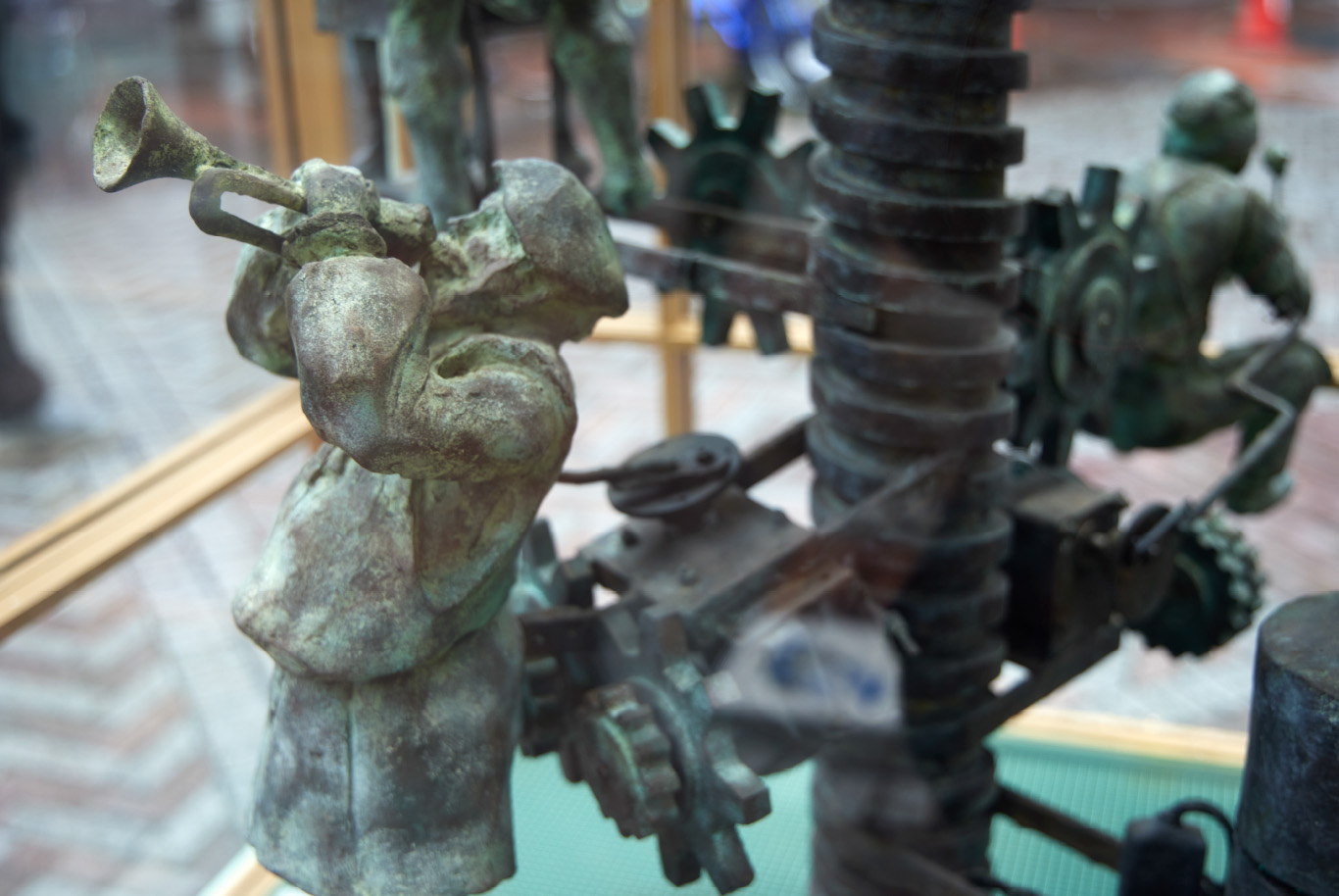
Bronze-style figures depicting nine medieval European townspeople, such as a priest ringing a bell, a farm woman sifting, a baker baking bread, and a blacksmith striking iron, rotate to mournful Baroque-style music. As a pioneer of mechanical puppet clocks, which were still rare in Japan at the time, it has kept time. Although it once broke down, the mechanical puppet clock started ticking time again for the first time in 16 years on June 10, 2021, 'Time Memorial Day'. NOMURA MEDIAS (formerly Nomura Techno) was responsible for the restoration and subsequent maintenance. Looking back with Mr. Takashi Ishida, Managing Director of Isezaki Mall 1・2St., on how the town symbol loved across generations was revived.
Isezaki Mall 1・2St. used to be a shopping street with an arcade where cars could pass, but in 1978, it became an open mall during an urban redevelopment project. At that time, NOMURA Co., Ltd. produced the mechanical puppet clock as a commemorative monument. However, it broke down around 2005, and with no prospect of repair, it remained as it was for 16 years. However, a turning point came during the COVID-19 pandemic. The mall used to hold events such as street performances and festivals about 250 times a year, but events could no longer be held due to the pandemic. Mr. Haruo Hiroi (then Chairman) proposed using those funds to restore the mechanical puppet clock and revive the bustle of the town.
NOMURA MEDIAS's parent company, Nomura Kougeisha, has been producing mechanical doll clocks for about 50 years, and has also worked on the mechanical doll clocks at Yurakucho Marion, which sparked the mechanical clock boom, and various Sogo stores. In addition, NOMURA MEDIAS handles their maintenance and upkeep. Among them, the mechanical doll clock at Isezaki Mall 1st & 2nd Streets was the memorable first mechanical clock created by Nomura Kougeisha, which made everyone even more enthusiastic about its restoration.
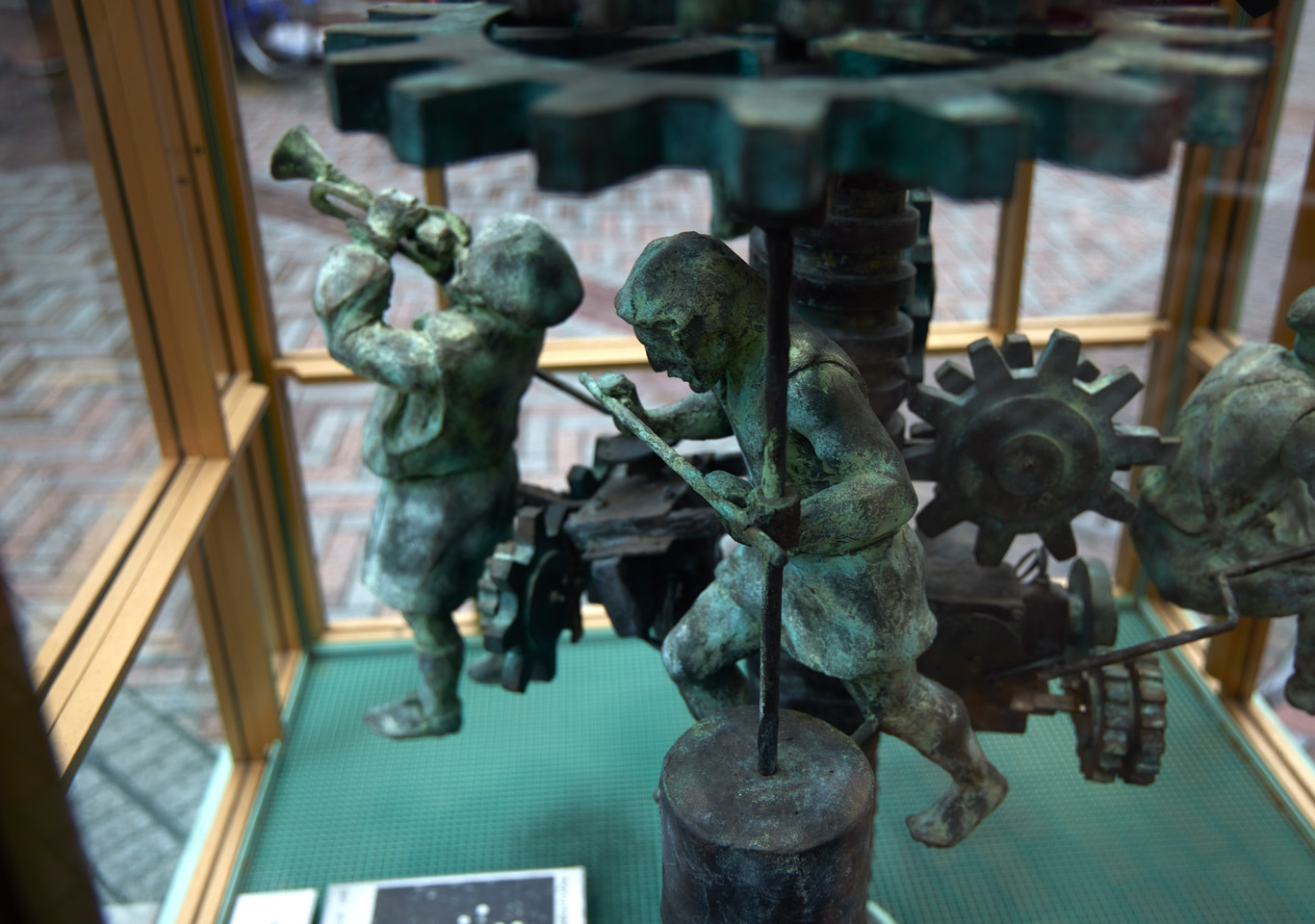
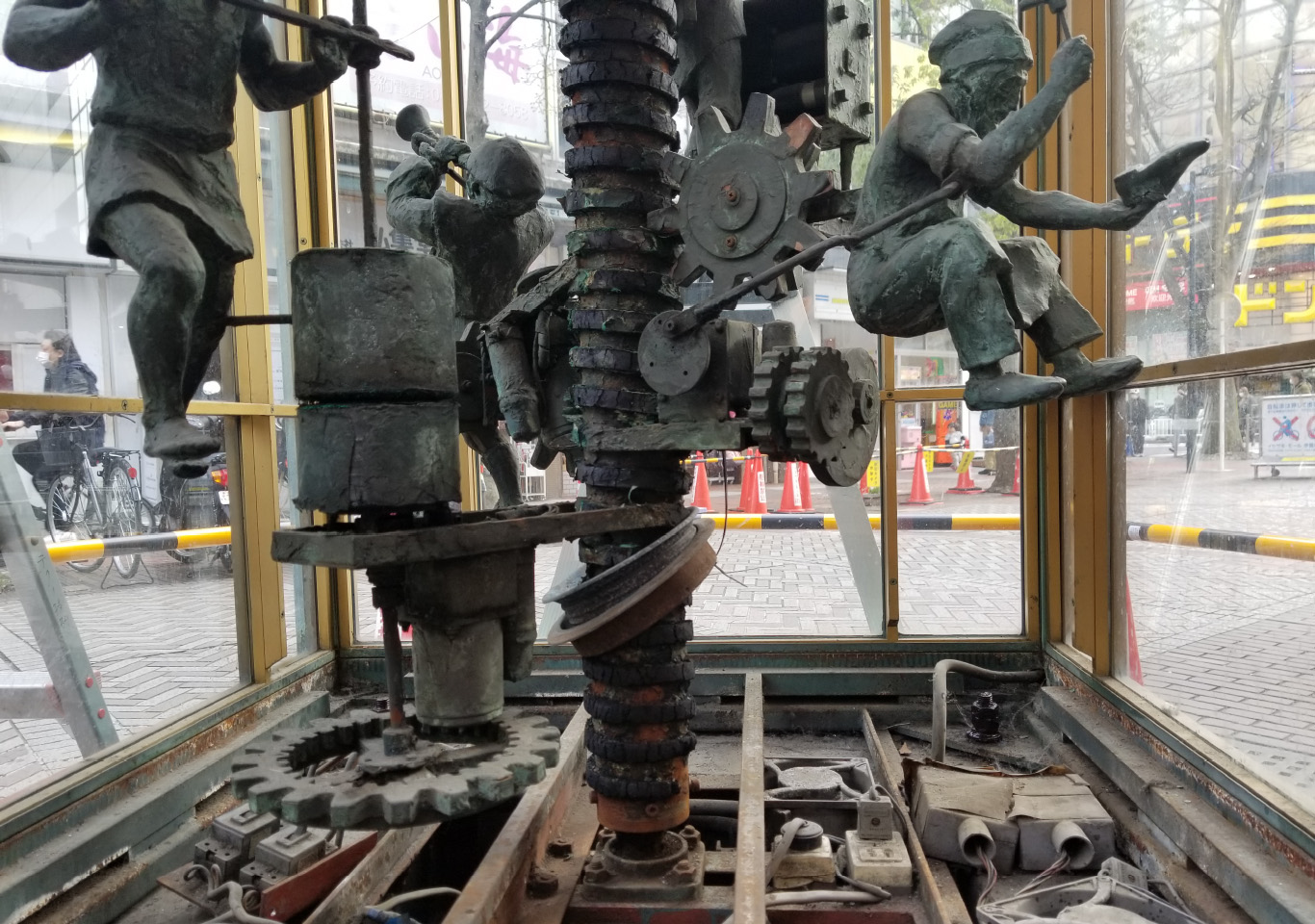
In restoring the automaton clock, there was a desire to return it as close as possible to its original state at the time of creation. While the "form," such as the exterior and parts, remained as it was, the challenges were the "color" and "sound." "This was not the era of digitalization like today, so the blueprints were not preserved, and only a few sketches from the time of creation remained. There was also deterioration over time, and the color had been repainted several times, so the original color was unknown. Furthermore, the sound source tape was also missing. The music was composed by Mr. Yutaka Masuda, a famous local composer, but he had already passed away," recalls Technical Director Keiji Kobayashi about the situation at the time.
The music played by the mechanical doll clock lasts for as long as three minutes. Mr. Ishida, who used to work at a department store formerly located in Isezaki Mall 1st & 2nd Streets, says he can hum part of the melody even without the audio source, but complete restoration is difficult with just that.
Therefore, Kobayashi tracked down retired Nomura Kougeisha staff members and had them paint colors together at the factory to piece their memories back together. They also tried every possible means to recreate the original colors, such as reviewing footage of Isezaki Mall 1st & 2nd Streets used in TV dramas broadcast at the time. Regarding the audio source, they searched the Isezaki Mall 1st & 2nd Streets office and managed to find a single, dust-covered backup tape, which was digitized and successfully restored.
Mr. Ishida smiled broadly and said, "Near completion, I visited the factory and was amazed by the passion of everyone, especially Mr. Kobayashi, asking 'Are they really going this far?' We simply requested a restoration, but they paid attention to colors, shapes, and even minute movements. I believe it was only because the miracle of discovering the audio tape coincided with NOMURA MEDIAS's passion that we were able to recreate the mechanical doll clock from that era."
Aiming for Aging Evolution,
NOMURA MEDIAS Maintenance

Because the mechanical doll clock blends seamlessly into the town, its restoration does not cause people to gather solely to watch it, nor does it elicit loud cheers. However, once the music begins to play, one repeatedly sees people turning around, stopping, and listening intently.
Isezaki Mall 1 & 2St. also serves as a school route for elementary and junior high school students, and we even heard comments like "We're so glad it was restored" from people in their 20s who had been listening to the chimes of the mechanical puppet clock since they were elementary school students. "The mechanical puppet clock has left a lasting impression in the hearts of local residents through its sound, and it will surely continue to be a treasure of Isezakicho," says Mr. Ishida.
Kobayashi looks back on episodes shared by local residents.
'During the restoration process, it became clear to us how much the local community cherishes the mechanical doll clock.'
He recalls a memorable moment when, while opening the doors of the mechanical doll clock to investigate it for restoration, a passerby regretfully called out, 'Is it finally being removed?' but was overjoyed upon hearing that it was being repaired to start moving again.
'After the restoration, an elderly person gazed affectionately at the mechanical doll clock and fondly talked about memories from the past.'
Through maintenance, they grasped the community's feelings toward the mechanical doll clock and successfully revived the vibrancy of the town.
-
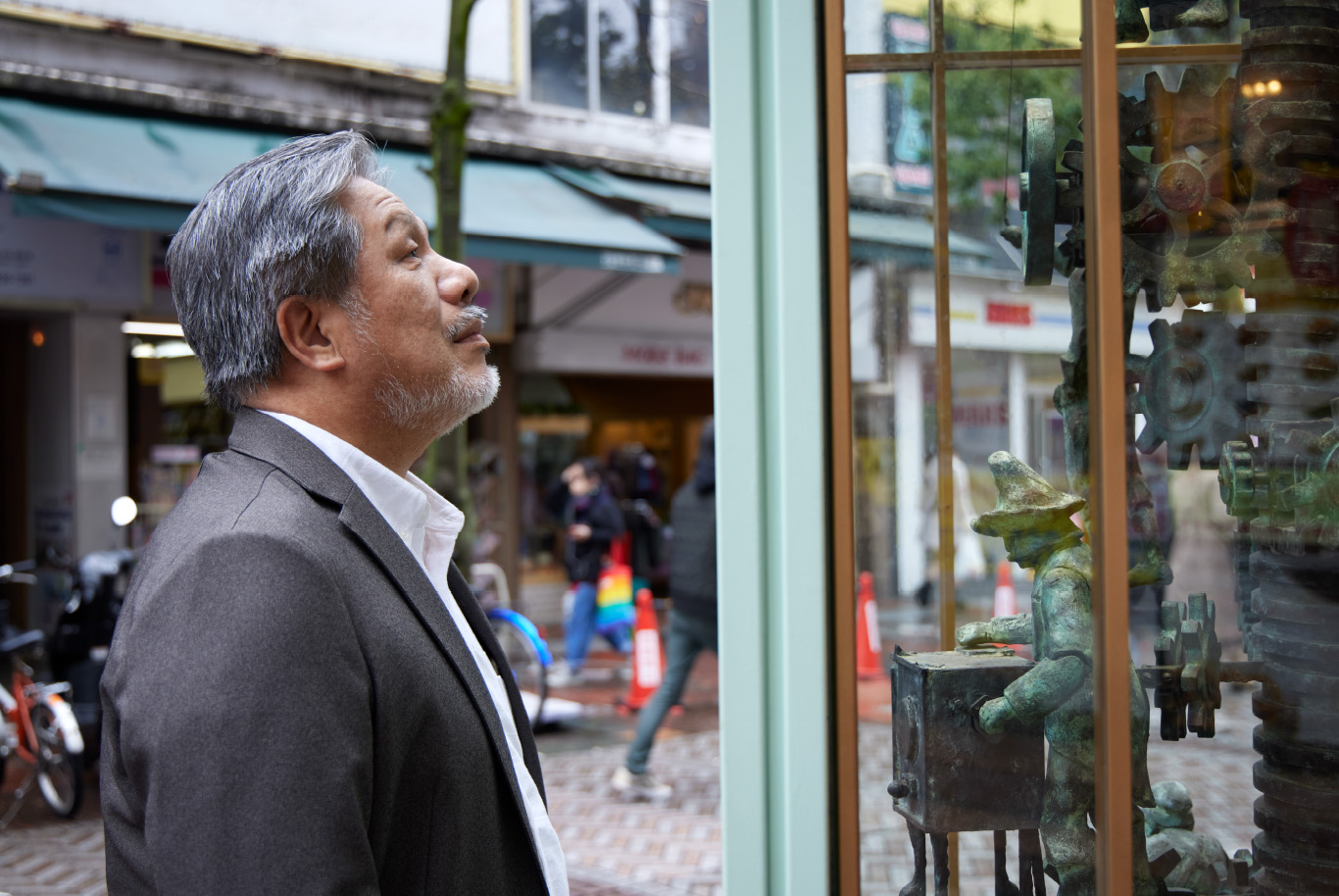
Kobayashi gazing at the mechanical clock -
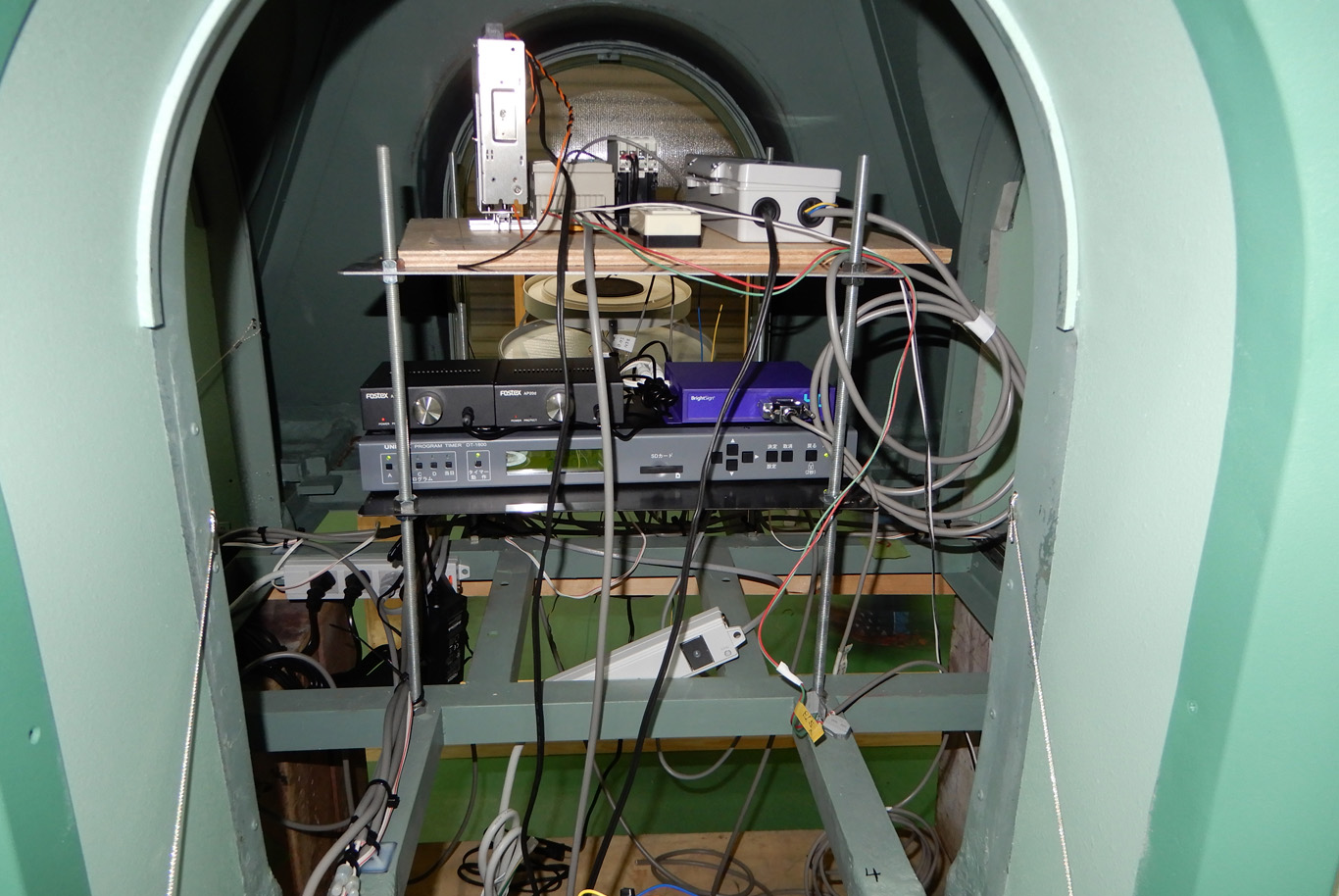
Introducing the latest audio-visual equipment -
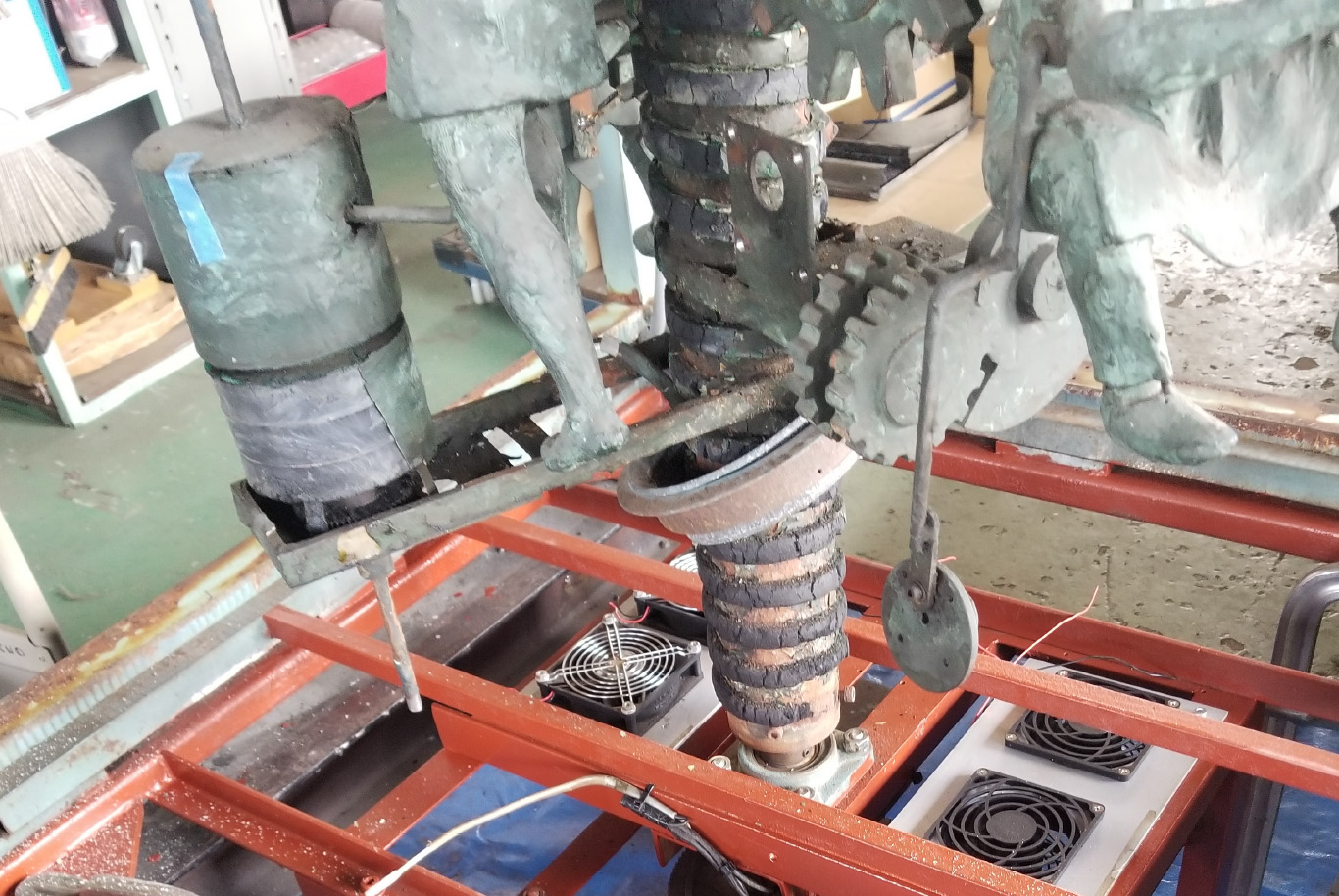
Scene from the factory
To continue bringing vibrancy to the town, NOMURA MEDIAS values the concept of "evolution over time." While the visible parts of this restoration inherit the original components, we proposed incorporating new technologies into the unseen internal mechanisms. Before the restoration, the automaton clock was managed by a control unit in an office via underground cables. However, with technological advancements, the restored version allows the unit to be housed within the monument itself and has been updated to a radio-controlled clock that automatically corrects errors by receiving standard radio waves. Furthermore, the low-durability audio tapes have been digitized and replaced with playback via a media player instead of a laser disc player. "In most cases, the period of maintenance is longer than the period of creation," says Account Producer Daisuke Ima. This proposal carefully considered what to inherit and what to renew, ensuring the clock remains a treasure of the town for the next 10, 20 years and beyond. "Thanks to the facility managers who allocate budgets and spare no effort in maintenance, we are able to continue our upkeep."
Driven by the client's passion and history regarding what is to be restored, combined with NOMURA MEDIAS' passion, technology, and ideas to capture and shape them, the mechanical puppet clock, beloved by the city, will continue to be maintained into the future.
Since its restoration in 2021, the mechanical doll clock has undergone maintenance inspections once a year. Mr. Ishida praises the high quality of the maintenance, saying, "Music plays every 30 minutes from 10:00 a.m. to 9:00 p.m. every day. It's amazing that it hasn't broken down despite 3-minute songs playing 22 times a day. It makes me wonder if they are secretly doing maintenance without us knowing."

Interweaving the feelings of the city
and its people, leaving them for the future
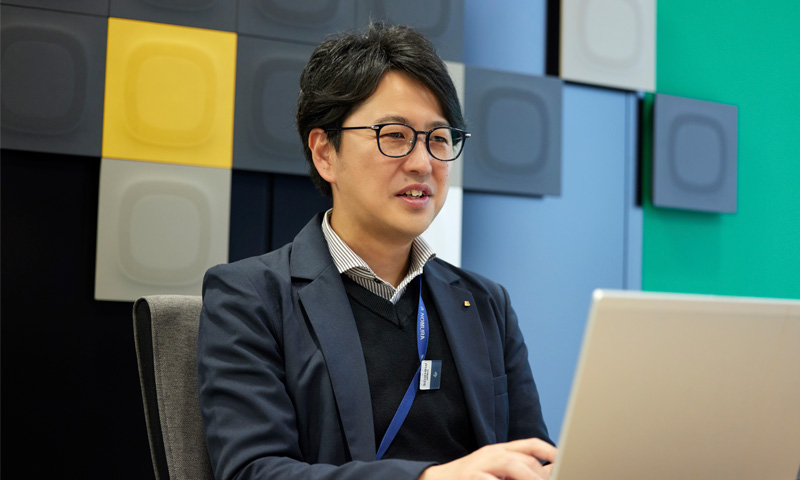
Kobayashi says, "The big difference between maintenance and creating something new is whether the actual users or viewers are right in front of you." Since maintenance involves people who are already using and viewing it, it is maintained while making changes so that it becomes the best possible form for them. For this mechanical puppet clock, restoration and maintenance were carried out with the determination that what didn't need to be changed must never be changed.
Recent exhibitions mostly utilize digital technology, and those using mechanical devices, like the mechanical puppet clock, are on a downward trend.
Many mechanical clocks exist in the world that are no longer functioning, but the number of restored automaton clocks is still small. While cost is a factor in some cases, Kobayashi cites another reason: "Immediately after creation, they are filled with the intentions and feelings of us creators. However, once they are delivered to the client and start moving, they become the property of the people in that region. As we creators handle automaton clocks all over the country, the feelings for each individual clock inevitably fade over time. That is precisely why we continue to propose maintenance and repair services, by understanding the strong feelings of the local community who listen to the sounds and watch over the automaton clocks."
"Just like the mechanical puppet clock, even if a company looks unchanged from the outside, it won't last long unless the internal operations are also stepping up. I believe it is the passion of Kobayashi-san and Kon-san that creates such history, and it is shaped by our corporate culture." Mr. Ishida's words make us even more determined.
"We were able to restore the mechanical doll clock even without blueprints or color samples precisely because there is a spirit that has been continuously passed down through our backbone, allowing us to meet the expectations of the people of Isezaki Mall 1・2St.," says Kobayashi. Moving forward, we will continue to pass on not only the technology, but also the thoughts and feelings of the people who created and were involved, proposing maintenance that keeps updating."
-
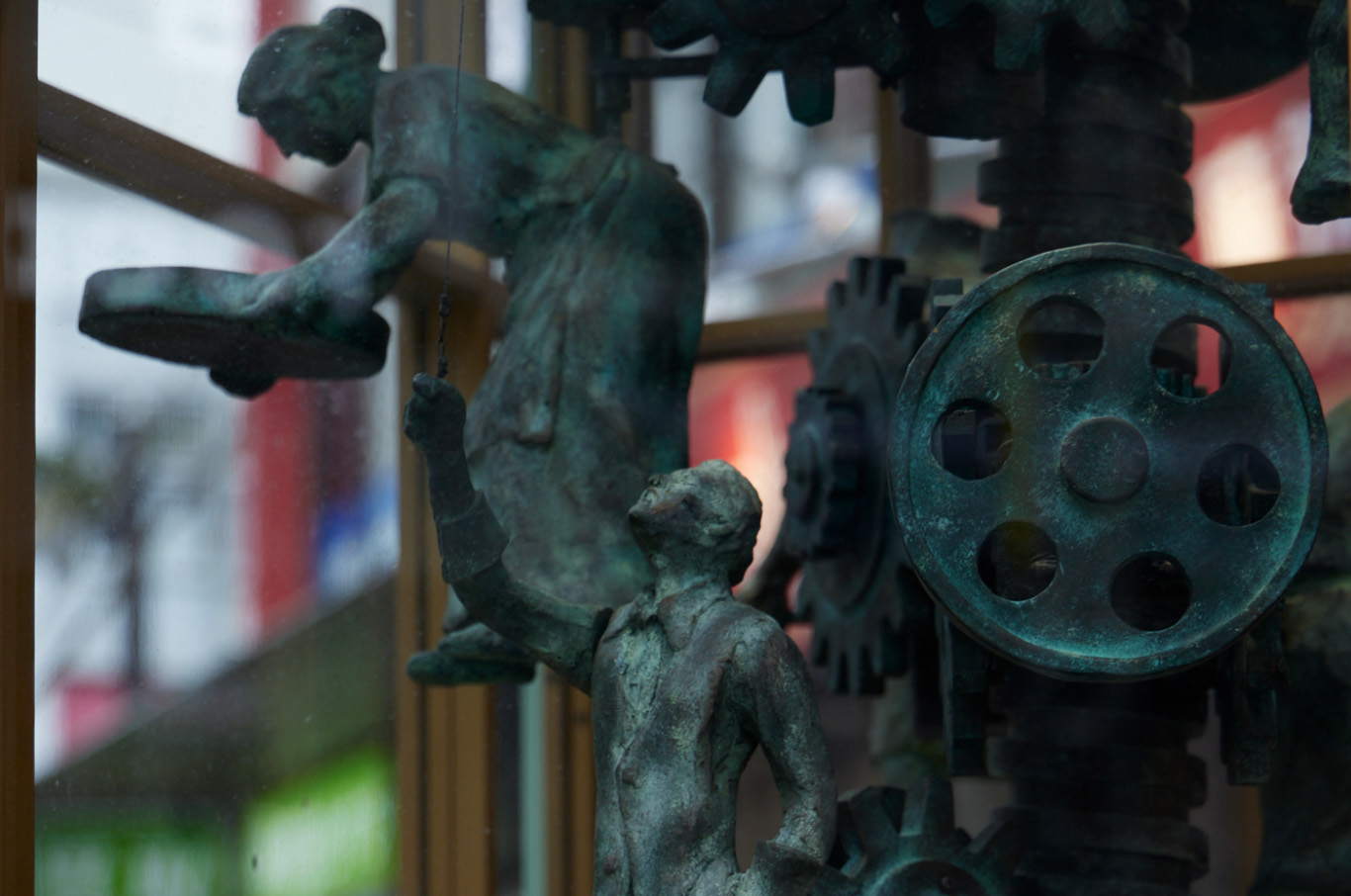
Reproducing the colors of the time -
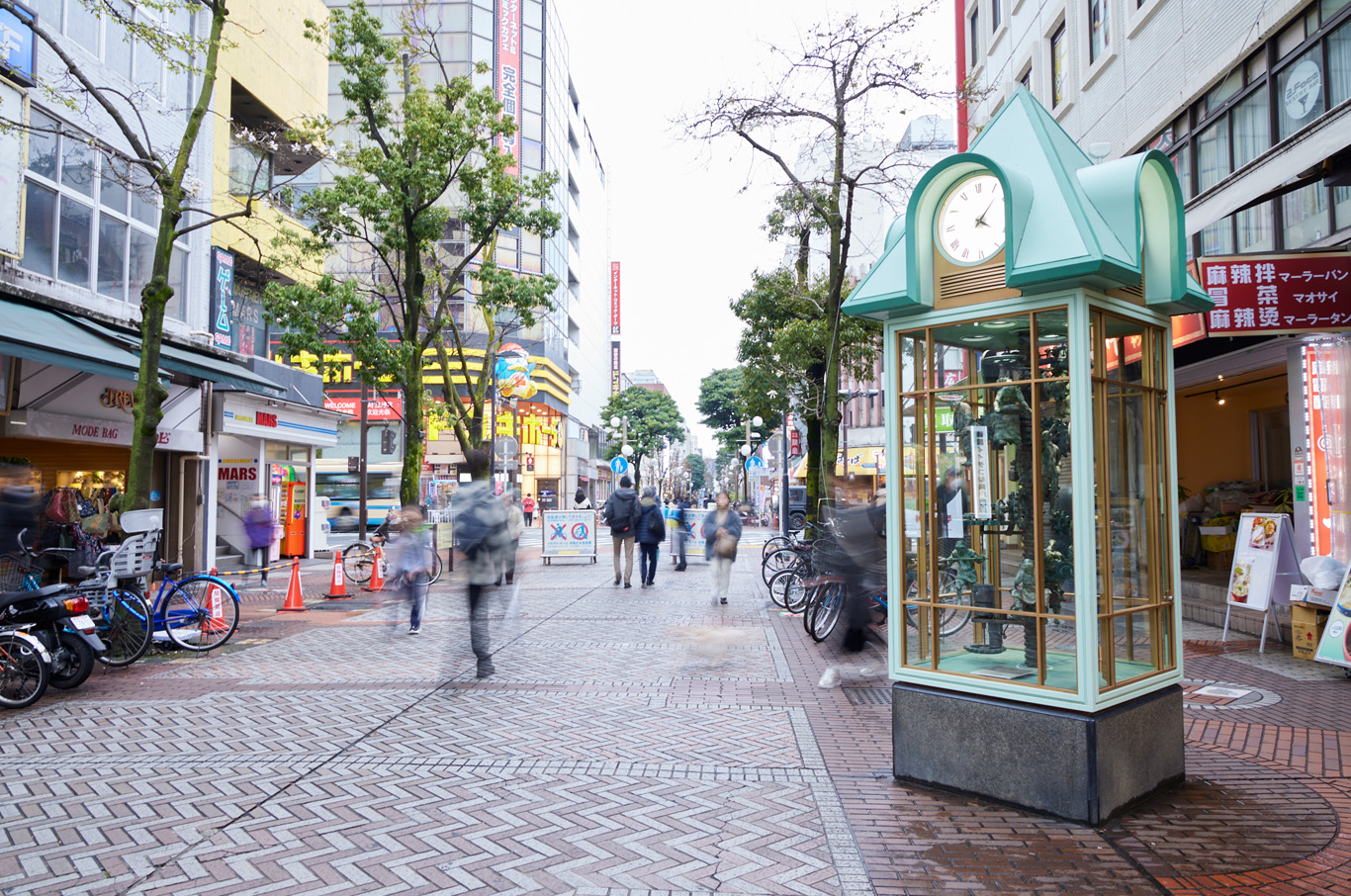
The mechanical doll clock that blends into the town -
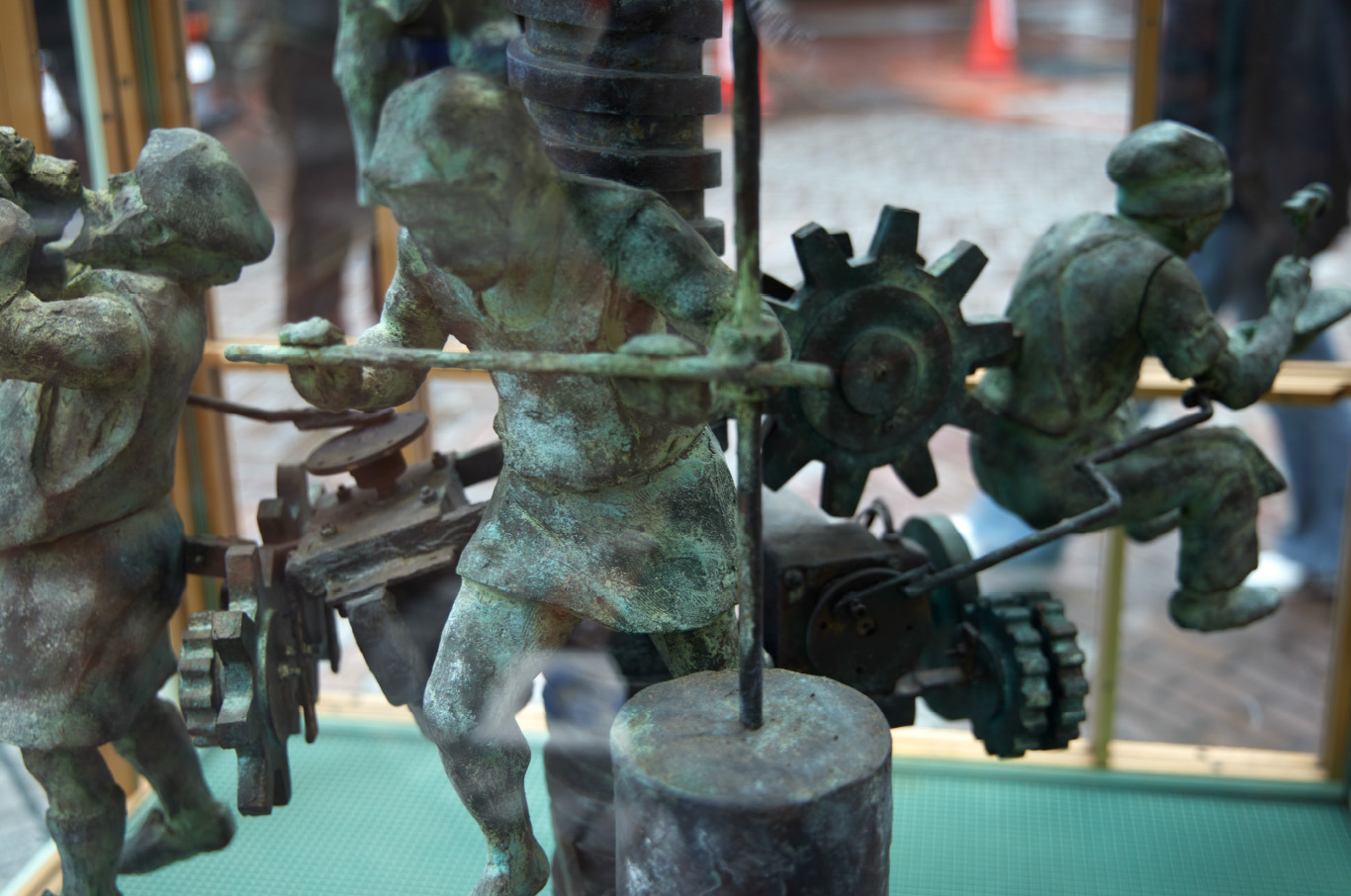
Mechanical dolls that move to the music -
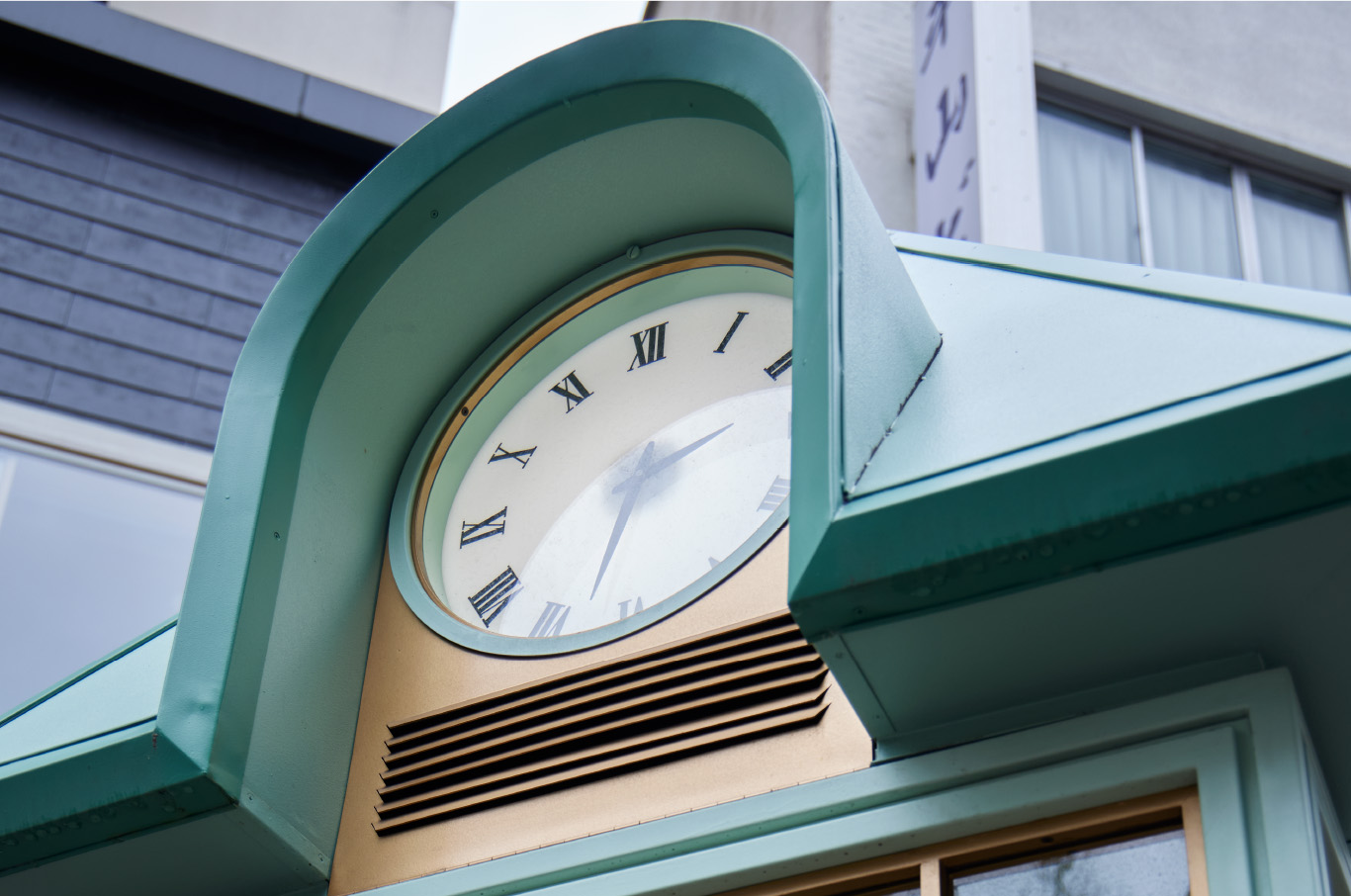
The mechanical doll clock that has started ticking again
- Project Member
-
- Account
Producer - Daisuke Ima
- Product
Director - Keiji Kobayashi
- Account
- Solution
-
- Engineering
- Production & Construction
- Maintenance & Upkeep
- System Design & Equipment Installation
- Project Year
- 2021.06