
Miraikan - The National Museum of Emerging Science and Innovation
未来を感じる購買体験 ノムラメディアスがてがける 次世代型ミュージアムショップ
- Store Operation & Product Development
- Store Fixtures & Exhibition Fixtures
- Video/Interactive Content & Equipment Installation
- Museum Shop Planning & Operation
- Original Product/Museum Goods Development
Feeling consideration and the future,
Open to everyone
Miraikan's
Museum Shop
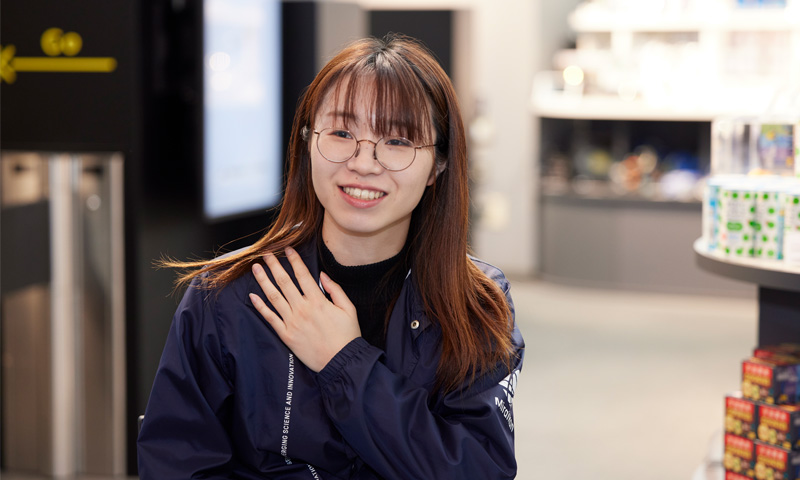
The National Museum of Emerging Science and Innovation (Miraikan), where visitors can experience cutting-edge science and technology. Since its opening in 2001, Miraikan has been providing visitors with insights and learning opportunities through current and evolving science and technology. In November 2023, the museum shop on the first floor, "Miraikan Museum Shop" (hereinafter referred to as "Museum Shop"), reopened after a renovation. NOMURA MEDIAS led this renovation and continues to be involved in its operation.
In 2021, Chieko Asakawa became the director, and in the "Miraikan Vision 2030" set as a benchmark, it was declared, "Aiming to be a 'laboratory for future society' where one can experience demonstration experiments of cutting-edge technology for future society." The new museum shop was also required to be designed as an extension of this concept. Miho Koseki of the National Museum of Nature and Science (then in charge) recalled the purpose of the public offering, saying, "We wanted people to experience technologies and services that might become commonplace in the future through the experience of buying souvenirs, and to give each person an opportunity to think about the future."
NOMURA MEDIAS, with Account Producer Yasuhiro Suzuki at the center, began planning the Museum Shop. The concept is "Goodwill +be". Goodwill is a word that leads to good deeds and, by extension, compassion. By combining this with "will be," an expression indicating the future, they imbued it with the desire to create a store full of compassion and connected to the future.
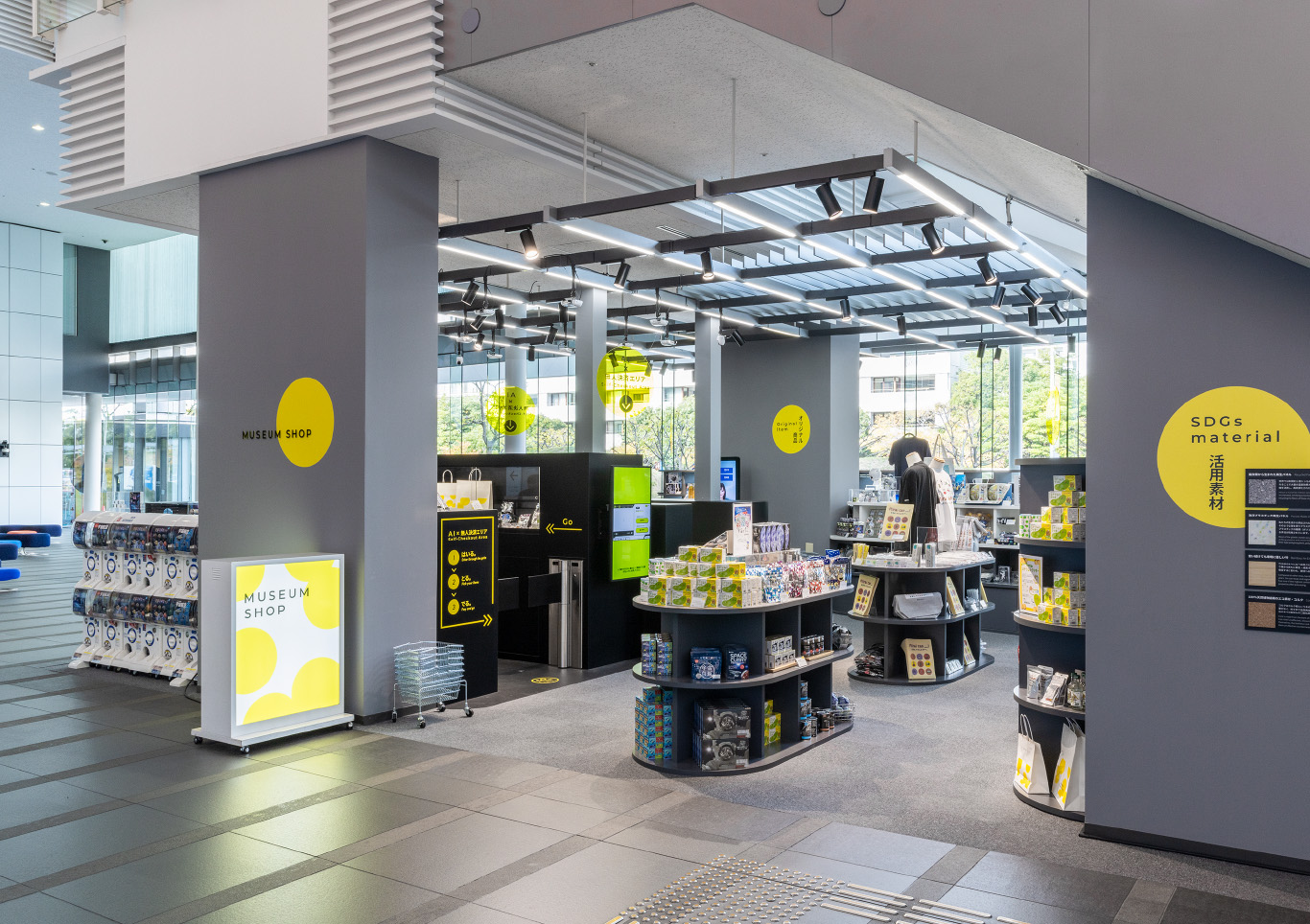
For example, the yellow signage that stands out in the museum was inspired by tactile paving (braille blocks for guiding the visually impaired) by Suzuki. Yellow was adopted as the key color to symbolize an "open space."
However, the museum's colors are white and blue, which are also used in the logo, and the interior color scheme has been adjusted accordingly. From the internal discussion stage, there were many opinions such as "Why yellow?" and "Shouldn't it be another color?" However, Suzuki, in addition to the aforementioned idea, supplemented that yellow is considered a color that signifies "hope for the future" in color psychology, and pushed through the proposal. The museum was surprised by this bold proposal, but in fact, the response from visitors has been excellent. Ms. Koseki also expressed her satisfaction, saying, "The addition of yellow seems to have brightened the space."
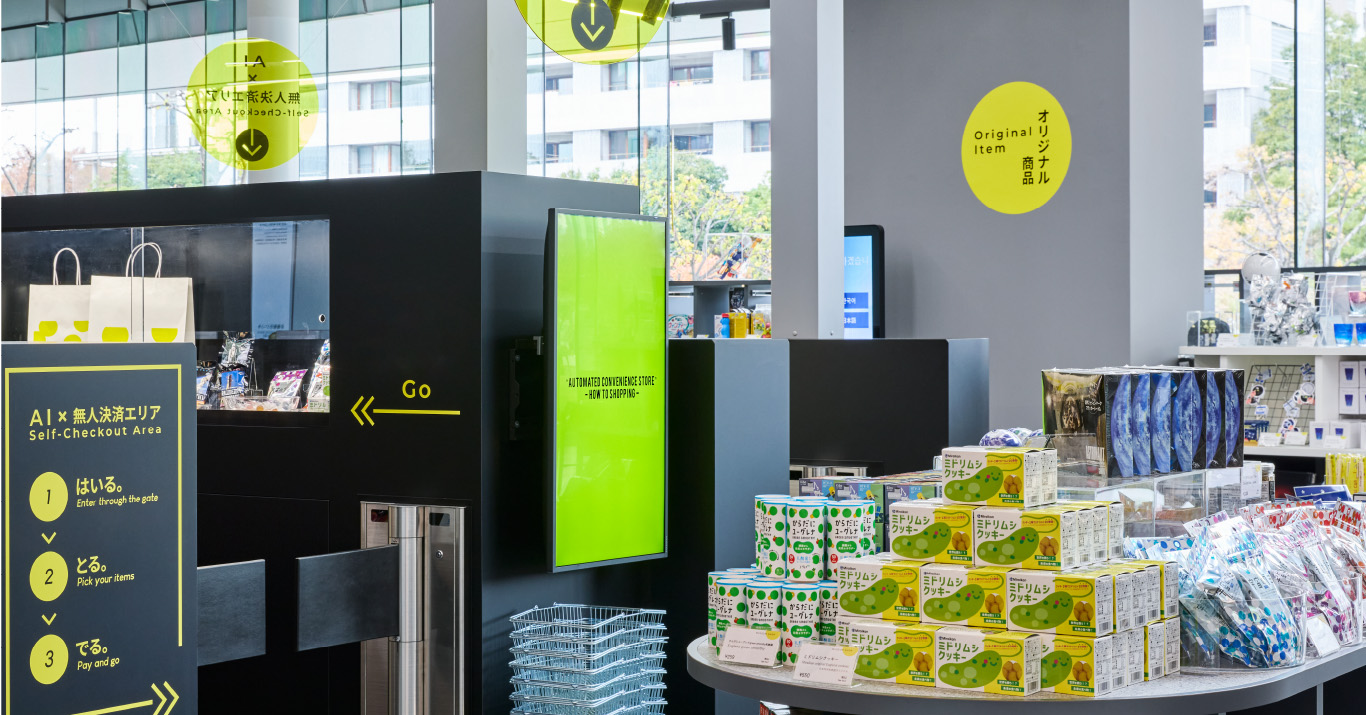
Looking at the fixtures in the store, you'll notice that most of them have rounded corners. This is another thoughtful design to ensure safety and enjoyment while browsing. Additionally, some of the fixtures and products utilize waste materials. In particular, stationery products made fromライスレジン (rice resin), a biomass plastic made from waste rice, have been well-received for "indirectly contributing to regional recovery." Suzuki stated, "We incorporated this not just for the future, but as part of a new experience," and it is undeniable that these added value proposals are creating new value for the Museum Shop.
The popular Euglena cookie from the previous store is still on sale with a redesigned package. Yoshikazu Onuma, the account producer in charge of store operations, explains, "We heard that there are many elementary school students visiting, so we made the design easy to handle and cute." The new original goods, featuring the slogan "Mirai can_!" in colorful lettering, are also popular with student groups visiting on school trips.
"We look forward to further developing products that cater to customers' desire to buy souvenirs unique to the museum," says Koseki. In response, Suzuki replies, "In many product development cases, once the client has a somewhat solid plan, the rest is a matter of obtaining approval. We were able to focus because we had a supportive partner like Koseki, who was involved in product development from the idea stage." Building a good relationship led to the success of the project.
-
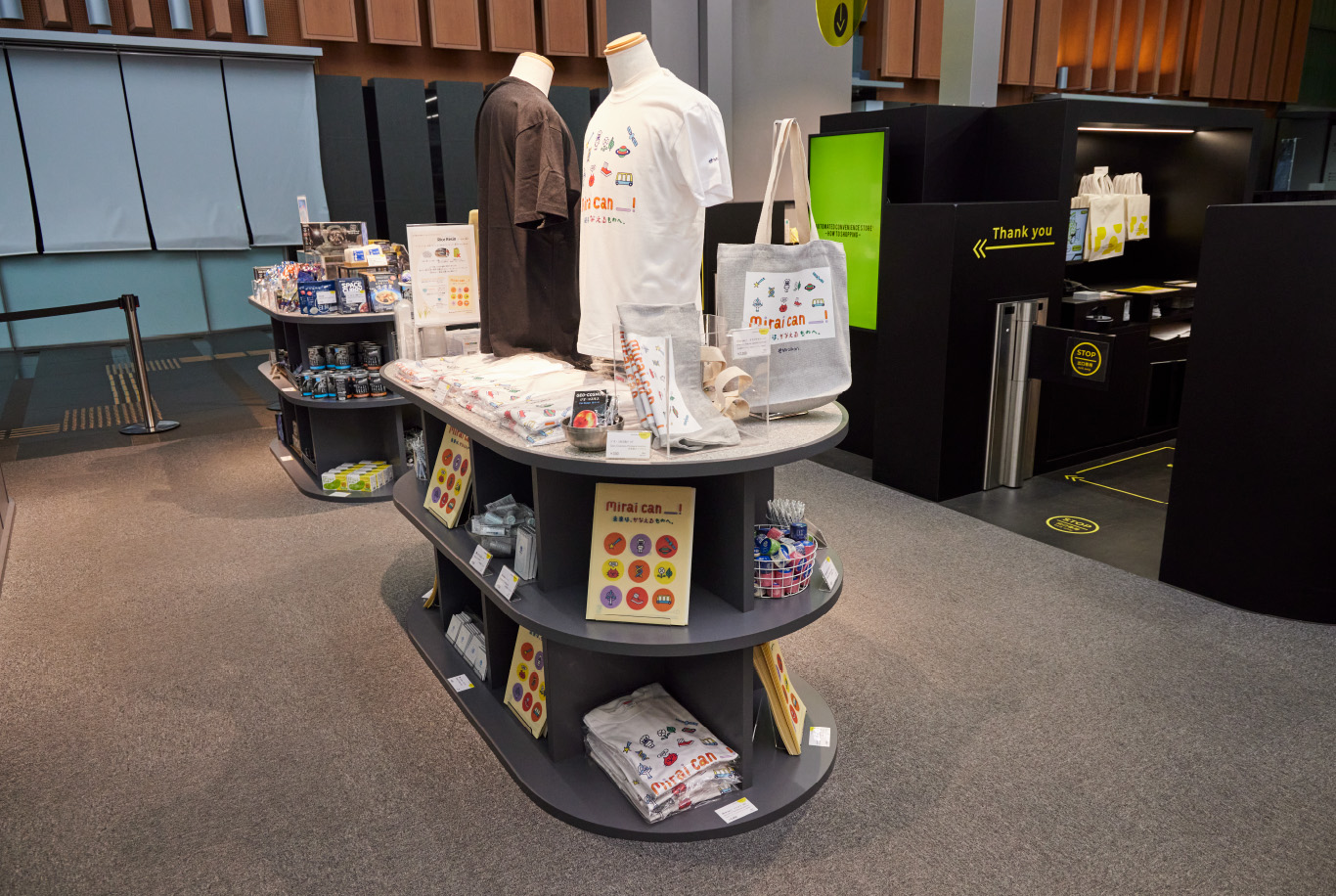
Miraikan original product corner -
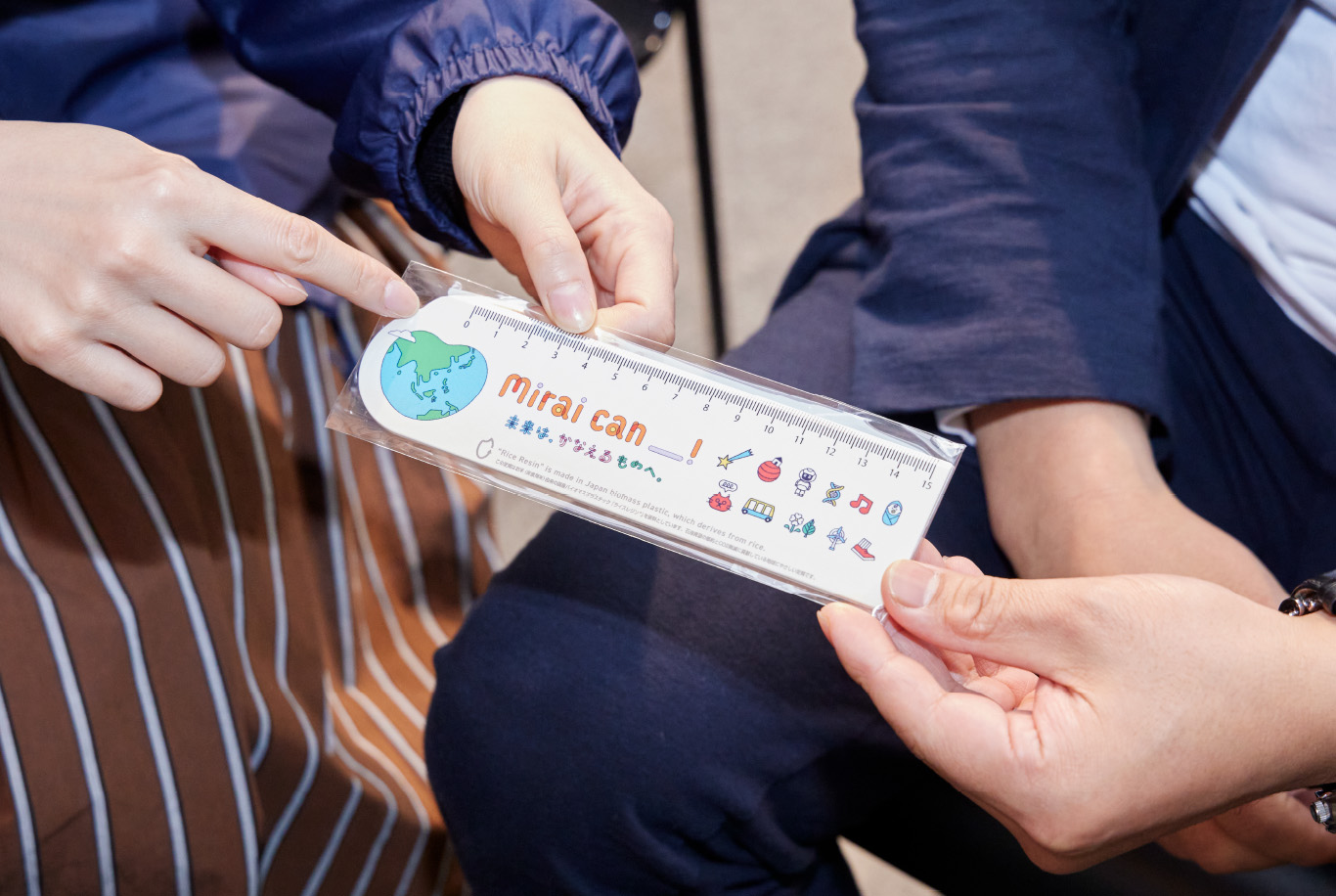
Miraikan Rice Resin Ruler
As an "experimental laboratory for future society",
Actively adopting cutting-edge technology
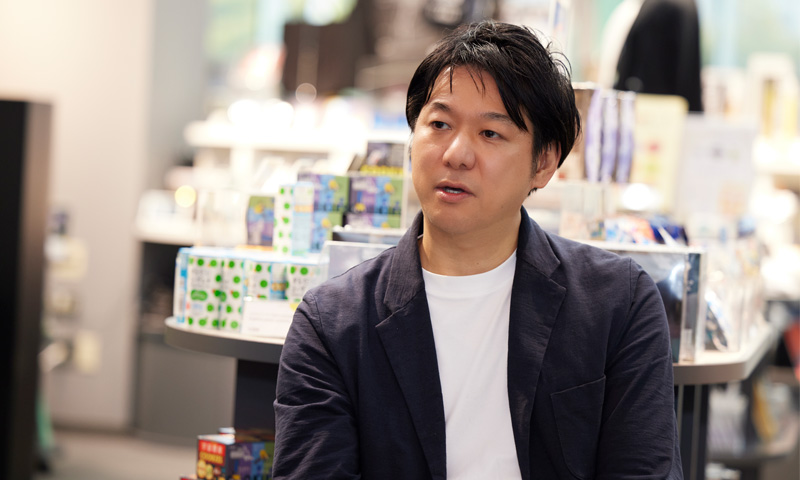
As a futuristic shopping experience, one of the symbolic facilities of the Museum Shop is unmanned payment. While society is re-evaluating the value of hospitality and human interaction, there is also a call for labor shortages. Especially in the Odaiba area, there are few applicants for jobs, making it difficult to realize. "What is needed in this place right now is to provide a rich shopping experience even without staff." With this in mind, Suzuki sought cooperation from TOUCH TO GO, which handled unmanned AI payment stores at Takanawa Gateway Station (JR East).
Cameras installed on the ceiling detect customer movements, and sensors on the shelves detect changes in weight when products are picked up. The more we heard about this system, which monitors customer behavior from multiple angles to complete transactions safely and smoothly, the more rational it seemed, and we decided without hesitation to include it in our proposal.
Self-checkout is becoming more common in convenience stores and supermarkets, but the widespread adoption of full-scale unmanned payment systems like TOUTH TO GO is still in the future. Mr. Koseki shares his candid thoughts at the time: "We received a request to incorporate something that couldn't be experienced elsewhere, so this proposal was very appealing." While acknowledging that there were operational concerns and anxieties about unmanned payment, he continued, "It was a proposal that made it easy to imagine a future where customer service evolves, and we could place our expectations on it. Experiments involve risks. Active challenges are part of our role as a 'testing ground for future society.'"
-
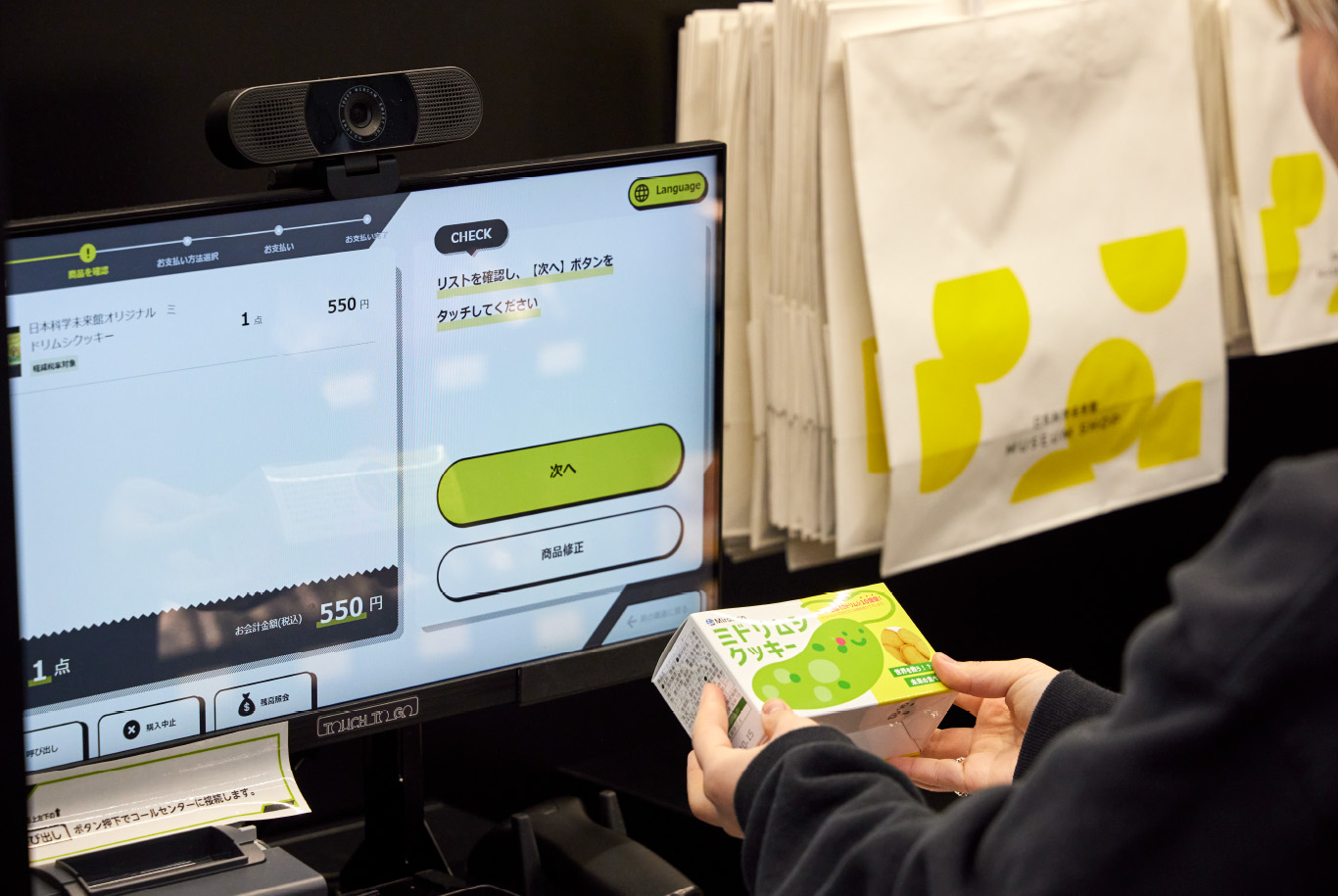
Unmanned checkout area checkout scene -
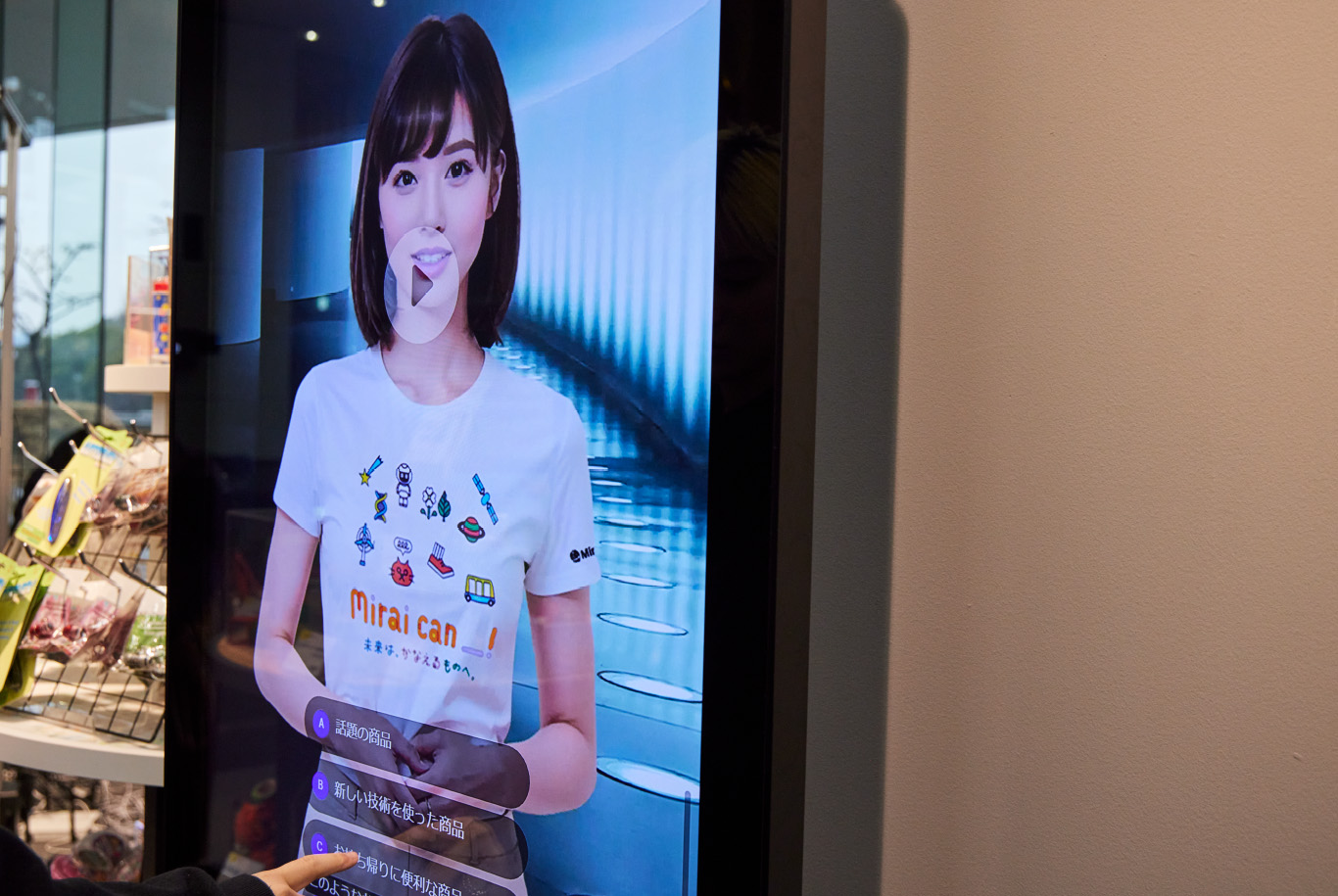
Multilingual digital human signage
The unmanned checkout system has been well received, with many curious customers using it. We often saw customers who entered hesitatingly enjoying the purchasing experience with cheers at checkout.
The advanced technology introduced in the Museum Shop is not limited to unmanned payment. The "Multilingual Digital Human Signage," where a virtual digital human, Miku Nakagawa, acts as a guide and recommends products in four languages, is also a new experiential service exploring possibilities in future society. Various devices are incorporated to explore new communication methods in stores.
Additionally, a portion of the Museum Shop is rented out as an experimental booth (PR space) for companies with cutting-edge technology. One would normally want to display and sell as many products as possible, but Suzuki explains the intention: "I consider the Museum Shop to be an exhibit of the Miraikan as well. Just as there are permanent exhibitions and special exhibitions, I wanted to add an element of 'something is happening' beyond just changing the products." In fact, the sight of people interacting with cutting-edge technology in the open space of the shop corner attracts attention from afar. Customers who show interest stop by the booth, and as a result, a chain reaction is created where they also make purchases at the Museum Shop.
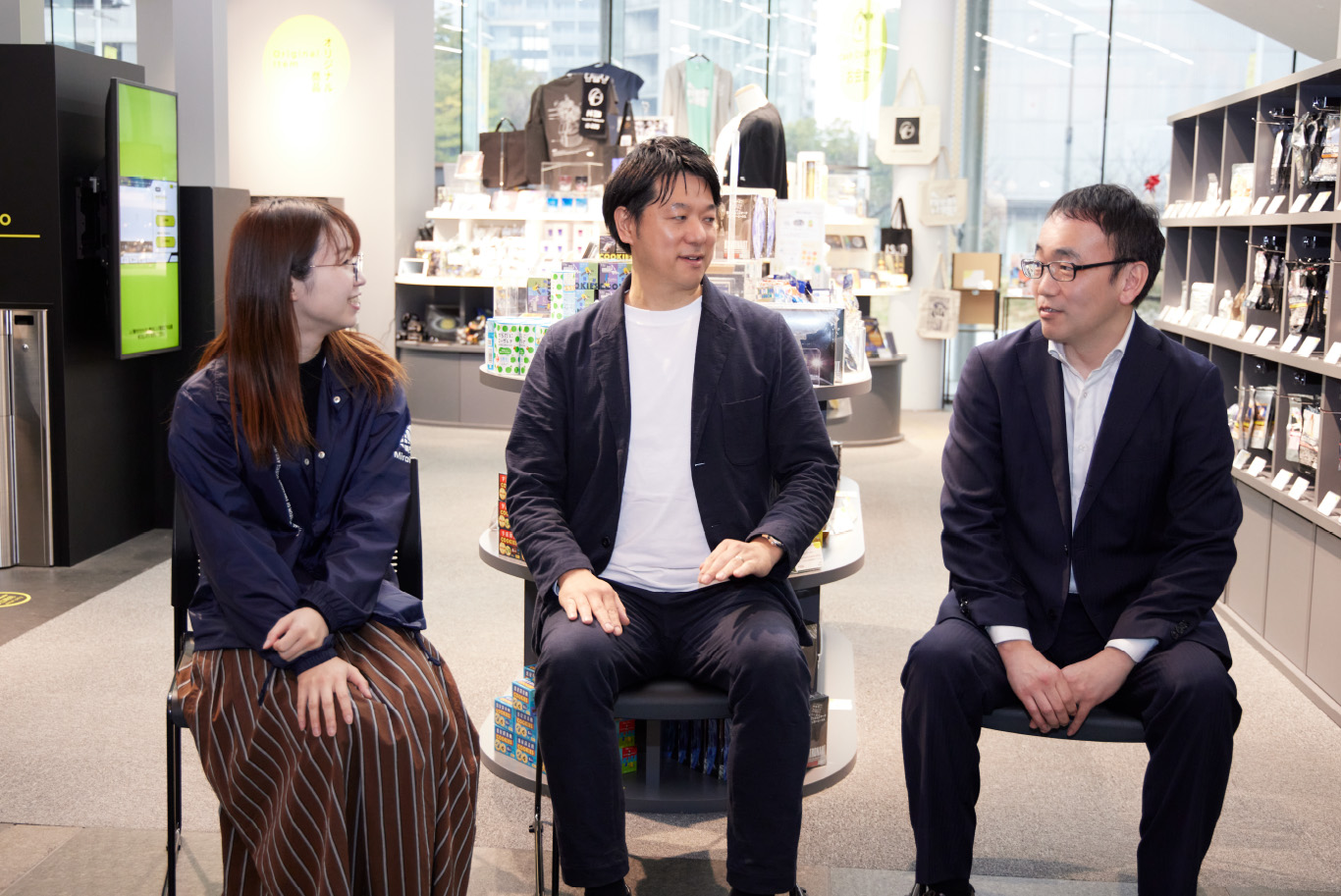
For the exhibition renewal
Even with the short construction period matched to
Realizing the ideal store
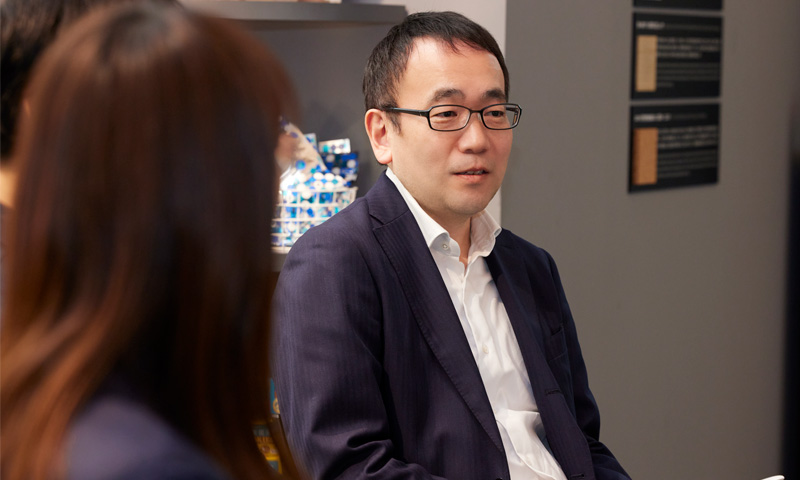
Originally, the opening of the Museum Shop was scheduled for a later date. However, due to the simultaneous unveiling of several new exhibitions at the museum and the resulting attention from events like preview tours, a decision was made to expedite the opening of the new museum shop to coincide with this opportune moment.
As a professional in store operations and shop management who has overcome numerous challenges, there was no way I could refuse. Especially when it was a request from "friends" with whom we had built a new Museum Shop together. NOMURA MEDIAS S continued to hold regular bi-weekly meetings and maintain close communication, but due to a schedule change, they further strengthened their team. They aimed to speed up responses, shorten lead times, and resolve minor issues early. Thus, on November 22, 2023, the new "Museum Shop" opened.
Reflecting on the project, Mr. Koseki praised: "They were quick and accurate in understanding Miraikan's philosophy and goals, and they thoroughly understood what we wanted to communicate and achieve. Their responsiveness and ability to make revisions to our requests were exceptional and a tremendous help."
Meanwhile, Suzuki laughs and says, "The client might have felt that we were experienced, but we were desperately working internally." He continues, "NOMURA MEDIAS is a manufacturing company, and directing processes, deadlines, budgets, and partner companies is something we do many times a year. I believe this project was a culmination of that accumulated experience." As mentioned earlier, NOMURA MEDIAS is a group of professionals in store operations and shop management, handling numerous projects in parallel. It's not uncommon to receive strict reviews from within the company during production. However, perhaps it is precisely because of this that they were able to achieve highly accurate output that captures the client's intentions and needs while maintaining (or rather, increasing) a sense of speed.
About half a year has passed since the Museum Shop reopened, and the team's focus has already shifted to future prospects. When Mr. Koseki says, "I want to make original goods related to new exhibitions," Konuma answers instantly with "Of course," and citing the news of a lunar rover landing on the moon, adds, "When an event related to Miraikan occurs, I want to set up a related corner in the sales area to create a store where we can interact with customers."
Furthermore, Onuma mentioned hearing customers say, "The shop has been renewed, it looks interesting" right after the reopening. He expressed his confidence, stating, "Only a few people, like museum staff, would be aware that the operator has changed or that it has been renovated. The fact that general customers felt it was 'interesting and improved' suggests we may have exceeded conventional expectations."
Suzuki expressed a sense of fulfillment, saying, "The excitement and passion felt when seeing exhibits in a museum or art gallery cool down if left as they are. Entrusting those feelings to objects and taking them home at the end of an exhibition is the role of the museum shop. As the final destination of the exhibition, I think we have taken the first step in the original role of a museum shop."
Mr. Koseki cheered on the two representatives from NOMURA MEDIAS, saying, "I would be happy if people come to Miraikan in the future with the Museum Shop as their destination. I have high expectations for its future evolution."
From the products lining the shelves to various advanced technologies and sign colors, there is nothing "meaningfulless" in this Museum Shop. Through a design where products, space, and services are linked, it has been thoroughly thought through what customers visiting this space can experience and what value it brings to Miraikan. That might be what NOMURA MEDIAS aims for in "maximizing experience value."
-
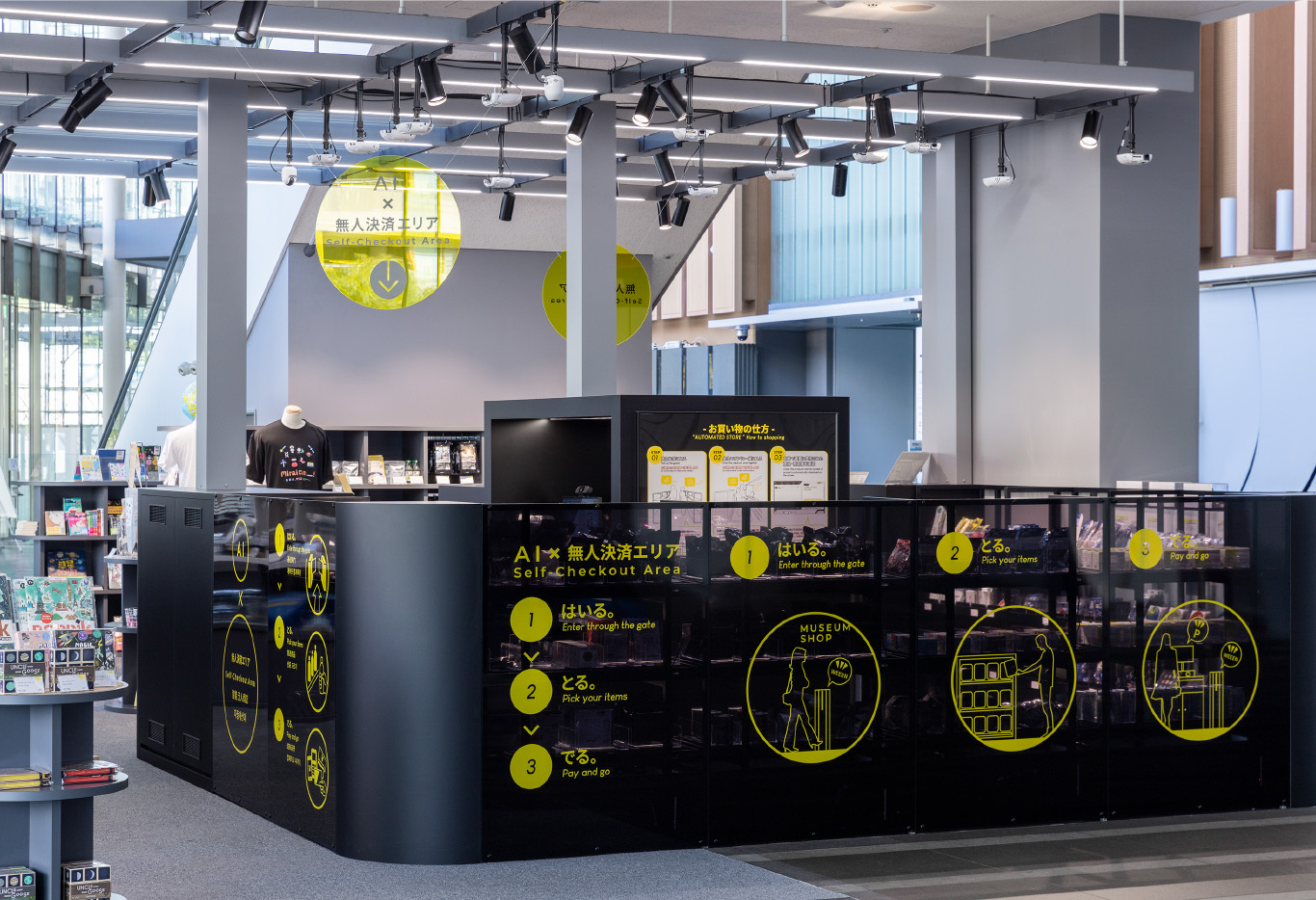
AI × Unmanned Checkout Area -
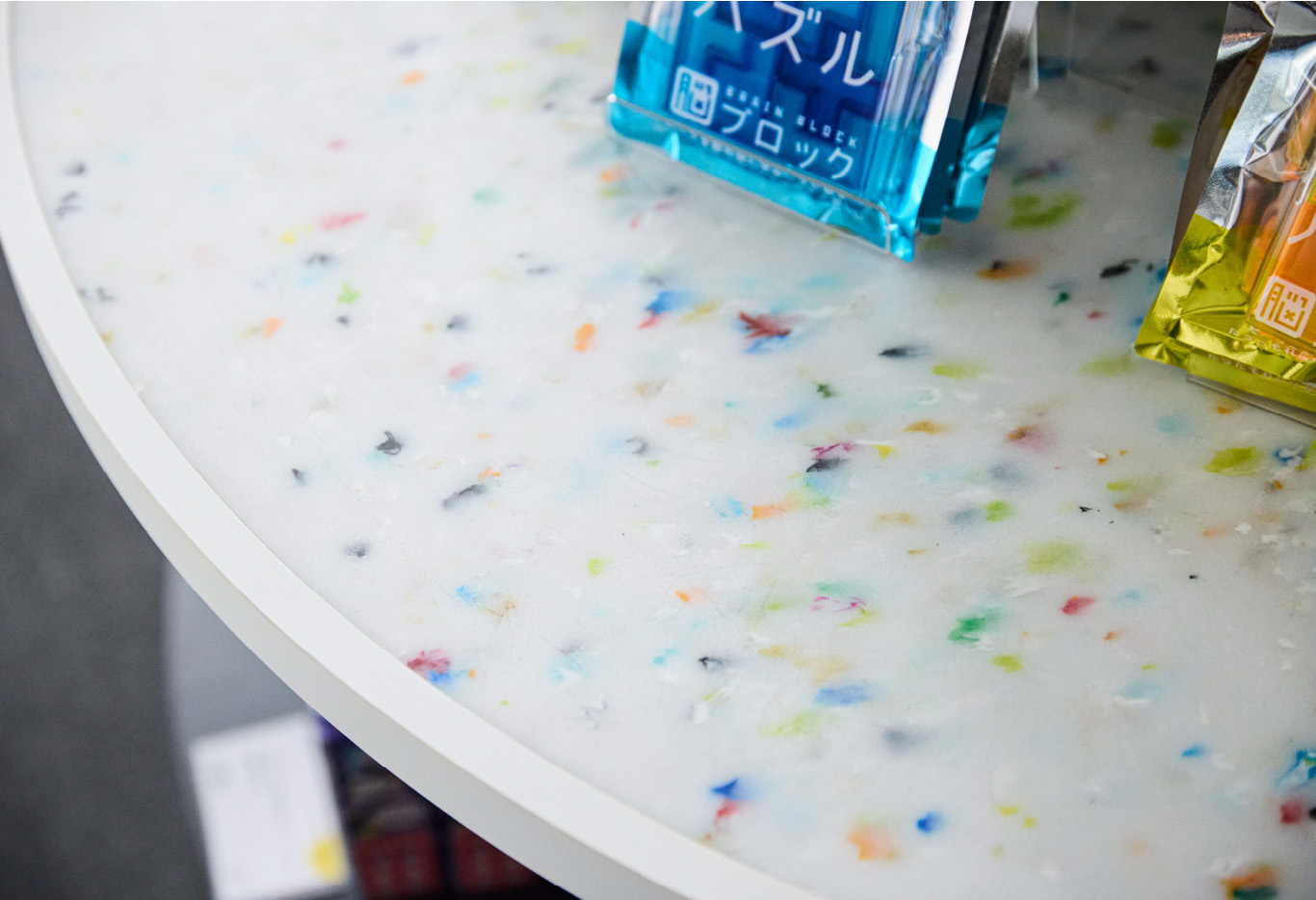
In-store fixtures (using recycled marine plastic panels)
- Project Member
-
- Store manager
- Shiho Sato
- Account
Producer - Yasuhiro Suzuki
- Product
Director - Toshiaki Kawabata
- Operation
- Yoshikazu Onuma
- Design
- NAVER Corporation (Keisuke Kobayashi)
- Solution
-
- Product development
- Store management
- Project Year
- 2023.11-